A ceiling leak in an occupied building can become a tenant, inventory, or equipment problem before anyone reaches the roof. Commercial Roofing South Bend inspects, repairs, restores, coats, replaces, and maintains low-slope and metal roofs across South Bend, IN. We begin by locating the affected room or work area, tracing the water path above it, and making safe any opening that is still admitting water. The permanent scope follows the assembly and what the inspection confirms.
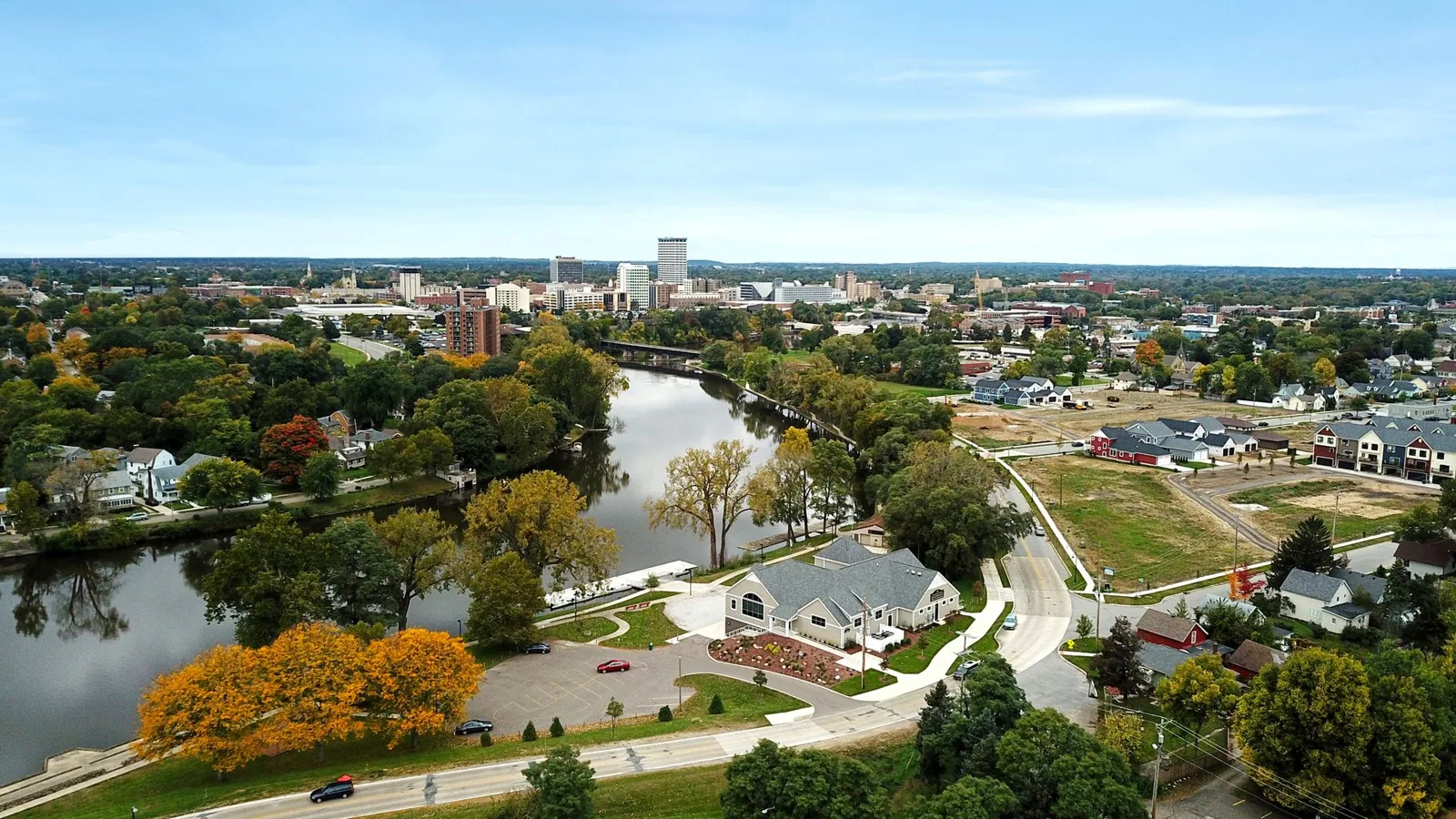
South Bend’s commercial building mix includes healthcare, education, small businesses, distribution, and the continuing redevelopment of former industrial property. Downtown South Bend and the Renaissance District have different building patterns from the airport’s commercial park and the manufacturing activity extending toward Mishawaka and Elkhart. The mix ranges from occupied health and education buildings to industrial properties, so each inspection starts with the roof assembly, access needs and operations below it.
Control water before it spreads
When a leak is active, the first call should identify the room, floor, equipment, and materials below it. We help the property contact protect people and contents, then inspect the roof zone above the reported area. Water can travel beneath a membrane or along a deck before appearing indoors, so the ceiling stain is not the repair boundary. We photograph the condition, check drains and scuppers, and place temporary dry-in when the opening can be safely reached.
At an office, clinic, school, or retail property, the work sequence must fit the people using the building. We confirm access hours, interior restrictions, mechanical equipment, and any room that must remain operational. If a ceiling needs to be opened or a test cut is required, the plan includes who can authorize it and how the area will be closed afterward. Our emergency response is available at any hour and every day, with the first step focused on making the affected area safe.
The inspection then separates the water-control issue from other building systems. Condensation, plumbing, or equipment discharge can create an interior symptom near a roof penetration. We identify what the roof inspection supports and which question needs another trade, rather than assign every ceiling mark to the roof. The leak repair scope states which opening is addressed and what evidence remains to be gathered.
Work through snow and thaw
A typical South Bend winter adds about 64.5 inches of snow to the roof exposure, with the heaviest accumulation most likely in January. Uneven drifts collect at parapets and equipment, while meltwater still needs an open path to the drain. We inspect the bowl, scupper, low areas, and seams around the route water must follow before calling the roof clear.
Freeze-thaw stretches from fall into spring. Water can enter a small lap opening, freeze in a seam, and return as a leak after the next thaw. South Bend has recorded a 92 mph wind gust, along with hail and tornado events. After a storm, we inspect for displaced edge metal, punctures, lifted flashing, impact marks and changes to attachment, then photograph each roof zone reached.
Drainage and assembly details matter during every season. A drain and scupper inspection checks outlet condition and the surrounding membrane, while a TPO roof system needs seam and penetration details repaired with compatible materials. If the surface is covered by ice or unsafe to reach, we document that limit and return when conditions permit rather than infer what could not be examined.
Plan by building use and roof zone
Healthcare and education buildings may have people, sensitive equipment, and fixed room schedules below the roof. A distribution facility depends on loading access and clear routes for deliveries. Office and retail properties can have tenant hours that determine when noise, staging, or temporary closures are acceptable. We ask about these needs before setting the roof work order. The property manager gets a sequence that identifies which area will be protected, opened, and closed on each visit.
Industrial properties are present in South Bend, Mishawaka and New Carlisle. Ignition Park is a technology area on former Studebaker grounds, while Elkhart has large-format manufacturing. The roof demands differ by use: technology buildings often concentrate equipment and penetrations, while plant roofs may require careful coordination around production. For owners with buildings in several cities, we record each assembly, repair boundary and priority separately, then group visits by area.
Downtown properties can include older structures, new additions, and different roof zones joined through years of repair. On a building in Downtown South Bend, a new tie-in may meet an older deck or wall transition that needs inspection before the membrane is closed. A manager can compare those conditions with a separate site in Mishawaka or a plant in Elkhart without assuming the same scope fits all three.
Make the boundary visible
A roof walk records the conditions that can be seen and the areas that remain uncertain. We examine seams, flashings, penetrations, drains, equipment curbs, edge metal, and changes in elevation. If moisture may have moved beneath the membrane, a controlled opening can show insulation and deck conditions at that point. Its result applies to the test area. We mark what was opened, what was dry or wet, and where further investigation could change the recommendation.
The repair choice follows that evidence. A localized opening with sound material around it may be repaired. A roof with wet insulation, widespread attachment problems, or repeated failures may need a broader recovery or replacement discussion. A coating can restore a suitable surface, but it cannot dry concealed insulation or fix a drainage defect by itself. We explain what stays in place, what must be removed, and how the proposed work ties into retained material.
A written commercial roof inspection can support a repair decision, insurance documentation, maintenance planning, or a capital review. It should include photographs, roof-area references, observations, and limitations. If the owner chooses only temporary protection, the record still identifies the permanent correction that remains open, so the next visit starts with the same known boundary.
Carry findings into the next visit
After a repair, the closeout records where the membrane or flashing was opened, the materials used, the tie-in completed, and any area left outside the scope. A follow-up visit can compare the same roof zone after rain or thaw. If the repair depended on equipment service, another trade’s confirmation, or an inaccessible space, that dependency stays visible. The building team can then distinguish completed roofing work from an open coordination task.
For a first call, share the building use, interior symptom, timing, prior repair history, roof plan if available, and hours when access is safe. We will walk you through temporary protection and the inspection sequence. Photos of the interior and any known roof records help define the first visit, but the roof condition still has to be checked on site. The recommendation reflects the inspected roof areas and the operations that need to continue below them.
Commercial Roofing Questions
How quickly can someone respond to an active leak?
Emergency response is available at any hour, including weekends and holidays. We first make the affected area safe, trace the roof zone that can be reached, and set temporary protection where conditions allow.
Does winter snow mean the roof needs to be replaced?
No. We inspect drainage, seams, flashings, and attachment, then check moisture where needed. Snow exposure informs the inspection, but the roof’s assembly and observed condition determine whether repair, recovery, or replacement is appropriate.
Can a roof repair be planned around clinic or school hours?
Yes. We coordinate access, interior protection, material delivery, and noisy work with the facility contact. The scope identifies which rooms or roof zones need notice and what can remain in service.
What does a test opening establish?
A test opening shows the insulation and deck condition at that point. We compare it with moisture readings, seams and visible conditions elsewhere to decide whether more testing is needed.
What should I provide before the first visit?
Share the affected room, building use, leak timing, earlier repairs, roof plan, and access hours. Someone will walk you through the response and what the inspection can confirm.
Related Roof Work
- Emergency Commercial Roof Repair
- Commercial Roof Leak Repair
- Roof Drains, Scuppers and Ponding Correction
- TPO Roofing
- Downtown South Bend
- Mishawaka
- Elkhart
- Ignition Park
- Commercial Roof Inspection
Talk to Our Team
Tell us where the water is landing, what the roof is made of and when the building is easiest to reach.
Phone: 555-555-5555
Email: [email protected]