About Commercial Roofing South Bend
Walk the roof first, write the scope second, price it third. That order holds on every building we take on.
A commercial roofing team for South Bend, Mishawaka and Michiana.

What Owners Can Expect
Three habits that hold on every South Bend roof we work on.
What the work includes
The core of the work is the roof itself. A repair deals with a failed seam, a split flashing or a section of insulation that has taken on water. A recover puts a new membrane over a roof that tests dry, and a replacement strips the old system back to the deck and starts again. The roof systems we put down and keep up run from single-ply sheets, welded or glued, to layered asphalt roofs, standing seam panels, metal retrofits set over a tired roof, foam sprayed in place and fluid coatings that renew a sound surface. Around the construction work sits the looking: a crew member on foot with a probe, a drone over the sections nobody should walk, an infrared pass after sundown to find wet insulation, and a written report with photographs that an insurer or a lender can read on its own.
How a call unfolds
Someone answers and asks where the water is landing, whether anyone is near it and what the weather is doing. While a crew is being dispatched, the caller hears what to do in the meantime: move people and stock away from the wet area, set containers where they help and stay off the roof. On site, the first task is to make the area safe, clear the drains and scuppers, and put a temporary dry-in over the opening. The crew photographs everything, traces the wet area from above and below, and the property manager receives a photo log. A tenant notice goes out if the work will affect a suite. Then comes the plan for the permanent fix, and a follow-up visit after the next thaw or heavy rain to confirm that it held. The sequence holds whether it is one leak or a storm that has hurt many roofs at once, and the manager sees each step arrive in that order. On a storm night that order is what emergency roof repair means in practice: safe, dry, recorded, then fixed.
A market with a long list of weather
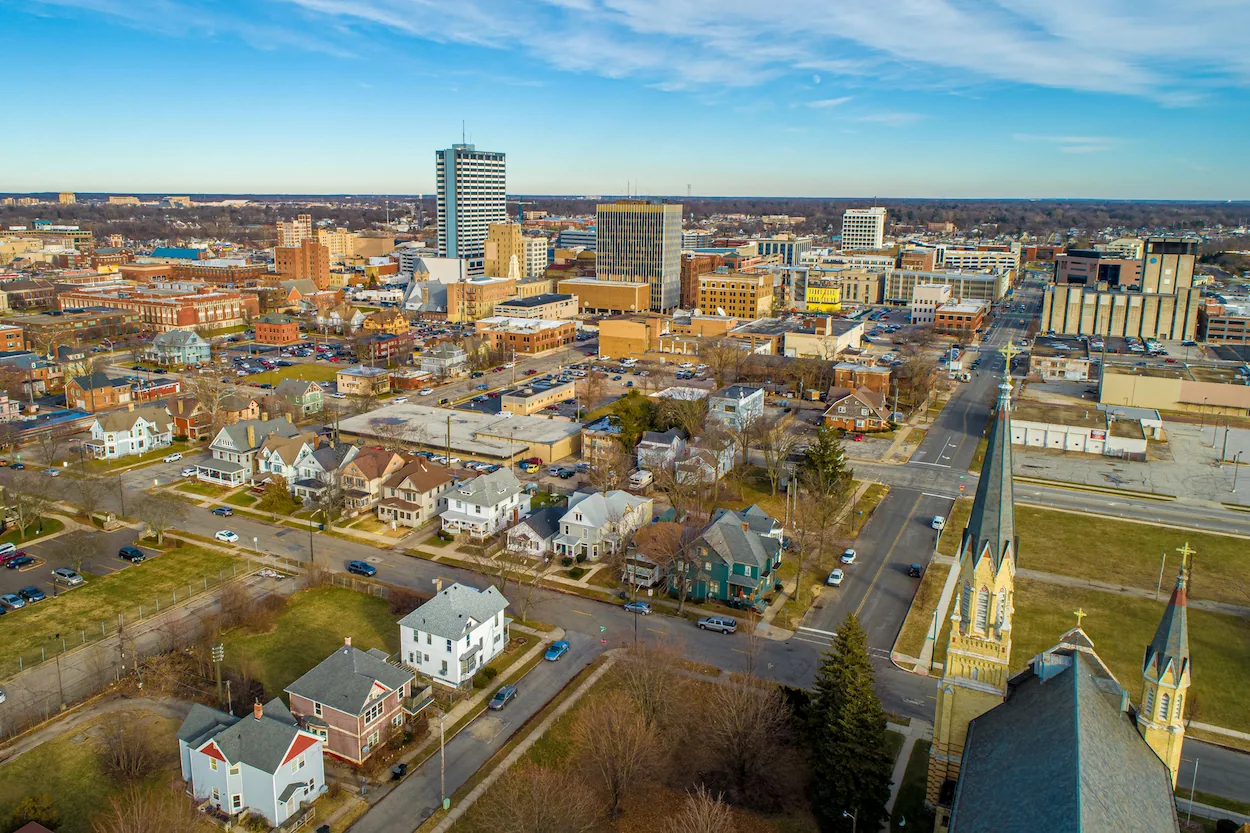
South Bend sits about 20 miles from Lake Michigan and averages 64.5 inches of snow a year. November 2022 piled up 30.2 inches in its first 20 days, a record for that stretch, and flat roofs held that weight until it melted or was cleared. Freeze and thaw run from the middle of October to the start of May, which opens seams and splits flashings at the edges. Wind has reached 92 mph here, tornadoes have crossed the county, and the October 2016 storms put wind damage on West Indiana Avenue and drew a microburst path from Northside Boulevard out to Longfellow Road. Each of those events shapes how we detail edges, secure membranes and keep drains open, and the edge and drain details on a bid get the same scrutiny as the membrane named on it.
Code sets the other boundary. Indiana's statewide commercial code is the 2014 edition, based on the 2012 International Building Code. For a replacement, we confirm the code and energy requirements in force when the permit is prepared, then account for them in insulation, attachment and drainage details.
Buildings and the people who own them
The market is a patchwork. East of the city, Elkhart is known for its RV plants, and Goshen has manufacturers of its own. In Mishawaka the mix includes retail along Grape Road, the Mishawaka manufacturing area and the VA clinic at Mishawaka. Downtown, the Renaissance District is reusing the old Studebaker complex for technology and manufacturing space, and South Bend International Airport and its business park draw industrial users. Hospitals, schools, a university campus on the St. Joseph River and the University of Notre Dame round out the list. The roof questions change from one kind of building to the next, and so do the people who ask them.
The work is set up for the people who answer for those roofs: property management companies with a stack of work orders, investors and lenders who need a read on a roof before a closing, school districts planning summer projects, public agencies tied to bid calendars, and restoration firms handling storm claims. Across those industries the need is the same, a straight answer on paper, so each visit ends with photographs tied to roof locations and a plain recommendation in a written condition report.
Working while the building runs
Most commercial buildings stay in use while the roof is worked on. Stores are open, nurses are on the floor, production lines are moving and tenants are paying rent. Occupied building reroofing means the schedule is built from the people inside: work by area, notices to tenants before the crew arrives, protected entries and dock doors, and noisy or odorous tasks timed away from sensitive hours. When the work touches a suite, the manager hears about it first, not the tenant. On a big roof the crew works in sections, so the part of the building under a finished section is dry and the part under an open section is covered at the end of each shift.
Public, institutional and military sites
Some roofs come with rules about who may be on them. A county building, a school, a VA clinic, and an Indiana National Guard armory each bring access procedures, escort requirements and calendars that the crew has to respect. Military sites bring badging, base access and scheduling around mission operations, and roofing there follows the Unified Facilities Criteria. We plan for that from the first call, whether the job is a county office or military installation roofing, and we put the access plan on paper so everyone knows who is allowed where and when.
Commercial Roofing Questions
Our warehouse has a metal roof and the office wing has a membrane. Can one crew handle both?
Both belong to the same day's work: standing seam or retrofit metal over the warehouse, a single-ply or layered membrane over the offices, and the joint where the two meet, which is a common place for water to get in. We walk them as one roof, photograph the transition, and write one report, so the owner is not reconciling two contractors' opinions.
Who should place the first call when a roof starts leaking?
Whoever sees it first can call, and the property manager or owner can follow with authority for access. A facilities director, a tenant, a night manager or an adjuster can all start the call, and the crew coordinates entry with the person responsible for the building.
What does a property manager have in hand when the first visit ends?
A photo log with captions, a sketch of the wet and damaged areas, a summary of what was done to make the roof safe and a recommendation for permanent work. It is written so a manager can forward it to an owner or an insurer as it arrives.
Nothing is leaking yet. What does a first visit look like on a roof that seems fine?
A walk of the whole roof on foot, a look at every drain, seam, curb and edge, and photographs tied to a sketch, so there is a baseline before the next winter. Anything that needs attention goes on a ranked list with the reason written beside it. If the roof is sound, the report says so plainly, and the next visit is set for after the thaw.
Talk to Our Team
Tell us where the water is landing, what the roof is made of and when the building is easiest to reach.
Phone: 555-555-5555
Email: [email protected]