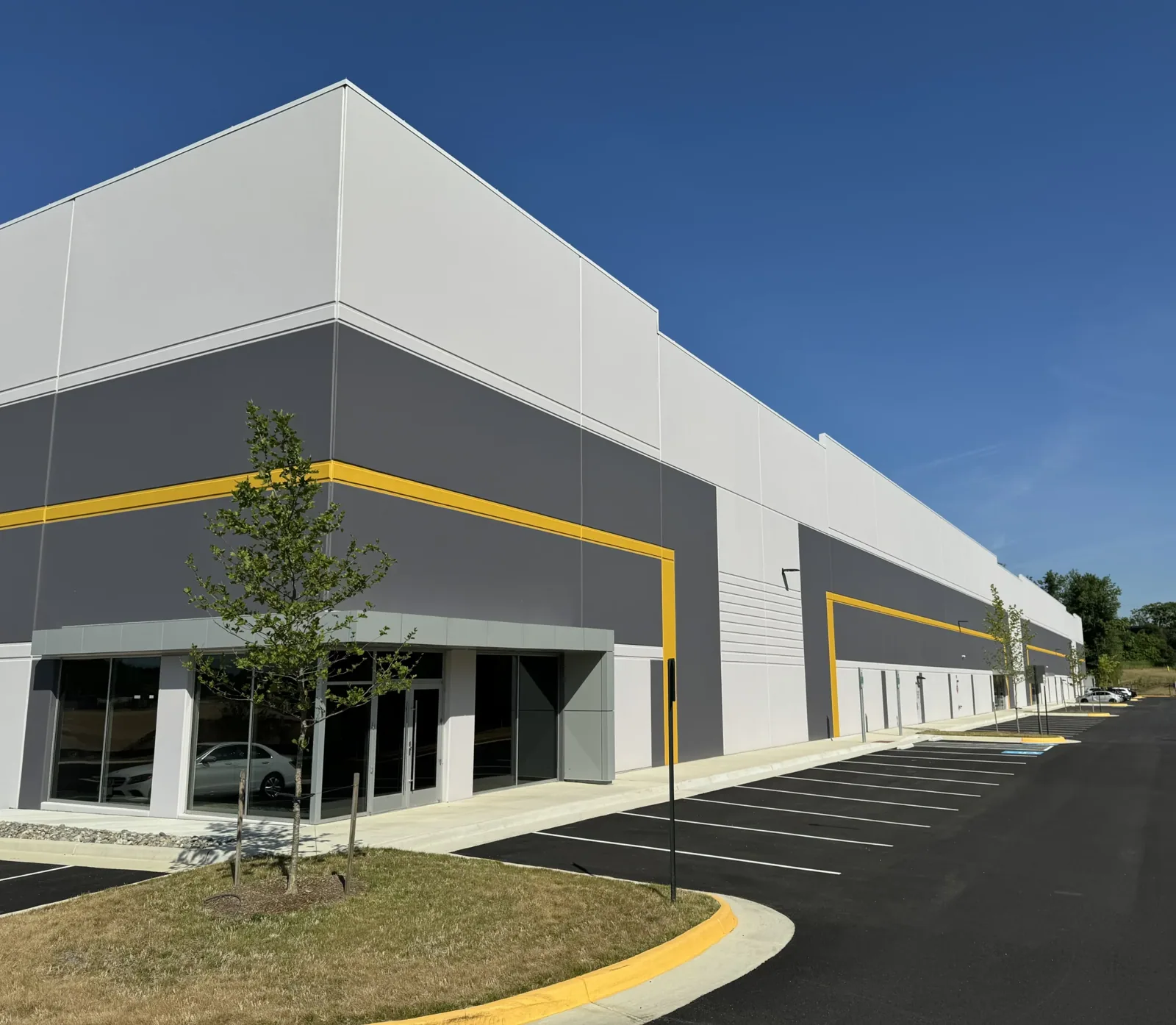
A picker radios the shift lead that a wet spot has opened on the slab beside the sortation line, and now someone has to choose whether to stop the belt. That call is the one a distribution manager dreads, because a stopped line backs up trucks at every door. The answer we give on the phone is a sequence rather than a verdict: get a person up top to clear drains and trace the opening, protect the conveyor and electrical gear underneath, and put a temporary dry-in over the spot so the belt can restart. For a fulfillment building in South Bend, IN the roof work is arranged around the flow of freight, not the other way round.
Stop the belt or keep it moving
The first conversation is with the operations lead, not the roof. We ask where the drip lands, what powered equipment sits below it, and whether anyone has already switched off a circuit. Then the crew climbs, usually by a fixed ladder or roof hatch that we check for safety first, and clears whatever is holding water: a drain strainer, a blocked scupper, a pile of slush against a wall. Most live leaks in a building like this trace to a seam, a wall flashing, or the base of a rooftop unit within a short distance of the stain, and the temporary dry-in goes over that spot within the same visit. The belt manager receives a photo of the patched area before we leave the roof.
Peak season sets the calendar
Distribution buildings run on a calendar that has nothing to do with roofing weather. Volume climbs through the fall, the holiday rush fills every dock door, and January brings the heaviest snow. The average first freeze arrives on October 18, so the workable window for adhesives and welded seams sits in the months before the rush starts. We ask for the operations calendar up front and plan tear-off, recovery and large repairs around it, saving the noisy and dusty tasks for overnight or weekend shifts when trucks are fewest. Smaller repairs wait for the quiet weeks after the holidays, when we can reach the roof without a crane lift over an active truck court.
What the walk covers
A distribution roof is crossed by trades more often than it looks. Dock-door canopies, exhaust fans, packaged units for the offices, and conduit runs for lighting and security all pierce the membrane, and each opening is a place where a worker's boot or a tool bag leaves a mark. We walk the main field, then the edges where trailers and forklifts may have struck the metal, then every penetration. Where a roof has seen heavy foot traffic, we look for walkway pads that were never installed and for scuffed seams along the routes technicians use. The findings go back as a numbered list with photographs, so the facility team can hand the repair items straight to a purchasing contact.
Roads, rails and rooftops
Freight buildings here sit close to the roads and rails that feed them, and that shapes how roof work is staged. I-80/90 runs along the north side of South Bend and Mishawaka, U.S. 31 has run as a freeway from Plymouth since 2014, and the Robert Young Rail Yards in Elkhart are among the largest freight classification yards in the world. On a site that ships along routes like those, material deliveries and crane picks have to fit between inbound and outbound trucks, so we stage insulation and membrane the day before a section opens and keep the hoisting zone clear of the busiest doors. By 2017 the South Bend company Tire Rack was running ten warehouses across nine states, and for an owner running logistics and 3PL operations across several buildings like that, one roof record covering every address beats a separate folder for each door.
Open lots take the wind
A distribution site is a big building on a big, open lot, which gives wind a long run at the roof edge. The 92 mph gust recorded at South Bend in August 1996 and the microburst swath that cut from Northside Boulevard to Longfellow Road in October 2016 are the kind of events that lift copings and peel perimeter membrane. We check edge metal attachment, the number and spacing of fasteners at the corners, and the condition of the sealant under the cap. After a storm, a wind damage roof repair starts with the corners of the roof and the line along the loading side, because those are the areas the gust reaches first.
Repair in stages, replace in sections
Because a distribution building cannot close for a week, permanent work is cut into sections that match the floor plan. One bay of the roof comes off, gets its insulation and membrane, and is made watertight before the next bay opens. Equipment goes onto proper curbs and supports in that same pass, and if an owner plans solar panels later, the new roof is built with the layout in mind. Between large projects a preventive maintenance program keeps the drains open and the seams checked, which is cheaper than another midnight dry-in. A warehouse roof shares the same drain and dock-access concerns, while cold-storage roofs add interior temperature and vapor-control constraints.
Commercial Roofing Questions
A trailer clipped the edge of the dock canopy. Is that a roof emergency?
Treat it as one until a person has looked. A bent or torn canopy edge can open the membrane at the wall, and the next rain finds it quickly. Send us a photo and the dock number, and we will tell you whether a temporary seal can wait for daylight or needs to happen tonight. We also record the damage with the date so the claim file stays accurate.
How do you keep roof work from slowing the outbound trucks?
We build the schedule from the truck calendar. Crane picks and material deliveries move to the hours when the yard is quiet, the hoisting zone stays away from active doors, and crews use a separate walking route to the roof. If one dock has to close for a lift, the manager hears about it a day ahead with the exact hour, so dispatch can send trailers to a different door.
If we plan rooftop solar, does that change how the roof should be replaced?
It does, and the earlier we know, the less it costs. Panels and their racking bring penetrations, ballast loads and walking paths, and the membrane under them needs to outlast the array. We coordinate the new roof with the layout, put heavier insulation boards or cover boards where the loads fall, and set the flashing details so the solar installer is not cutting into a fresh roof.
What protects the sortation equipment during a tear-off?
Protection starts below the deck. We ask for a clear zone under each work area, hang tarps or ceiling protection over conveyors and panels that cannot move, and work in sections so the exposed deck is never larger than what can be dried in by evening. Fastening through the deck is planned so screw points do not reach hung equipment, and the facility team gets a check-in at the end of each day.
Can one agreement cover every building we own across the county?
Often it can. A multi-site roof program puts every building on one schedule, with the oldest or most exposed roofs addressed first and a single photo log format across all of them. It also gives the finance team one budget line to track, instead of a scatter of emergency invoices that arrive after weather.
Related Roof Work
Talk to Our Team
Tell us where the water is landing, what the roof is made of and when the building is easiest to reach.
Phone: 555-555-5555
Email: [email protected]