The estimate for a full tear-off lands on a desk in March, and the number is large enough that someone asks the obvious question: can we go over what is already there? For some roofs in South Bend, IN a recover may be suitable and can reduce tear-off and debris compared with full replacement. For others the answer is no, and the roof will say so the moment we cut a core. An inspection determines which option fits the existing roof, rather than assuming a larger or smaller scope. If the findings point to full replacement, we put that in writing with the photographs beside it.
Two answers decide it
A recover stands or falls on two questions. First, is the insulation under the old membrane dry? Second, is the deck underneath it sound enough to hold fasteners and a second set of loads? Inspection and testing help answer both questions. Core cuts through the membrane show whether the insulation is firm and dry or soft, dark and saturated. A moisture meter and an infrared scan, usually taken at dusk when a roof releases the heat it stored through the day, show where wet areas run beyond the cores. We probe the deck at drains and low corners, where corrosion starts first, and we pull test fasteners to see what they actually hold. A roof with small, isolated wet spots can often be cut out and patched in before the overlay. Widespread wet insulation can make a recover unsuitable and may require replacement after the affected assembly is assessed.
Where code draws the line
Recovering depends on the existing assembly, local code and permit requirements. South Bend applies the Indiana commercial code in effect for the project; confirm current requirements with the building department before deciding whether another covering can be installed. The existing roof's condition, number of layers and insulation work can affect the permitted scope. The applicable energy-code provisions may also matter if insulation levels change, so include those questions before the final scope is set.
What goes over the old roof
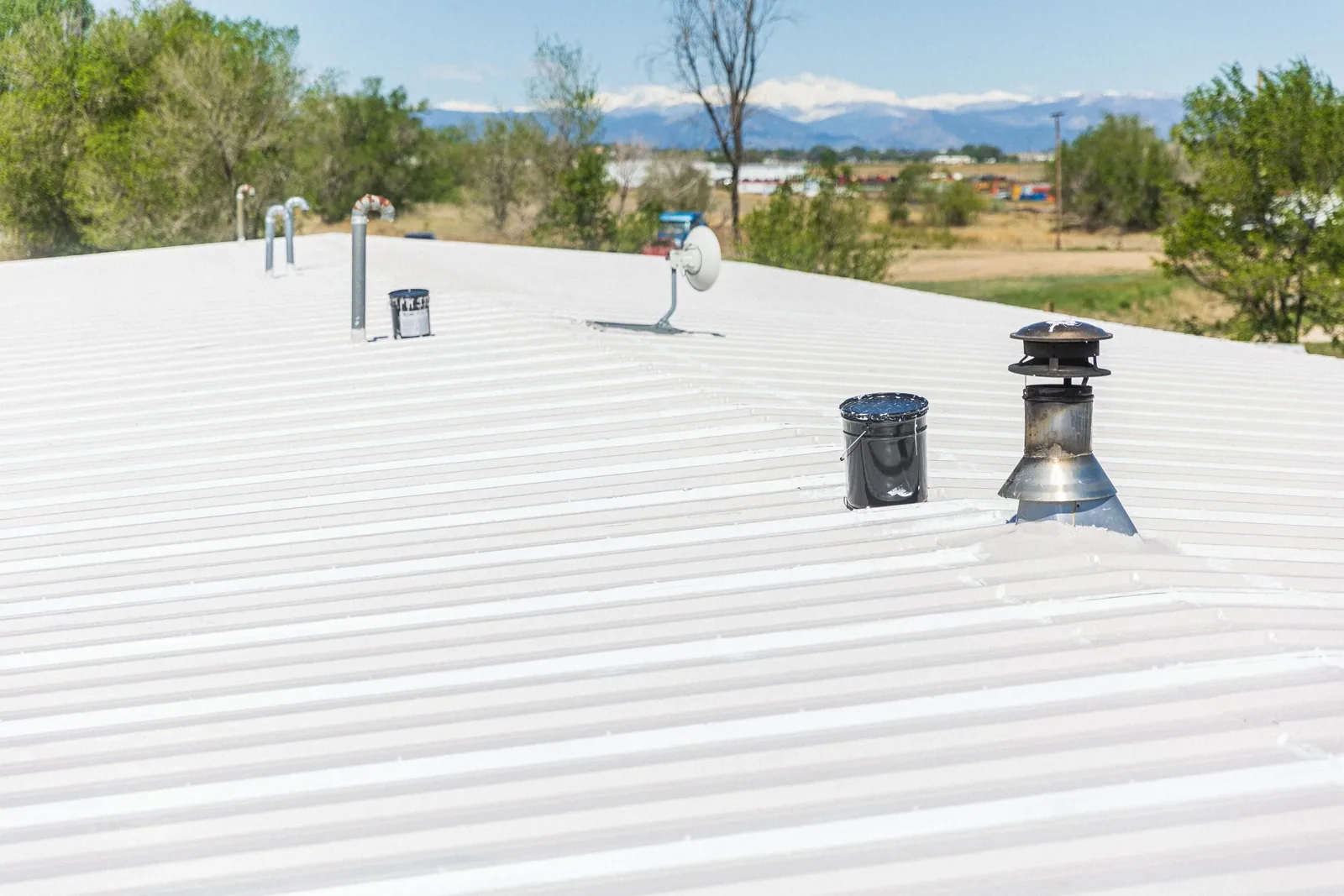
The sequence is shorter than a tear-off but not casual. We repair the old roof first: blisters and open seams are cut out, wet insulation is replaced, and loose flashing is removed. A cover board or separator layer goes over the old surface to protect the new membrane from asphalt, gravel and old adhesive. The new membrane may be mechanically attached through the old roof into the deck or fully adhered, depending on the approved assembly and substrate. Single-ply systems such as TPO and PVC are common choices, and an existing metal roof with failing fasteners may suit a metal roof retrofit instead. An aging built-up roof that is dry and sound can sometimes take spray polyurethane foam, which adds insulation and seals the surface in one assembly, provided the substrate passes inspection first.
At roof edges, the new height can affect water flow and attachment. Check termination bars, parapet caps, counterflashing and overflow openings as part of the detail design, not as an afterthought. The final scope should identify which components are reset, which remain and how the tie-in prevents water from reaching the old assembly.
Height changes at every edge
An extra layer makes the roof taller, and every detail at the perimeter has to follow it. Wall flashings that were tall enough yesterday may now fall short of the minimum height above the new surface. Parapet caps, edge metal and coping need to be extended or replaced, and with a recorded gust of 92 mph at South Bend, the edge attachment is where we spend extra time. Curbs, pipe supports and drain bodies all sit lower than the new surface will, so each one is raised or reset. The work on rooftop equipment curbs and supports is as much a part of the recover as the membrane, because a curb left at the old height is a leak waiting for the first spring melt.
Less noise, same notice
A recover moves faster than a tear-off and throws far less debris, which is a real advantage on occupied buildings. Because the existing roof generally remains in place, the project may involve less tear-off debris, though installation noise and access still need coordination. A tenant notice can identify noisy phases, rooftop-unit protection and a contact for building questions. For a retail roof along Grape Road in Mishawaka, where stores stay open through the week, we schedule the heaviest material loading for early morning and keep walkways clear.
After the recover
When the membrane is down, the property manager receives the photo log, the product documentation and the manufacturer warranty paperwork that applies to the installed system. A follow-up inspection after winter can check seams, edge metal and drains for movement or moisture. One practical limit matters: a recover adds service life, but the layer underneath is still old, and the next decision is only deferred. Putting it on a schedule in a capital plan keeps that decision from arriving as an emergency.
Commercial Roofing Questions
Can any commercial roof be recovered?
No. A recover needs dry insulation, a sound deck and a code position that allows another layer. Roofs with wet insulation, with more than one existing layer, or with a deck that has corroded at the drains are replacement jobs. We confirm each condition with cores, a probe and fastener pull tests, then document which scope fits. Installing over hidden wet insulation can create additional repair needs, so testing should precede the decision.
Will a recover affect the manufacturer warranty?
Warranty terms differ by manufacturer and by system, and some will not warrant a membrane installed over certain existing roofs. We ask the manufacturer for its requirements before the scope is final, and we write down what the paperwork will and will not cover. If a manufacturer refuses to warrant the overlay assembly, that is a finding worth knowing before the work starts, not after.
How do you know the insulation is dry without tearing the roof off?
We combine three tools. Core cuts give a direct look at the insulation at chosen points, a moisture meter reads across the surface, and an infrared survey shows temperature patterns that trace wet areas between the cores. No single method is complete alone. Together they let us map wet zones, cut them out and repair them before the overlay, or call the whole roof a replacement if the wet area is too large.
Does an extra layer add too much weight for the structure?
It can, and snow is the reason to check. Snow in South Bend totals 64.5 inches in an average year, and drift load builds against parapets and rooftop units. Adding a layer adds permanent weight to a roof that must still carry that snow. On older buildings, especially steel-deck and joist roofs, we ask for the structural drawings or an engineer's review when the existing deck shows deflection. A recover over a roof that is already stressed is not worth the risk.
How long does a recover buy compared with a replacement?
A recover buys time, but how much depends on the condition of what is underneath and the system on top. A dry, sound existing roof under a new single-ply membrane gives the owner a useful interval before the full replacement. A weak substrate shortens it. We give you the reasoning and the limits in the written scope instead of a single number, so the decision can be made against your capital plan.
Related Roof Work
- Commercial Roof Replacement
- Metal Roof Retrofit and Restoration
- Spray Polyurethane Foam Roofing
- Edge Metal, Coping and Gutter Repair
- Rooftop Equipment Curbs and Supports
- Occupied Building Reroofing
- Grape Road in Mishawaka
- Roof Capital Planning
- Infrared Roof Moisture Surveys
Talk to Our Team
Tell us where the water is landing, what the roof is made of and when the building is easiest to reach.
Phone: 555-555-5555
Email: [email protected]