A drip lands on a pallet in the third bay, and by the time the forklift driver radios it in, there are four more along the same purlin line. That pattern belongs to an exposed-fastener metal roof, the kind of failure a plant or warehouse in South Bend, IN can see from the floor. The panels themselves are usually fine. The screws that hold them, and the little rubber washers under each head, are what wore out. A building in that condition has choices: restore the roof it has, cover it with a new one, or tear it off. The first two options often work, and the evidence is easy to read from the floor.
Why the screws let go
An exposed-fastener panel is pierced by thousands of screws, each sealed by a washer that has to survive sun and weather. South Bend has recorded a low of -22 F and a high of 104 F, and the roof passes through a freeze and a thaw many times between October and May. Each cycle makes the panels shift slightly on their fasteners. Over time the holes elongate, the washers crack in ultraviolet light, and screws back out a fraction of an inch, enough to let water track down the threads. Rust follows at the laps and along the ridge, where moisture sits. We start with a walk down the panel rows, marking every raised screw, every stained washer and every lap with a rust line, and we photograph a sample so the scope is based on what the roof shows.
Tighten, seal and coat
When the panels are sound, restoration is the lowest-disruption path. The crew replaces failed fasteners with larger, corrosion-resistant ones, installs new washers, and seals the laps with butyl tape or sealant. Rust is wire-brushed and primed, the whole surface is cleaned, and a coating goes over everything. Silicone coatings shed ponded water and resist ultraviolet light, while acrylic coatings are lighter and often priced lower. The scope of roof coating and restoration depends on the panel condition and the thickness of what remains. Restoration does not make a worn panel new, but a roof with sound steel underneath can get a good deal more service for a fraction of the cost of replacement.
A new roof over the old one
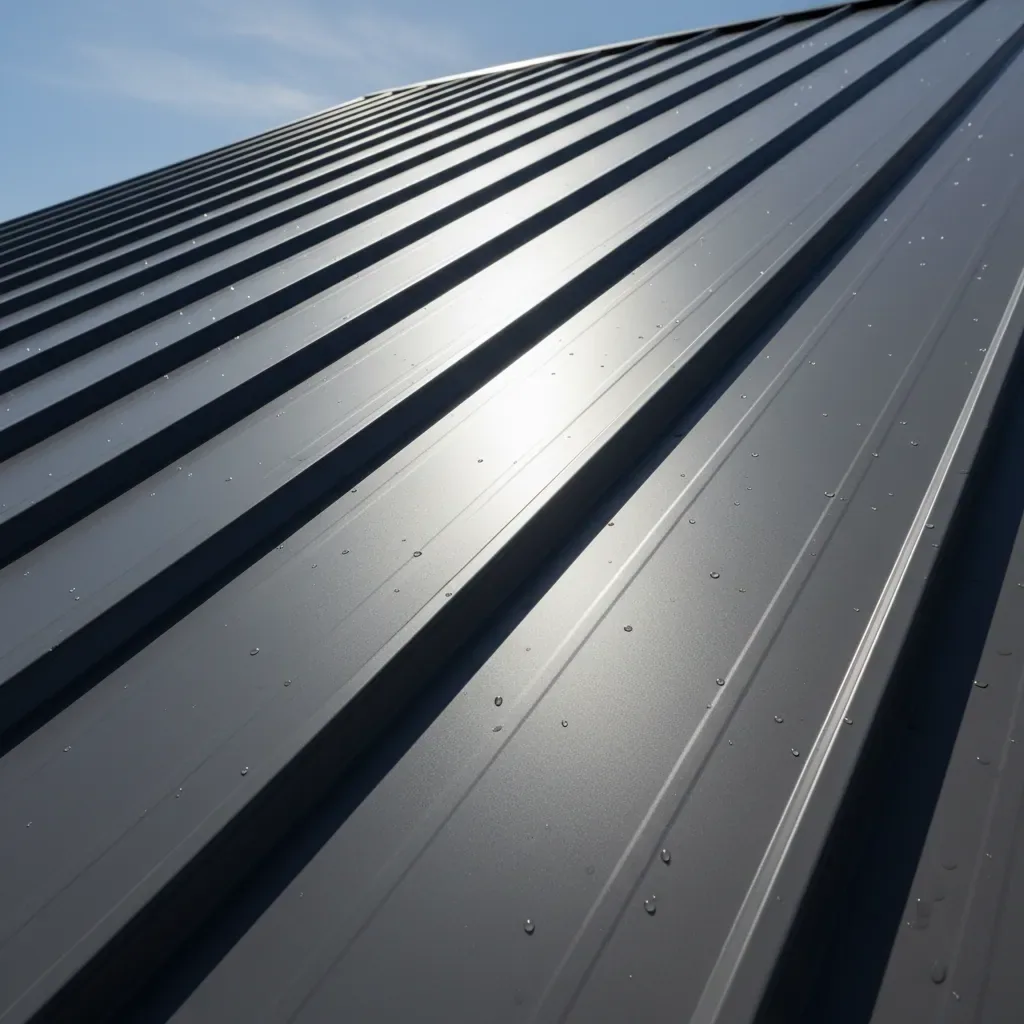
When the steel is too far gone for coating, or the owner wants insulation and a longer horizon, a retrofit system installs new framing over the old panels and a new roof on top. Sub-purlins span the existing rib pattern, insulation blankets fill the gap, and a new standing seam roof covers it all with concealed clips and no exposed screws. The old roof stays in place during the work, which keeps the building dry and avoids the debris of a tear-off. The structure still has to carry the added weight and the drifted snow, and the building department has a say in the insulation level, with the 2010 Indiana energy code and its ASHRAE 90.1-2007 reference the current edition. We ask for the original drawings or have an engineer review the frame before the scope is final.
Leak or condensation
Not every drip is a leak. A metal roof without insulation or with a warm, humid space beneath it can sweat on cold mornings, and the water looks exactly like a leak on the floor below. Rain, sleet or snow reaches the roof on roughly 148 days of an average year, which supplies plenty of damp, cold mornings to cause it. We check the timing first: drips that appear on clear, cold mornings point to condensation, and drips that follow rain or melt point to a roof opening. An infrared moisture survey helps where insulation is in place, and a look at ventilation and process humidity often explains the rest. Fixing condensation by replacing screws wastes the money. Finding the real source first saves it.
Plants, storms and loose panels
Industrial towns east and south of the city have plenty of plant buildings, and any of them with a metal roof faces this question. Elkhart has RV and manufacturing plants such as Forest River, Keystone and NIBCO, Wakarusa has Forest River and a Thor plant in a former Monaco Coach facility, and Hoosier Racing Tire has its headquarters and warehouse in Lakeville. When a June 2019 storm damaged buildings in Lakeville and on the Mishawaka bypass, it was a reminder that loose panels and ridge caps are where wind gets in. After any storm, we check end laps, ridge caps and eave trim, since a lifted edge on a metal roof can open a whole row to the weather. For manufacturing plant roofing, the schedule follows production, not the other way around.
What stays on file
Every retrofit or restoration job ends with a photo log of the fastener work, a record of the sealant and coating products, and a drawing of what went on top of what. A visit in early spring checks the laps, the flashings and the gutters after the winter load has come off. For occupied buildings, we also keep the tenant notice and the safety plan with the file, so the next property manager has the whole story.
Before covering a panel roof, we check the purlins, clips, deck condition, and the way the eaves, valleys, and ridge shed water. A retrofit frame changes the load path and raises the finished surface, so gutters, wall transitions, rooftop equipment, and snow guards need to be coordinated with it. The estimate separates those edge and penetration details from the field panels.
Commercial Roofing Questions
The screws on our panels keep backing out. Is it cheaper to keep tightening them?
Tightening buys a season, not a fix. A screw that has backed out sits in an enlarged hole with a cracked washer, and turning it down again only pinches the washer. Replacing it with a larger fastener and a fresh washer, then sealing the laps, resets the roof. If the steel is sound, that approach costs far less than replacement.
Can an old metal roof be coated, or does it need to come off?
Coating works on a sound panel. It does not rescue steel that has rusted through or panels that have lost their fastener holds. We probe the rust, test for adhesion and check the fasteners across the field. If the steel passes, we clean, prime, fix the fasteners and coat. If it fails, a retrofit or replacement is the right answer.
How do I know if the drips are leaks or condensation?
Timing gives the first clue. Condensation appears on cold, clear mornings or when the interior is humid, while leaks follow rain or melt. We also look for rust patterns, wet insulation and open laps, and use an infrared scan where insulation is present. If condensation is the cause, the cure is insulation or ventilation, not new screws.
Will a retrofit add too much weight to a light steel frame?
The new panels and framing add modest weight, but snow load, wind and the existing frame all need review. We request drawings or have an engineer check the structure, then size the sub-purlins and clips for what the frame can carry. If the frame is already stressed, we tell you before any design is drawn.
What happens in the bays under the roof during a retrofit?
The old panels stay in place while the new framing and roof go on, so the building stays dry and production usually continues. We plan lifts and material staging away from active doors, protect racking and equipment where needed, and send a notice to every tenant or shift supervisor before work starts in their area.
Related Roof Work
- Silicone Roof Coatings
- Acrylic Roof Coatings
- Roof Coating and Restoration
- Standing Seam Metal Roofing
- Infrared Roof Moisture Surveys
- Elkhart
- Lakeville
- Manufacturing Plant Roofing
- Occupied Building Reroofing
Talk to Our Team
Tell us where the water is landing, what the roof is made of and when the building is easiest to reach.
Phone: 555-555-5555
Email: [email protected]