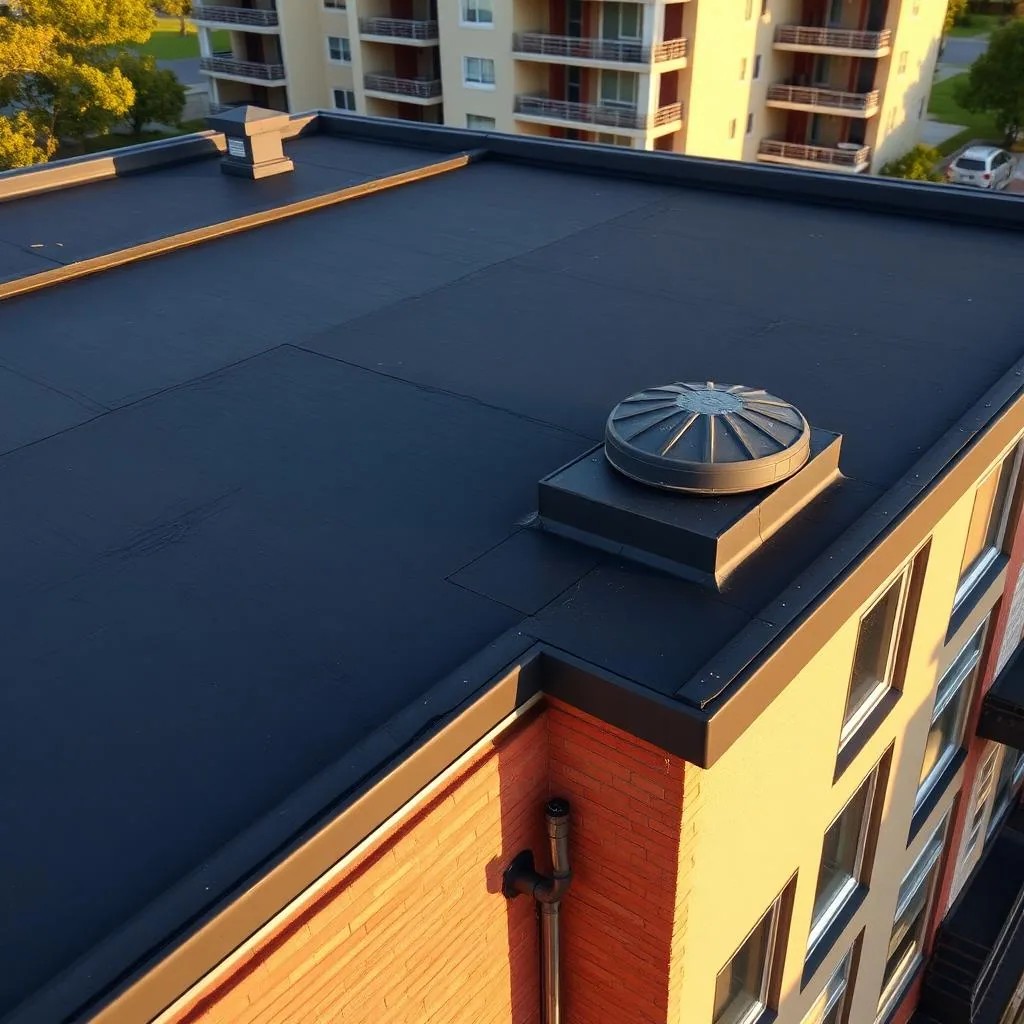
On a campus that runs its own fire department, the fire office is on the first call about any torch-applied modified bitumen job, ahead of the roofer. The University of Notre Dame, at the heart of the Notre Dame area, operates its own police, fire, water and power systems, and that arrangement makes a point that applies across South Bend, IN: a roof that is installed with heat has to be planned with the people who answer for the building's safety. Modified bitumen is asphalt blended with polymers and reinforced with fabric, laid in plies and surfaced with granules or a coating. It is tough, easy to repair and familiar to roofers in the market. The way it is applied, and not only the sheet itself, is what shapes the schedule and the bid.
SBS and APP are different sheets
Two polymers sit behind most modified bitumen. SBS is rubber-like, so it stretches and recovers, and it stays flexible in a cold January. APP is plastic-modified, so it holds its shape in heat and tolerates sunlight well, but it is stiffer in the cold. South Bend's long cold season makes temperature range and installation conditions important parts of the specification. We compare the roof's exposure, substrate, drainage and approved assembly before choosing between SBS and APP for the field and base flashings. APP still has a place on roofs with long, hot exposures and on details where a stiffer cap is wanted. We choose by looking at the roof: slope, exposure, the existing substrate, and the application method the building allows. A sheet picked for its price alone often fails at the first winter detail.
Torch, adhesive or self-adhered
Every modified bitumen roof is bonded to its base in one of three ways. Torch application heats the sheet with a flame and flows the asphalt into the substrate. Cold-applied systems use adhesive and no flame, and self-adhered sheets stick through a peel-and-press backing. Torch work calls for hot work permits, fire extinguishers within reach and a fire watch that continues after the last flame goes out. Many owners and insurers prohibit open flame near combustible decks and old insulation, so we ask early what the building allows. Cold-applied and self-adhered sheets avoid the flame, but they need warm, dry surfaces and primers that behave poorly on damp November mornings. On occupied building reroofing, odor and air-intake locations are part of the same conversation, and the facility team signs off on them before we start.
Plies and what lies beneath
A typical modified bitumen system has a base sheet, one or more ply sheets and a cap sheet, and each layer has a job. The base sheet separates the system from the substrate, the plies add redundancy, and the cap carries the granules that protect the asphalt from the sun. Under all of it sits insulation and, increasingly, a cover board that resists foot traffic and fastener pull-through. The layers make leaks hard to start but also hide them once they start. Water that enters through a pinhole travels through the plies and soaks the insulation below, so we insist on core cuts or an infrared scan before recovering an older roof. The same layered logic is the reason people compare modified bitumen with built-up roofing, its older cousin, which uses similar materials in a different order.
Hail, boots and granules
The granulated cap is a rugged surface for a flat roof. It takes foot traffic from service techs better than a smooth single-ply, and it shrugs off many small impacts. It does not make the roof immune. The June 1, 2019 storms brought hail up to 1 inch to South Bend, and a stone like that can bruise the cap and loosen granules, exposing asphalt that ages quickly in sunlight. After a storm we examine the field for bare spots and cracked laps and document anything that belongs in a hail damage claim. Granules that collect in downspouts are not always an alarm, since every roof sheds some as it weathers, but a heavy accumulation near the drains is worth a closer look. A sound but worn cap can often be given more life with a reflective roof coating.
Flashings, freeze-thaw and the wall line
On a modified bitumen roof, the field sheet is rarely what leaks first. The flashings are. The membrane rolls up the wall, ties into a counterflashing or a metal cap, and has to move with the wall as the building heats and cools. Measurable precipitation falls here on roughly 148 days of the year, and the cycles of thaw and refreeze open any weakness in the flashing. Drift snow builds against parapets and rooftop units, then melts behind the base sheet and stresses every termination. The usual flashing failure repair is cutting out a cracked base flashing and replacing it with a reinforced piece lapped over the field. The edge metal and coping above it gets checked in the same visit, since a loose cap lets in water faster than any seam.
Reading an older roof and its makers
An older modified bitumen roof reveals its history in blisters, ridges at the laps, alligatored cap sheets and slipped flashings. Those signs help us estimate how much service life is left, and the cores confirm what the surface suggests. Several manufacturers make the sheets, among them Soprema and GAF, and each has its own approved assemblies, adhesives and flashing details. We install and repair to the system on the roof and keep the photo log and product records for the property manager. Once the snow is gone we go back over the laps and the wall flashings, because the first thaw shows what the winter did. A single-ply alternative such as EPDM roofing uses different seam and flashing methods, so the existing assembly controls the choice.
Commercial Roofing Questions
Our insurer asks about open flame. Is a torch the only way to install modified bitumen?
No. Cold-applied adhesives and self-adhered sheets avoid the flame entirely, and they are the usual answer when a building bans torch work. They require warm, dry surfaces and careful priming, so the schedule is more sensitive to weather. We write the application method into the scope and the permit plan, so your insurer sees the controls up front.
Which handles South Bend winters better, SBS or APP?
SBS is the usual pick for the field and the flashings because it stays flexible in the cold and recovers after movement. APP is stiffer but holds up well in heat and sun. Many roofs use SBS for most of the system and reserve APP for specific details. We look at the roof's exposure, then recommend the sheet that fits it.
Why are granules collecting in my downspouts?
Every granulated roof loses some as it weathers, particularly in the first year. A steady, heavy stream after a storm or a thaw suggests the cap is wearing or was bruised by hail. We check the field for exposed asphalt, and if the cap is sound but thin, a coating can protect it. If the asphalt is cracked, repair or replacement is on the table.
Is it worth coating an old modified bitumen roof instead of replacing it?
Coating makes sense when the insulation is dry, the laps are intact and the cap still has body. It adds reflectivity and seals the surface for a further stretch of service. It does not fix wet insulation or open flashings, so we repair those first. If cores show moisture across the field, the roof has moved past coating and into replacement.
How many plies does a roof like ours really need?
The assembly the manufacturer details for your deck, insulation and exposure tells us. Some systems use a base and a cap, others use extra plies for redundancy or heavier traffic. We follow the maker's published system for the sheet on your roof and explain in the scope why each layer is there, so you see what the extra ply buys.
Related Roof Work
- Notre Dame Area
- Occupied Building Reroofing
- Built-Up Roofing (BUR)
- Hail Damage Roof Repair
- Roof Coating and Restoration
- Flashing Failure Repair
- Edge Metal, Coping and Gutter Repair
- Soprema Roofing
- EPDM Roofing
Talk to Our Team
Tell us where the water is landing, what the roof is made of and when the building is easiest to reach.
Phone: 555-555-5555
Email: [email protected]