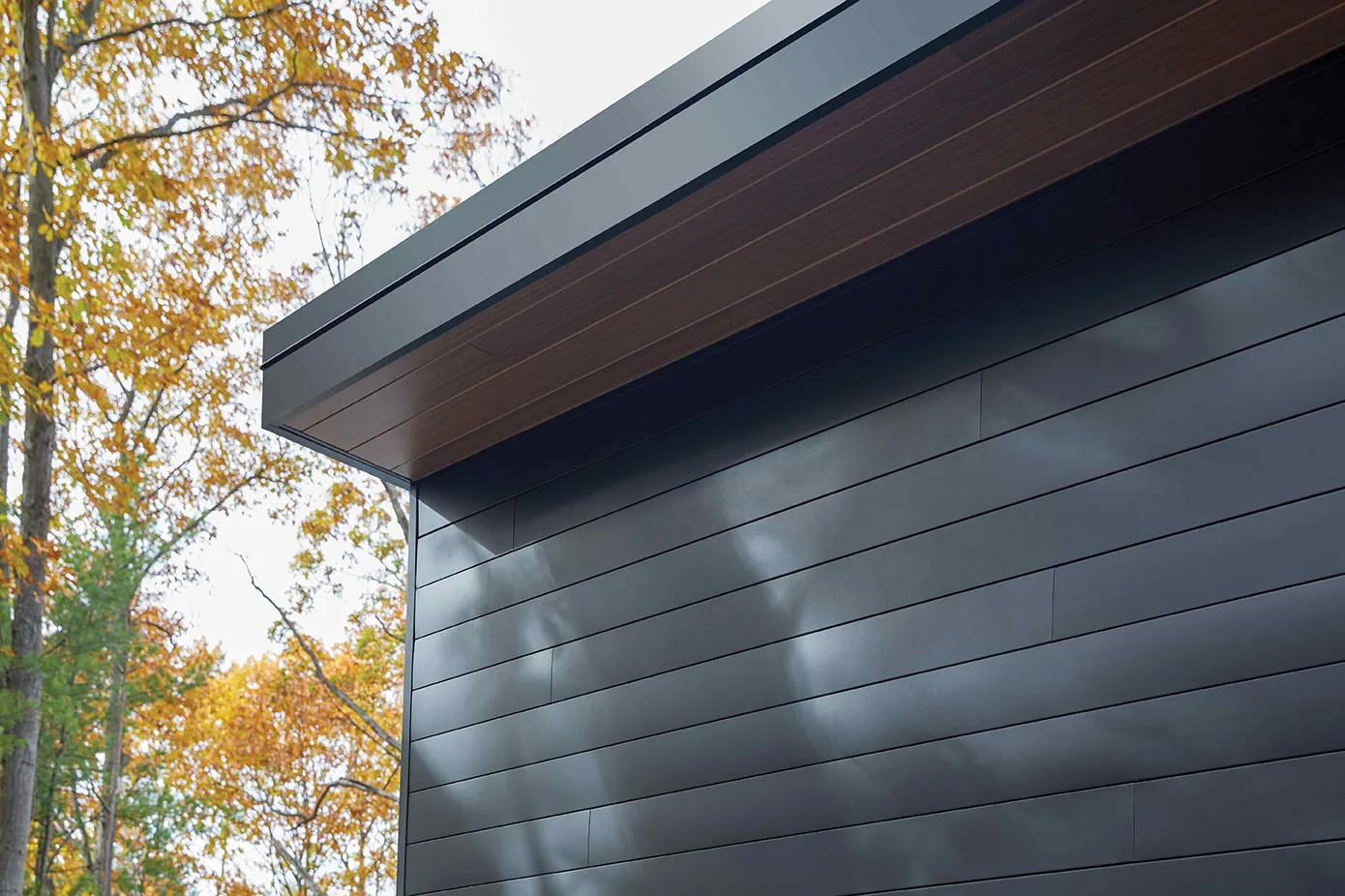
A ten-foot length of coping is lying in the parking lot on Monday morning, and a facilities coordinator is standing beside it deciding whether to rope off the walkway or call a roofer first. The answer is both. A loose edge is a hazard to anyone walking under it, and it is also an open invitation to the next rain, which will run straight into the top of the wall. In South Bend, IN the perimeter of a commercial roof takes the hardest punishment the climate offers, from wind to ice to a swing in temperature wide enough to move metal along its fasteners. Quiet, repetitive repair at the edge is what keeps that morning from happening.
Why the perimeter fails first
Wind flows over a flat roof and speeds up as it curls around the edge, which creates suction strongest at the corners and along the perimeter. The membrane, the cleat and the fasteners at that line are carrying the greatest load on the whole roof. A 92 mph gust in August 1996 is the strongest this city has logged, and a building does not need a record gust to lose coping. Taller structures feel it first, and the South Bend hotel, the second-tallest building in the city, stands higher into the wind than almost any other roof in South Bend. Edge metal is judged on how much suction it resists, so we match the metal gauge, the cleat and the fastener pattern to what that location will see, not to a generic specification.
How coping is held on
Coping is the cap that covers the top of a parapet wall. It sits on a continuous cleat or on a row of clips, and its joints are bridged with splice plates and sealant. When any of these fail, the cap lifts on one side, water gets under it and runs behind the face of the parapet. The signs on the ground are small: a gap at a joint, a stain on the wall below, a fastener head that has backed out. When we find them, we reset the cleat, replace failed fasteners and renew the sealant at every joint. Where the substrate underneath has rotted from repeated wetting, we replace it before we reset the cap. A full wind damage repair frequently begins with exactly this kind of loose coping.
Gutters, ice and the weight they carry
A gutter that drains well in July can pull itself off the fascia in January. Ice forms along the edge where a roof sheds snowmelt into a cold gutter, builds in layers and loads the hangers well beyond what they were designed to carry. In a place that averages 64.5 inches of snow a year, an undersized or poorly supported gutter does not last long. We check hanger spacing, the pitch toward the downspouts and the condition of the outlets, and we replace lengths that have been bent or split. Downspouts get the same attention. A leader that discharges onto a slab will ice at the base and back up, the same freeze that stops roof drains and scuppers from working in cold weather.
Metal moves with the temperature
South Bend has logged readings of -22 F and 104 F. Steel and aluminum expand and contract across a swing like that, and a long run of metal that has been fastened tight at every point has nowhere to go. It buckles, pulls its fasteners, or tears the sealant at its joints. Properly built edge metal uses expansion joints, slip clips and sealant that can stretch, so each section can move independently. When we see oil-canning, gaps that open and close with the season, or splice plates that have worked loose, we know the original system was too rigid. Repairs add the missing joints and swap rigid fasteners for slotted ones, so the metal can slide and the building envelope stays closed.
Where the membrane meets the metal
Edge metal has a second job: it finishes the membrane. At a drip edge or fascia, the membrane is flashed over a nailer, sealed to the metal flange and covered so water sheds outward instead of curling under. A failure here shows up as a streak running down the wall, or as a membrane edge that has lifted and curled back. We open the edge, check the nailer for rot, replace what has softened, and reflash the membrane before the metal goes back. This is a detail that matters to a roof replacement as much as to a repair, since a new membrane tied into failing metal will not last. When a recover is planned, the same edge work belongs in a roof recover scope.
Working above sidewalks and entrances
Edge work happens over the places people walk, so the plan starts on the ground. We rope off the walkway below, set up protection over entrances, and use lifts or swing stages where a ladder would be unsafe. On a campus like Indiana University South Bend, with 11 primary buildings on 80 acres along the St. Joseph River, edge work can move from building to building so that no single entrance stays closed for long. At a hotel, a casino or a retail center in Mishawaka, we agree on the quiet hours before mobilizing and arrange deliveries around the work. Everything we remove stays in view of a spotter until it leaves the site, and a short written update goes to the manager at the end of each day.
Commercial Roofing Questions
Why does the coping blow off when the rest of the roof looks fine?
The edge sees the highest wind suction of the whole roof, so it is the first part to lose attachment. Older copings were often fastened with a few screws and a bead of sealant, and thermal cycling loosens both over time. A roof can be sound across the field and still have a perimeter that is one gust from letting go. A walk with a pry bar and a close look at every joint tells us whether to reset, reinforce or replace.
Can loose edge metal be repaired, or does it have to be replaced?
Repair works when the metal itself is straight, intact and properly sized, and the problem is in the cleat, the fasteners or the sealant. Replacement is the better call when the metal is bent, corroded, undersized for the exposure, or built without room to move. We show the owner both options with photographs, and we price the repair and the replacement side by side so the choice comes from the roof's condition.
How do we stop gutters from tearing off every winter?
Look at what the gutter is carrying. Ice loads break hangers that are spaced too far apart or fastened into soft fascia, and a gutter that does not drain fully will hold water that freezes. Closer hanger spacing, heavier-gauge material, a steeper pitch to the outlets and a clear downspout path fix most of it. Where the roof dumps a large volume of meltwater into a short run, a different drainage detail is worth considering.
Will new edge metal match the old color and profile?
We match the profile and gauge exactly, and the color as closely as the manufacturer's finishes allow. Weathered metal fades, so a new section may sit next to an older one for a season before they blend. If the building's appearance matters, we replace the whole side of the building in one pass, which avoids the patchwork look. For campus and hospitality buildings, we agree on samples with the owner before ordering anything.
Is the edge metal covered by the roof warranty?
That depends on how the manufacturer writes the warranty and who supplied the metal. Many warranties cover edge metal only when it was installed and tested to the manufacturer's edge standards, and exclude damage from storms beyond a certain wind speed. We read the warranty paperwork before we touch an edge, and we tell the owner plainly whether a repair could affect coverage, so that no one finds out afterward.
Related Roof Work
- South Bend
- Wind Damage Roof Repair
- Roof Drains, Scuppers and Ponding Correction
- Commercial Roof Replacement
- Roof Recover and Overlay
- East Bank Village
Talk to Our Team
Tell us where the water is landing, what the roof is made of and when the building is easiest to reach.
Phone: 555-555-5555
Email: [email protected]