Roof Damage Repair
Repair for wind, hail, tornado, snow, ice, ponding, seam, flashing, puncture and fire damage on commercial roofs in South Bend, IN, with photo-logged reports.
After a storm line crosses St. Joseph County, the damage looks different from every parking lot. One manager sees a coping cap in the lot, another sees a dark patch at a rooftop unit, and a third sees nothing at all until a tenant calls two weeks later. The first job is the same in each case: get a crew onto the roof, find where water is entering, and make the building safe before anything is priced. In South Bend, IN, wind, hail, tornadoes, snow and ice test the same roof details that ordinary wear reaches at seams and flashings. We sort them by what the roof is telling us, then lay out the repair in order.
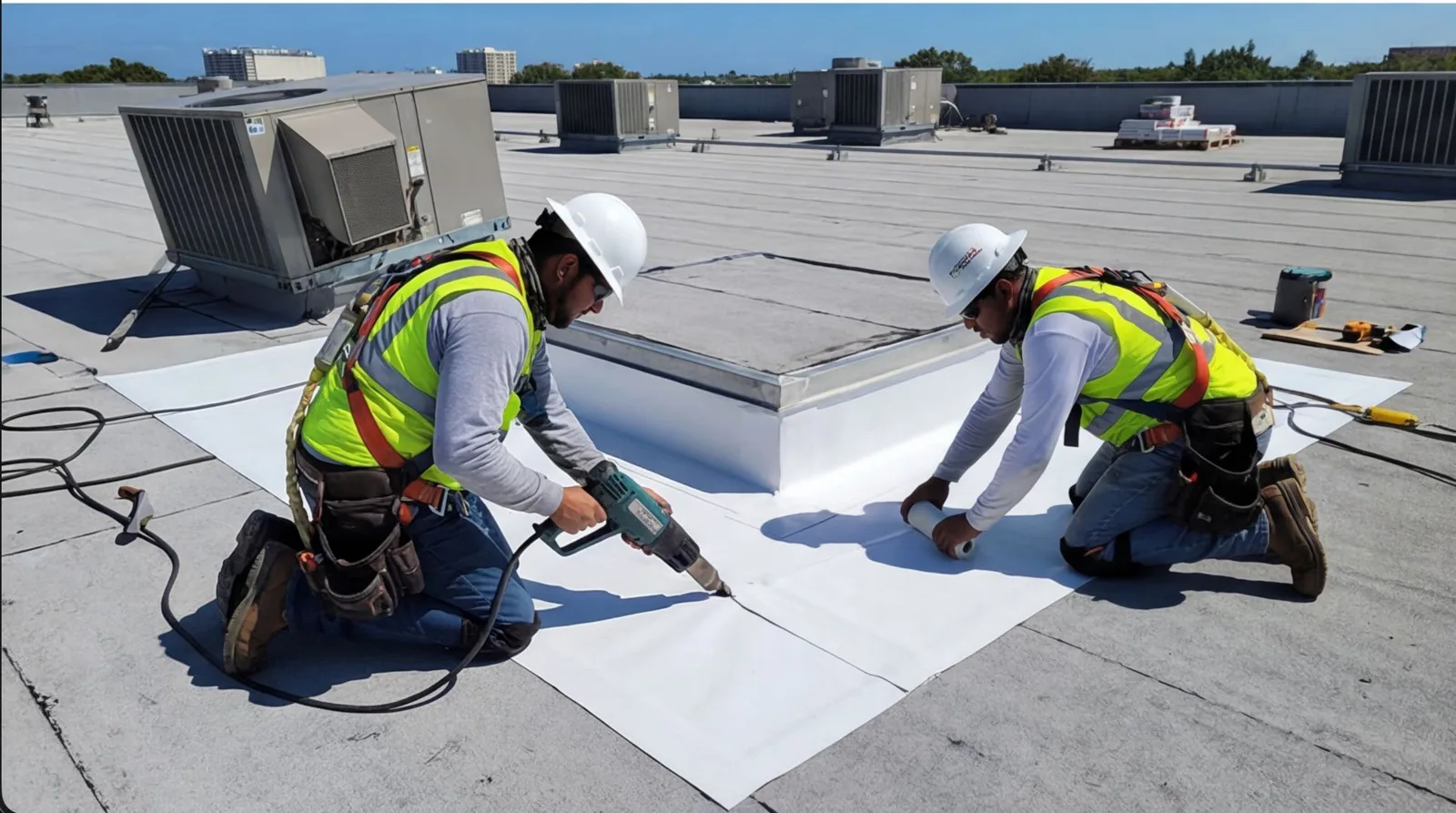
After a storm line crosses St. Joseph County, the damage looks different from every parking lot. One manager sees a coping cap in the lot, another sees a dark patch at a rooftop unit, and a third sees nothing at all until a tenant calls two weeks later. The first job is the same in each case: get a crew onto the roof, find where water is entering, and make the building safe before anything is priced. In South Bend, IN, wind, hail, tornadoes, snow and ice test the same roof details that ordinary wear reaches at seams and flashings. We sort them by what the roof is telling us, then lay out the repair in order.
Wind and tornado damage
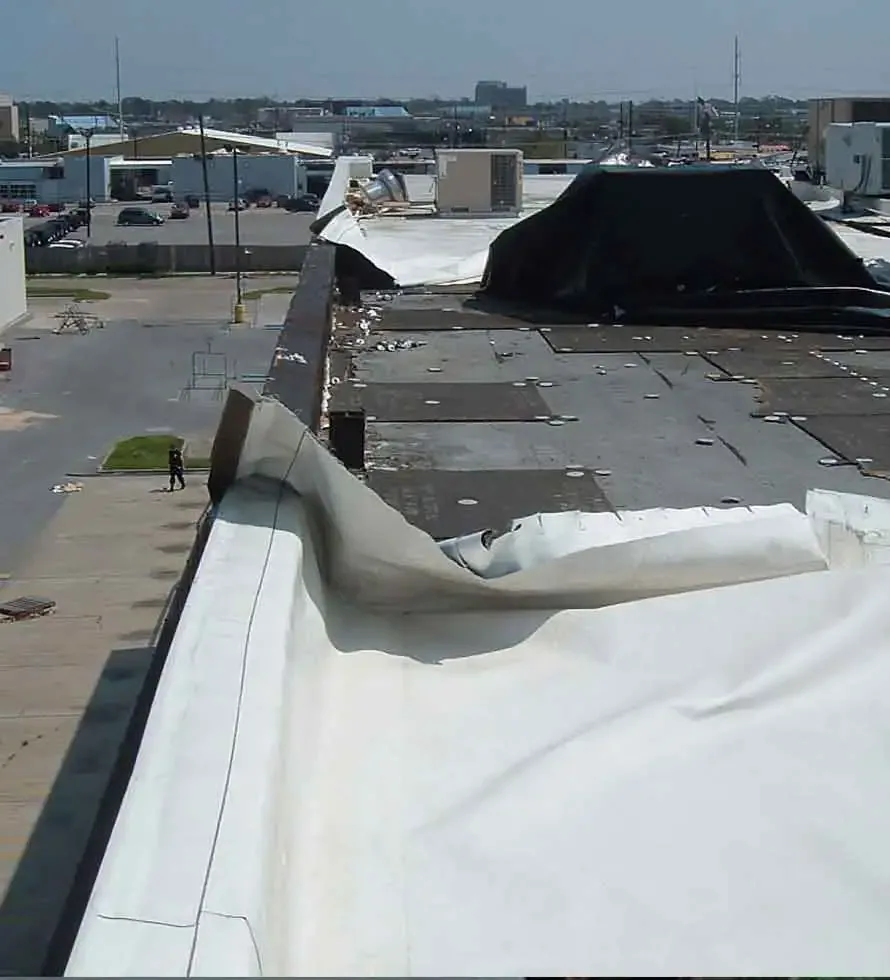
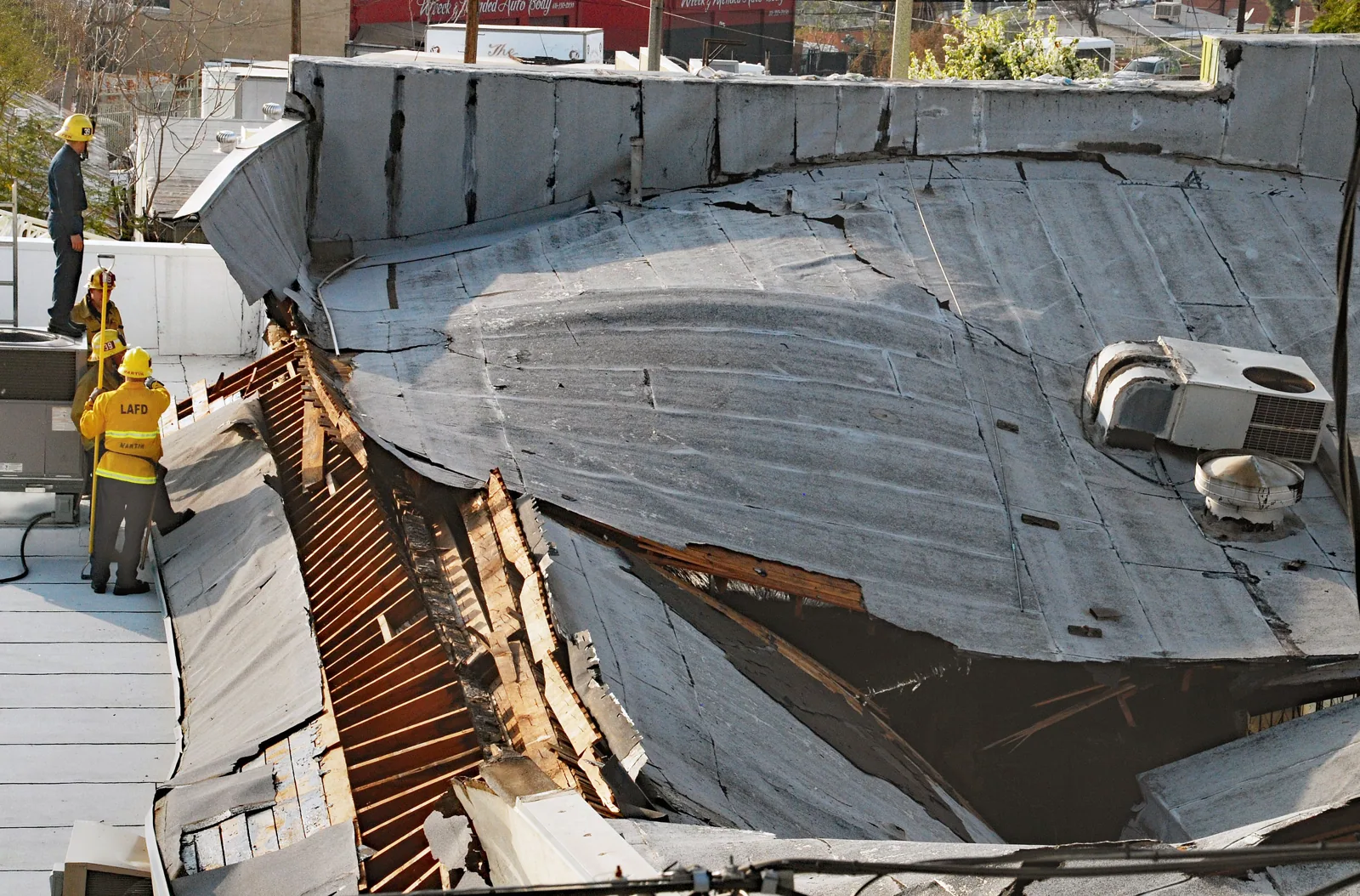
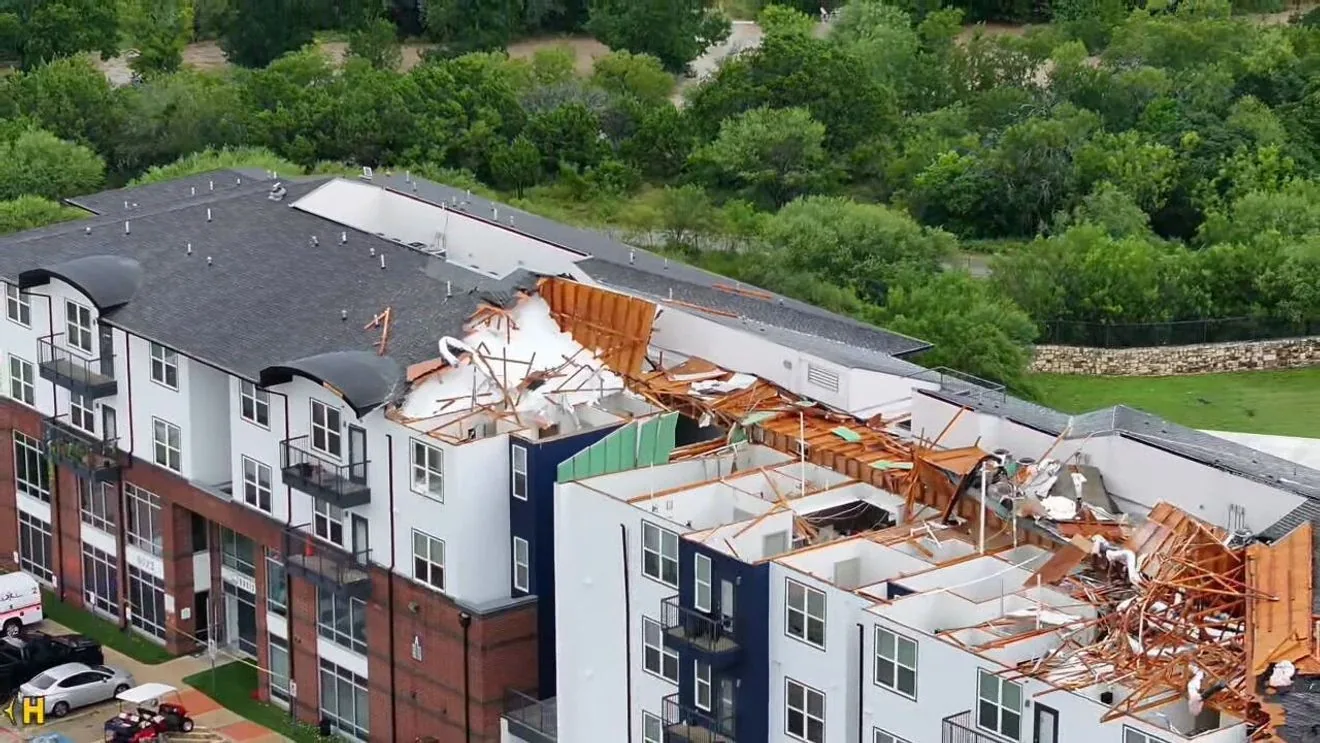
The highest gust on record at South Bend, 92 mph on August 22, 1996, shows what edge metal and attachment must resist. Peeled corners and loose copings are the usual signs, and wind damage repair begins at the perimeter, where uplift concentrates. Tornadoes leave heavier damage. The F3 that crossed northwest South Bend on October 24, 2001 and the October 2016 EF0 tornadoes remain the local reference points, and tornado damage repair usually means tarping, debris removal and a structural check ahead of any membrane work.
Hail you cannot see from the lot
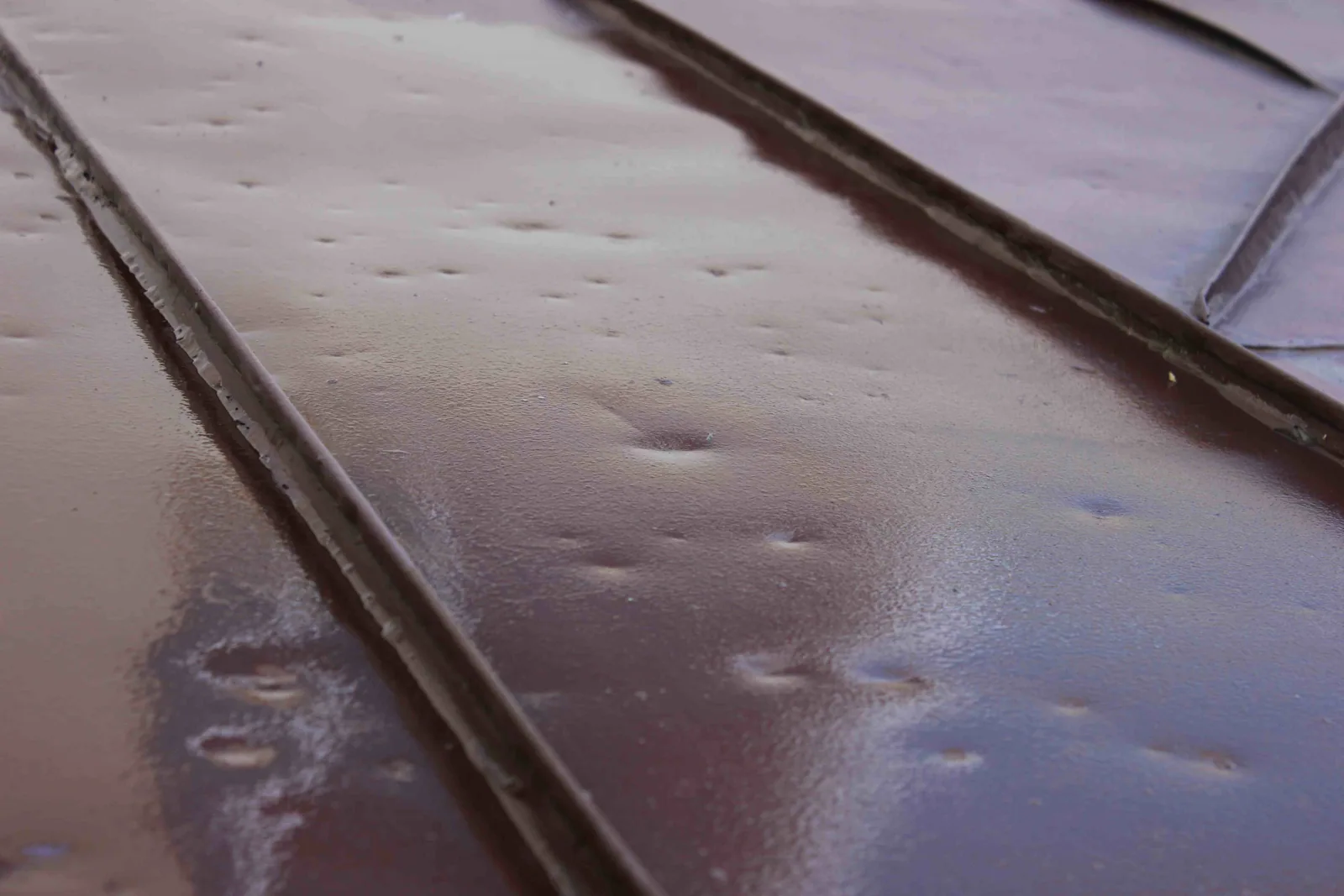
The storms of June 1, 2019 brought hail of about an inch to South Bend and 1.25 inches near Crumstown. Hail that size can bruise a membrane, fracture insulation beneath it and open granule loss on cap sheets without leaving a visible hole. Hail damage repair relies on a hands-on test of the surface and a moisture scan when the damage might be hidden, and the findings go into a photo log suited to an insurer.
Snow, ice and standing water
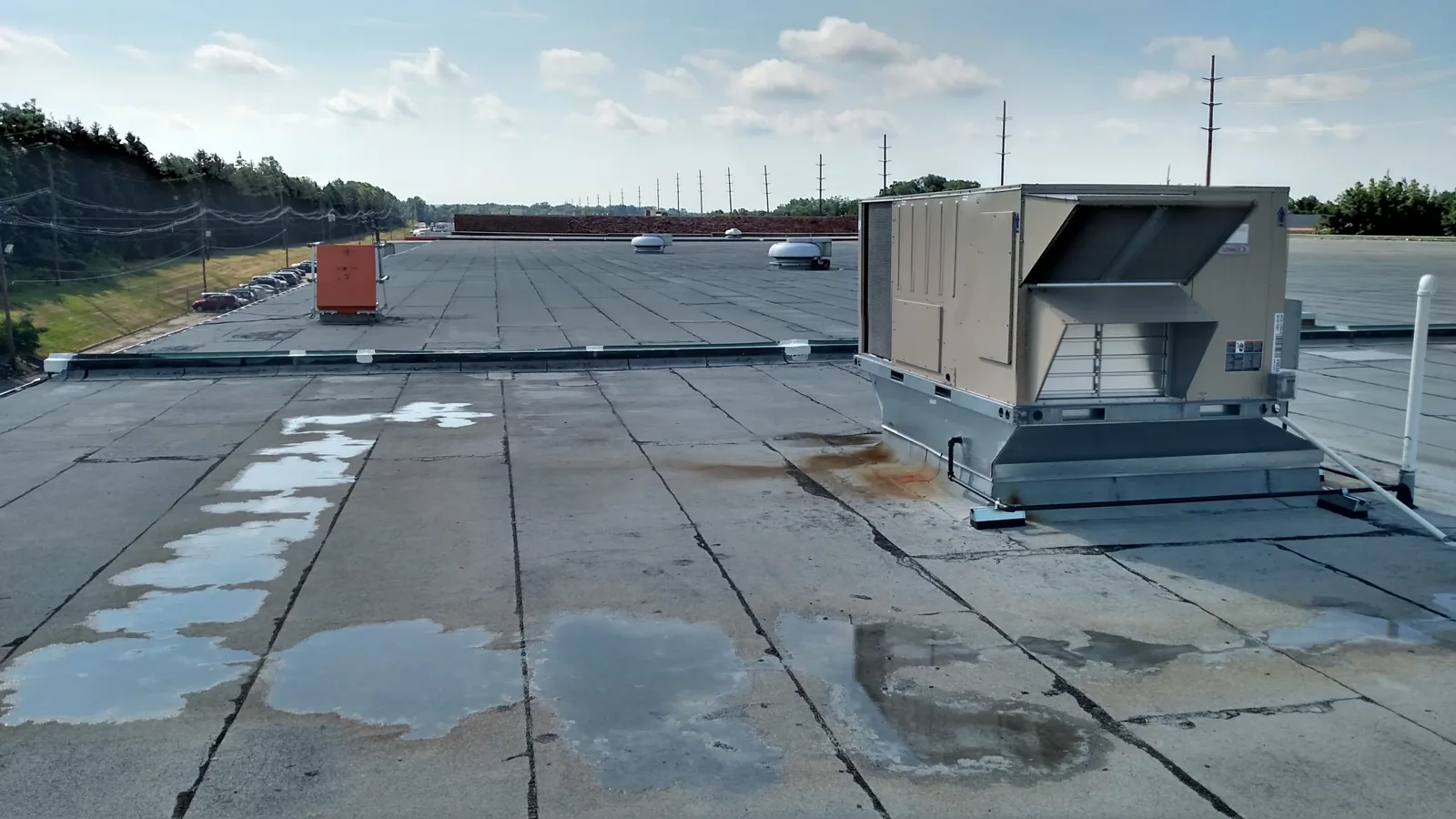
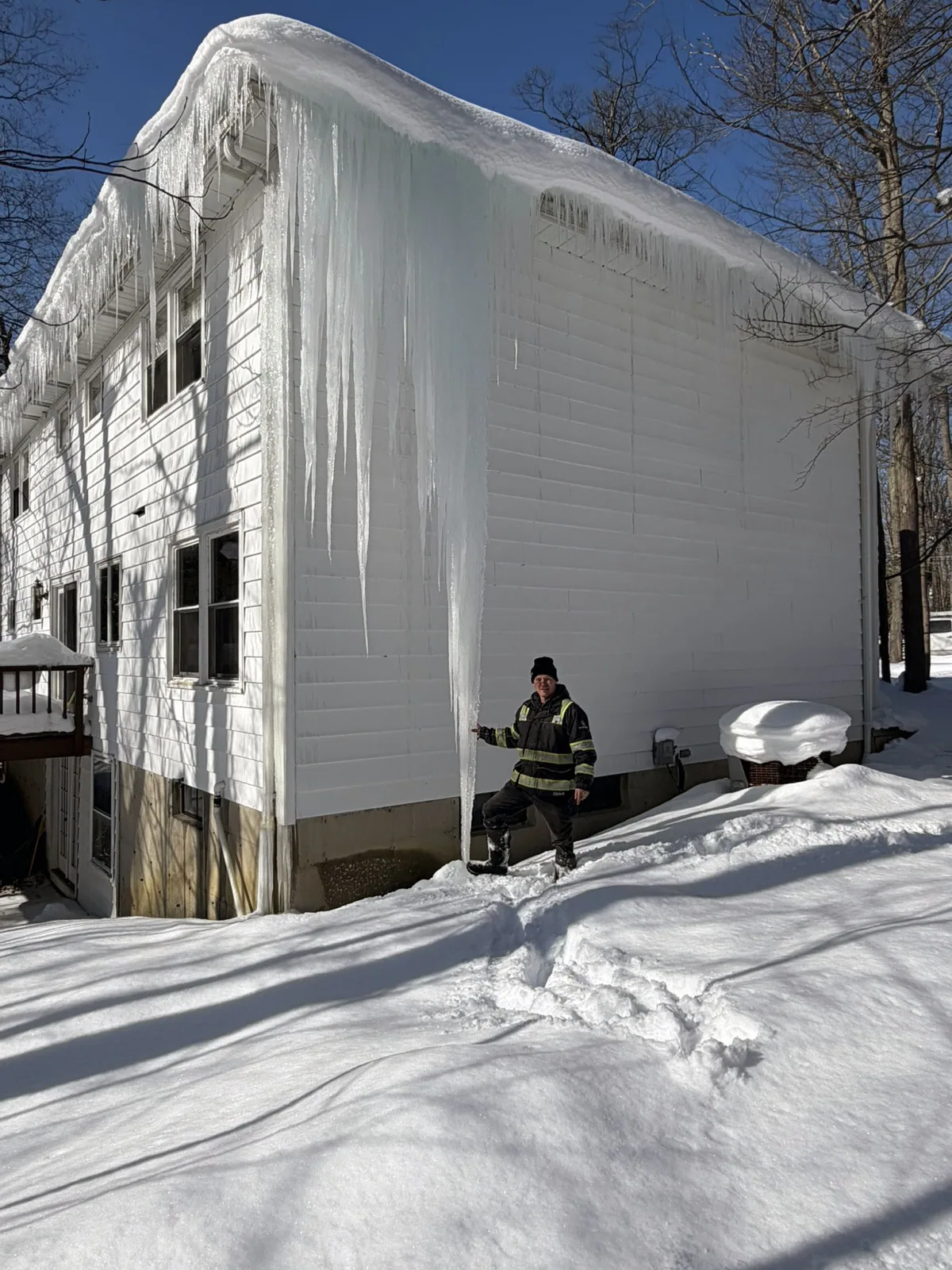
Winter loads a flat roof slowly. Drifts build against parapets and rooftop units, ice closes the drains, and the first warm afternoon sends meltwater looking for the weakest lap. Snow and ice damage repair starts with clearing drains and scuppers and checking the deck for deflection. South Bend once took 4.88 inches of rain in 24 hours, on August 2 and 3, 1995, a reminder that summer water matters too, and ponding water repair deals with low spots, blocked drains and insulation that has gone soft underneath.
Wear that turns into a leak
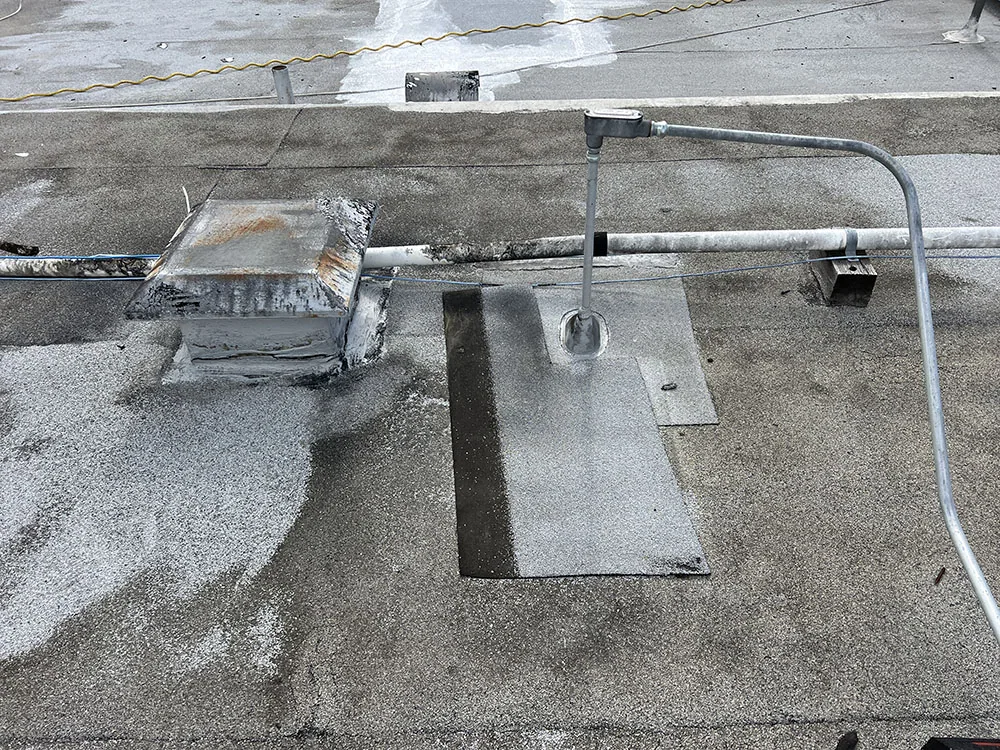
Not every leak starts with a storm. A flashing that has pulled away, a seam that has opened after years of freeze and thaw, or a puncture from a service call can let water in on a calm day. After a fire, fire damage repair adds heat-distorted membrane and water from hoses to the picture. After a storm in Mishawaka or anywhere else in the county, emergency roof repair handles the first hours while the permanent plan is written.
Commercial Roofing Questions
How soon after a storm should the roof be checked?
As soon as it is safe to get up there. Early photographs tie the damage to the storm date, which supports a claim, and a quick dry-in keeps a small opening from becoming wet insulation across a whole bay.
Is a patch enough after wind has lifted part of a membrane?
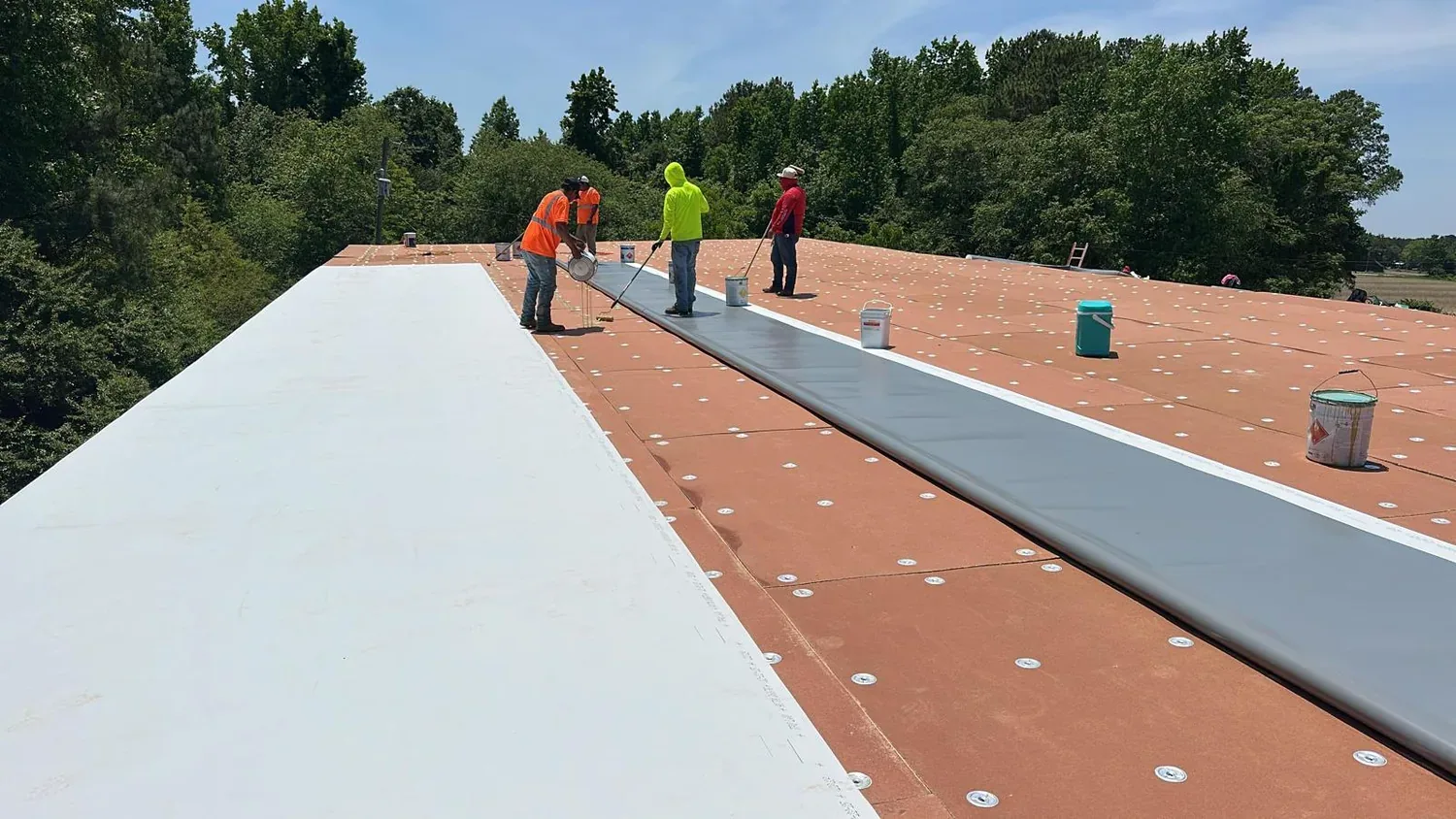
A patch works when the lifted area is small and the attachment around it is sound. If the sheet has pulled loose across a wider zone, the crew will test the fasteners or adhesive nearby before recommending anything.
A tenant calls during lake-effect snow. What is the first step?
We confirm safe access, protect the room below and locate the active path as conditions allow. A temporary dry-in comes before the permanent repair, and the crew photographs what was visible before moving snow or loose material.
Can permanent work wait until spring after an emergency visit?
It can when the roof is safe and dry-in remains secure. The follow-up visit checks the temporary repair after a thaw, then sets the permanent scope from the exposed membrane, insulation and deck.
Talk to Our Team
Tell us where the water is landing, what the roof is made of and when the building is easiest to reach.
Phone: 555-555-5555
Email: [email protected]