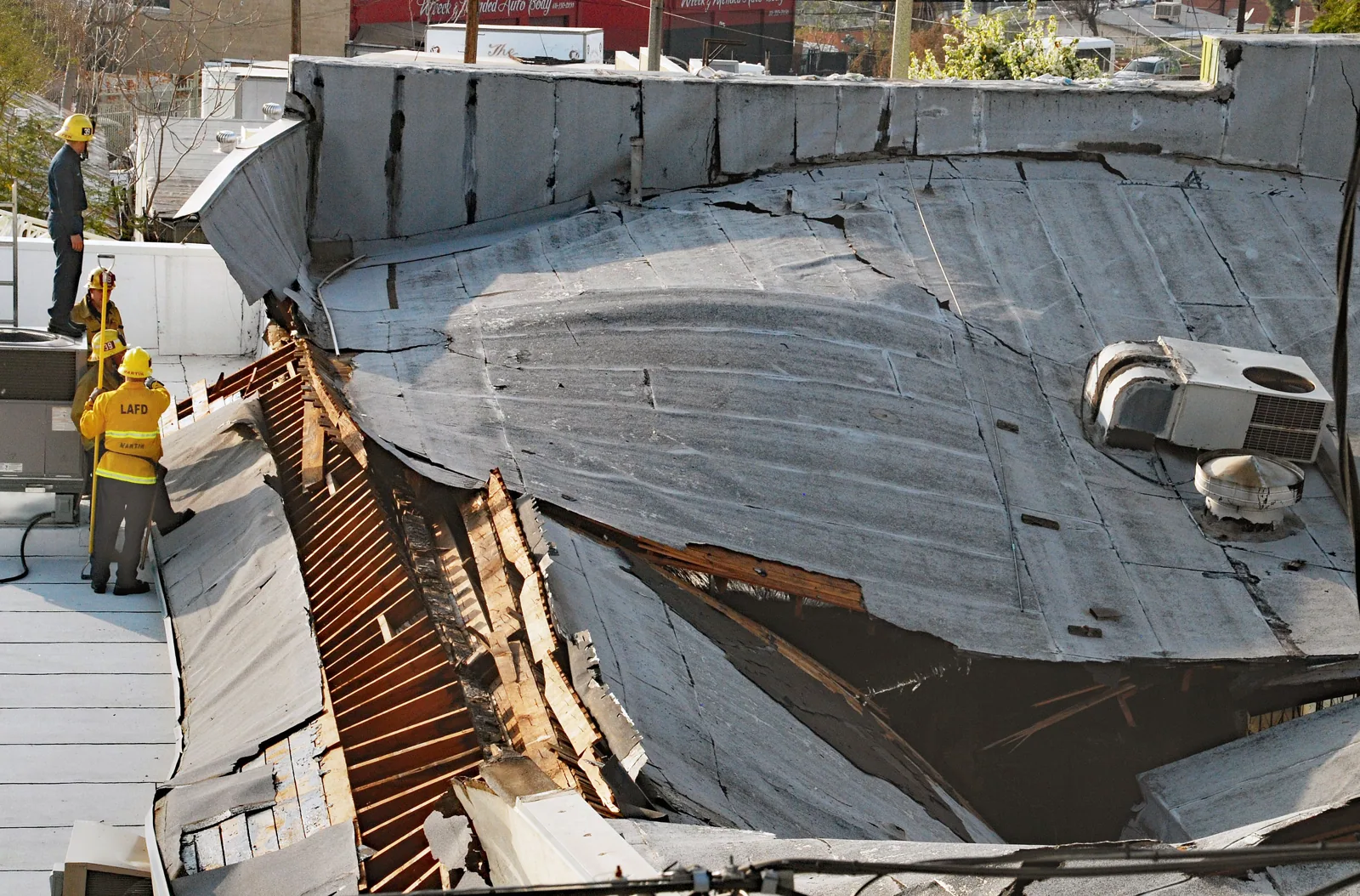
Hours after the engines leave, the property manager walks the lot and sees what the street never showed: soot streaked up the parapet, a smell that clings to everything and a roof nobody has been cleared to stand on. The fire marshal's tape is still on the door. The tenants are asking when they can get back in, the insurer wants photographs, and meanwhile a hole the firefighters cut to let heat escape is open to whatever the sky sends next. Fire damage roof repair in South Bend, IN begins in that gap, between the last hose line and the first approved step onto the deck.
Nobody climbs until the building is released
The order of events is fixed. Fire officials and investigators release the scene first, and until they do we stay off the roof and work from the ground and from drone images, which show the burn pattern, the vent cuts and the condition of the edges without anyone stepping on weakened deck. Once the building is released, a structural engineer rules on whether the deck can carry people at all, and where it cannot, the crew works from planks that spread weight or from a lift. On a campus such as Notre Dame, which runs its own police, fire, water and power systems, the first contact is with the university itself, and access follows the rules it sets. The first visit starts with a safe exterior assessment; repair waits until access and the structure are cleared.
What the heat and the hoses did
A roof fire damages in four ways, and each needs a different repair. Heat blisters, shrinks or melts the membrane, and a thermoplastic sheet can run like wax. Firefighters cut openings to ventilate, and those openings are often covered in a hurry, if at all, so every one gets the same scrutiny as a membrane puncture. Water from hose lines soaks the insulation, and the weight can sag a deck already softened by heat. Smoke leaves a residue that blocks adhesion, so a roof that looks untouched beside the burn may need cleaning before any patch will bond. We map the roof into burned, heated and smoked zones, photograph each, and sample the insulation in each zone to learn how wet it is. Steel deck is checked from below for warping and discoloration, which tells us how hot it got.
Snow on a deck that cannot carry it
A fire in January leaves a damaged deck under the heaviest snow of the year, since January is the month most likely to bring heavy snow and South Bend averages 64.5 inches in a year. A deck weakened by heat has less margin than the original design assumed, so snow becomes a safety question as much as a leak question. We keep drifts cleared around the damaged area, shore from below where the engineer calls for it, and watch the forecast as closely as the deck. Between the first freeze around October 18 and the last around May 1, meltwater has plenty of time to find any opening the dry-in has missed, and the weight of snow and ice on a compromised roof is a problem of its own.
Dry-in first, hot work last
Temporary protection starts with the openings. Vent cuts are covered with boards and a membrane that extends well past each edge, and burned areas are tarped and battened until the permanent scope is approved, the way emergency roof repair is done after any storm. Wet insulation is removed in the affected zones rather than left to dry in place, because it holds water against the deck and ruins the new sheet. We avoid open-flame methods on a roof that has just burned and prefer cold-applied adhesives, mechanical fastening and hot-air welding with a fire watch standing by. Tenants hear what is happening each day in a short written notice, and whatever is stored beneath the damaged section is covered or moved before the first board goes down.
Rebuilding to the code in force
Drawings for the rebuild go to a building department that enforces Indiana's 2014 code, which tracks the 2012 IBC, and a pending state rule would move the state to the 2024 IBC. New insulation over a burned area also has to satisfy the energy code, which here is a 2010 edition built on ANSI/ASHRAE 90.1-2007. A repaired section has to match the fire classification of the roof assembly around it. Where the deck itself was damaged, the engineer's repair comes first, and insulation and cover board follow only after the deck has been inspected and approved. Where more than one section is lost, full replacement may be the cleaner scope, and the permit office confirms the path before the work is priced.
The file the insurer and the lender ask for
A fire claim is documented in layers. We photograph the damage before any of it is cleared, mark the vent cuts and burn zones on the roof sketch, and keep samples of the roofing and insulation until the adjuster has seen them. The photo log separates damage from the fire, damage from the water used to fight it, and conditions that predate both, such as old patches, because an insurer will want that line drawn. The written scope and the dated record go into one folder as part of insurance claim assistance, which shortens the conversation with the adjuster, the lender and the tenants' own carriers. Every temporary measure and its cost is logged so the invoices attach to a record. That record also covers the weeks of waiting, because a burned section sits under the same weather as everything else: the partial roof collapse at the St. Joseph County Services Building in Mishawaka, which followed high winds and rain on April 1, 2016 and flooded the top floor, shows how much water one failed roof can put into a building. So the dry-in is checked after every storm until the rebuild starts, and each check goes into the file with a date.
Commercial Roofing Questions
Can maintenance start clearing debris off the roof before the adjuster visits?
Hold off on anything beyond making the building safe. Burned material, melted membrane and the vent cuts are evidence of how the fire moved, and clearing them first can shrink the claim. We photograph everything in place, set aside samples, and only then remove what is in the way.
When can anyone safely walk on a roof after a fire?
Only after fire officials release the building and an engineer has looked at the deck. Heat can warp steel and char wood without any sign on the surface, and a membrane over a weakened deck looks sound until someone steps through it. Until then we work from drones and lifts.
A section next to the burn looks fine. Does it still need replacing?
Sound-looking membrane beside a burn can be heat-aged and coated in residue that stops a patch from bonding. We test adhesion, take a small insulation sample and measure moisture before we decide to save it. The answer is sometimes a cleaning and a patch, and sometimes a larger section than the owner expected.
Will the new roof have to meet a newer code than the one we had?
The edition in force when the permit is issued applies, and for now that means the 2014 state building code paired with the 2010 energy code. Insulation values often move the price of a repair, so we confirm the requirement with the building department first. If the state adopts the 2024 edition, we will say so in writing.
How should tenants hear about the work while the building is closed?
Send a short written notice the day the roof is made safe: what happened, what has been done, what comes next and who to call. We supply the roof portion of that wording and photographs. Tenants cope with delay better when the notice names a date for the next update.
Related Roof Work
- Notre Dame Area
- Membrane Puncture Repair
- Snow and Ice Roof Damage Repair
- Emergency Commercial Roof Repair
- Roof Insulation, Tapered Systems and Cover Board
- Commercial Roof Replacement
- Roof Insurance Claim Assistance
- Mishawaka
Talk to Our Team
Tell us where the water is landing, what the roof is made of and when the building is easiest to reach.
Phone: 555-555-5555
Email: [email protected]