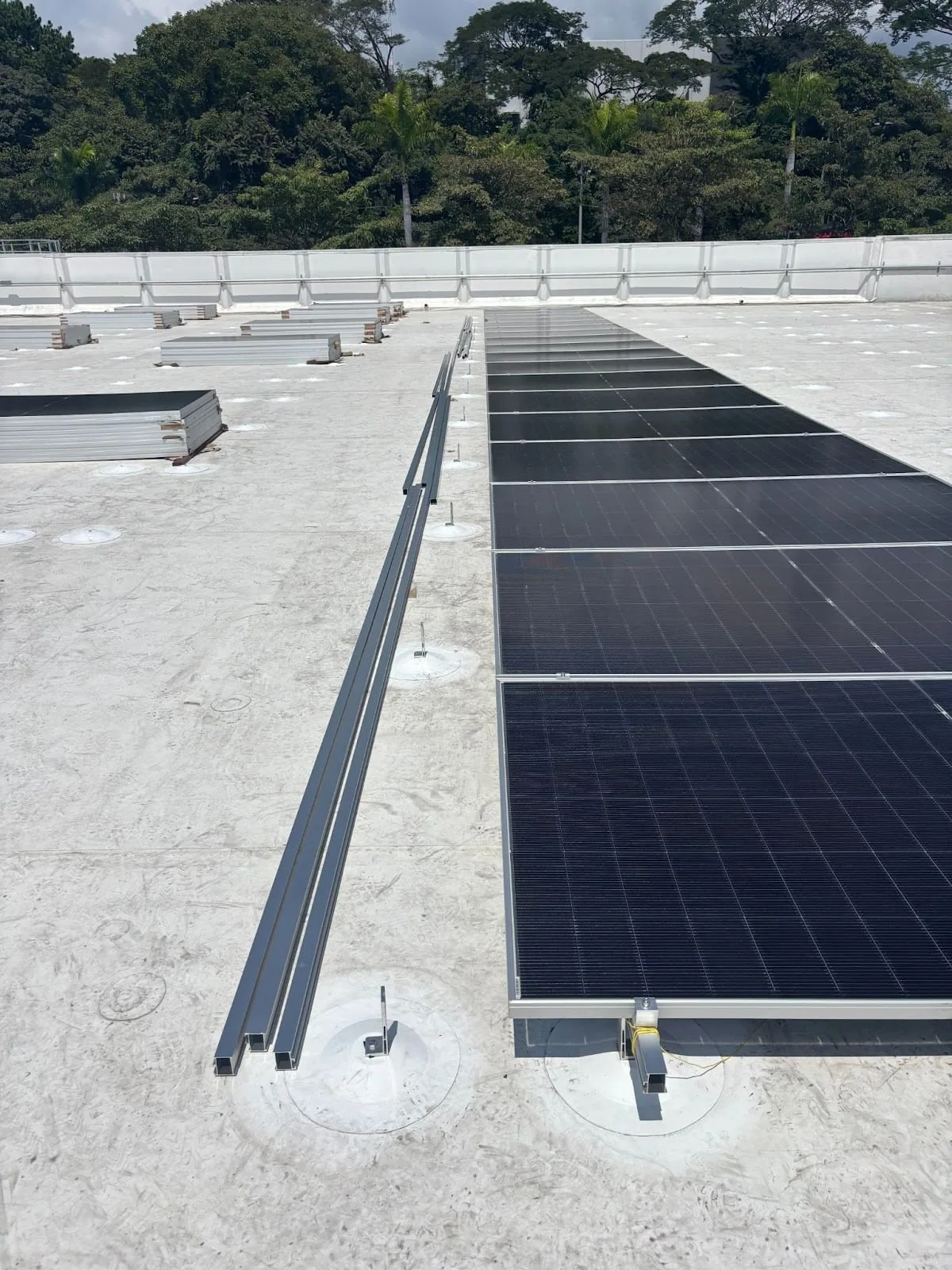
A maintenance supervisor at a food plant sends a photo of a soft, swollen patch of membrane beside an exhaust stack and asks whether the roof is finished. Sometimes it is. More often the sheet was a poor match for what the building puts on it, and a different membrane would have lasted. KEE is the answer to that question on certain roofs. It is a PVC-alloy sheet, a close relative of ordinary PVC built with a plasticizer that stays in the membrane instead of migrating out of it. On a roof in South Bend, IN that sees fryer exhaust, fuel, deicing runoff or process chemicals, that difference matters more than any other line on the bid.
What the alloy changes
Ordinary PVC stays flexible because of a plasticizer that can slowly leave the sheet, especially when the membrane touches asphalt or a hot, greasy surface. KEE uses a different, higher molecular weight ingredient that is designed to stay put, so the sheet keeps its flexibility longer and tolerates contact that would age other single-plies. The seams are still hot-air welded, and the same discipline applies: test-weld a scrap, weld, then probe every lap. What changes is the long view. A KEE membrane is a choice for roofs where the exposures would shorten the life of a cheaper sheet, and the choice should be made on that basis, not because the product is more specialized. Where the building has little exposure, a simpler system is usually the better value.
Plants that cook, mix and press
Food and process plants are the most common KEE candidates. The manufacturers in Plymouth include Pretzels Inc. and Zentis, and the employers in Middlebury include Culver Duck Farms and the Meijer Central Kitchen, the kind of names that bring cooking and processing to mind. Kitchens and cooking lines push fat, steam and wash-down water out through the roof, and over time the film builds around every stack and louver. The pattern on a roof like that is familiar: a ring of dark residue, softened seams near the fans and a field that never quite dries. When we survey a roof like that, we map every exhaust point, note the discharge direction, and mark the zones where KEE, heavier walk pads or a rerouted discharge would protect the membrane.
Roofs near the airfield
South Bend International Airport sits three miles northwest of downtown, with three runways, the longest at 8,414 feet, and FedEx Express flying cargo from the field. Buildings that serve aircraft can see fuel vapor, deicing fluid and exhaust that an office roof never does, and hangars add large spans and big doors that move air under the roof when wind rises. For a building inside the fence at South Bend International Airport, the airport sets the rules for access, escorts and equipment, and we confirm those first. For aircraft hangar roofing, the exposure list decides whether KEE fits, and the attachment must be set for the uplift a wide, open building can see.
Welding a stiff sheet in the cold
A KEE sheet is welded like PVC, but it is less forgiving when cold. Rolls are stored warm and unrolled only when the crew is ready to weld, because a cold roll handled roughly can crease. The first freeze usually arrives around October 18, and November 2022 brought 22.7 inches of lake-effect snow to South Bend International Airport in a single event, so late-season jobs are staged in sections that can be closed before dark. Welds are made only on dry surfaces, and the crew probes every lap before the next section starts. If a snow squall closes the day early, the temporary tie-in is sealed and checked the next morning before welding resumes. Winter work on KEE is possible, but the schedule has to respect what the sheet needs.
Repairing a contaminated roof
Grease and oil are the enemy of a clean weld, even on a membrane that resists them. Before any repair, we remove surface film with the cleaners the manufacturer allows, then test-weld a scrap on that same area to be sure the sheet will fuse. Where contamination has gone deep into old seams, we cut back to clean material and weld a cap strip across the repair. A roof that has been leaking near an exhaust stack is also a candidate for an infrared scan, because oil-laden insulation can hold water for a long time. Once the repair is done, preventive maintenance visits start at the stacks, since that is where the next repair will happen.
Where the money goes
KEE costs more per square than commodity single-ply, and the price is not the only variable. Insulation thickness, the amount of roof the exposure actually touches, crane or hoist access, and the number of penetrations all drive the total. On some roofs it makes sense to use KEE only in the exposed zones and a lower-cost sheet elsewhere, when the manufacturer's details allow the two to be joined. On others a TPO roof with extra pads and a rerouted discharge is cheaper over its life. Our written scope lays out both paths with the reasoning, along with whichever manufacturer details apply. Existing roofs can also be recovered where the old surface is dry and the maker's requirements are met.
Commercial Roofing Questions
How is KEE different from the PVC my last bid described?
KEE is a PVC-alloy sheet with a plasticizer that is meant to stay in the membrane, so it holds its flexibility longer when it contacts fats, oils and some other chemicals. Welding and detailing look similar on the roof. The difference is in how long the sheet stays soft under harsh exposure. Without that exposure, standard PVC or TPO is often the better value.
Our fryer exhaust drips onto the membrane every morning. Will KEE stay soft?
Fat and oil are the exposures KEE is built to tolerate, and the sheet generally outlasts membranes that stiffen under the same film. Walk pads, a grease containment tray under the fan and routine cleaning still matter, because a roof that is allowed to build up residue is harder to repair. We review the manufacturer's chemical information against your actual exhaust.
Can KEE go over an old tar and gravel roof?
Often, once the old roof is shown to be dry and sound. KEE tolerates asphalt contact better than ordinary PVC, but we still follow the manufacturer's requirements on separation layers and substrate preparation. Cores and an infrared scan come first, because wet insulation under a new sheet will undo the work no matter what membrane sits on top.
Why would a food plant choose KEE when TPO costs less?
Replacement cycles are the reason. A cheaper sheet that stiffens or swells near the stacks may need repair or replacement long before the rest of the roof ages out. For a plant that cannot afford open decks over production, avoiding an early tear-off is worth a higher starting cost. We write both options out so you can compare them against your own capital plan.
Do airfield and hangar roofs need special approvals before work starts?
Access, escorts, equipment limits and any restrictions on cranes or flight paths come from the airport and the building's tenant, and we confirm them before we mobilize. Rooftop work near an active field also changes how we schedule lifts and drone flights. We share the plan with the facility contact so no one is surprised on the day.
Related Roof Work
- PVC Roofing
- Plymouth
- Middlebury
- South Bend Airport Industrial Park
- Aircraft Hangar Roofing
- Preventive Roof Maintenance
- TPO Roofing
- manufacturer
- Roof Recover and Overlay
Talk to Our Team
Tell us where the water is landing, what the roof is made of and when the building is easiest to reach.
Phone: 555-555-5555
Email: [email protected]