A plant manager sees it first thing on a Monday: a dark patch has spread across the ceiling of an assembly bay after a night of rain and wind, and the first shift is twenty minutes from starting. The decisions that follow are simple to list and hard to make quickly. Which bays are affected, can the work crews move, and who tells the shift leads? We ask those questions on the first call, then get a crew on site to find the entry point, make the area safe and set a temporary dry-in, so the day can proceed around a repair rather than a puddle.
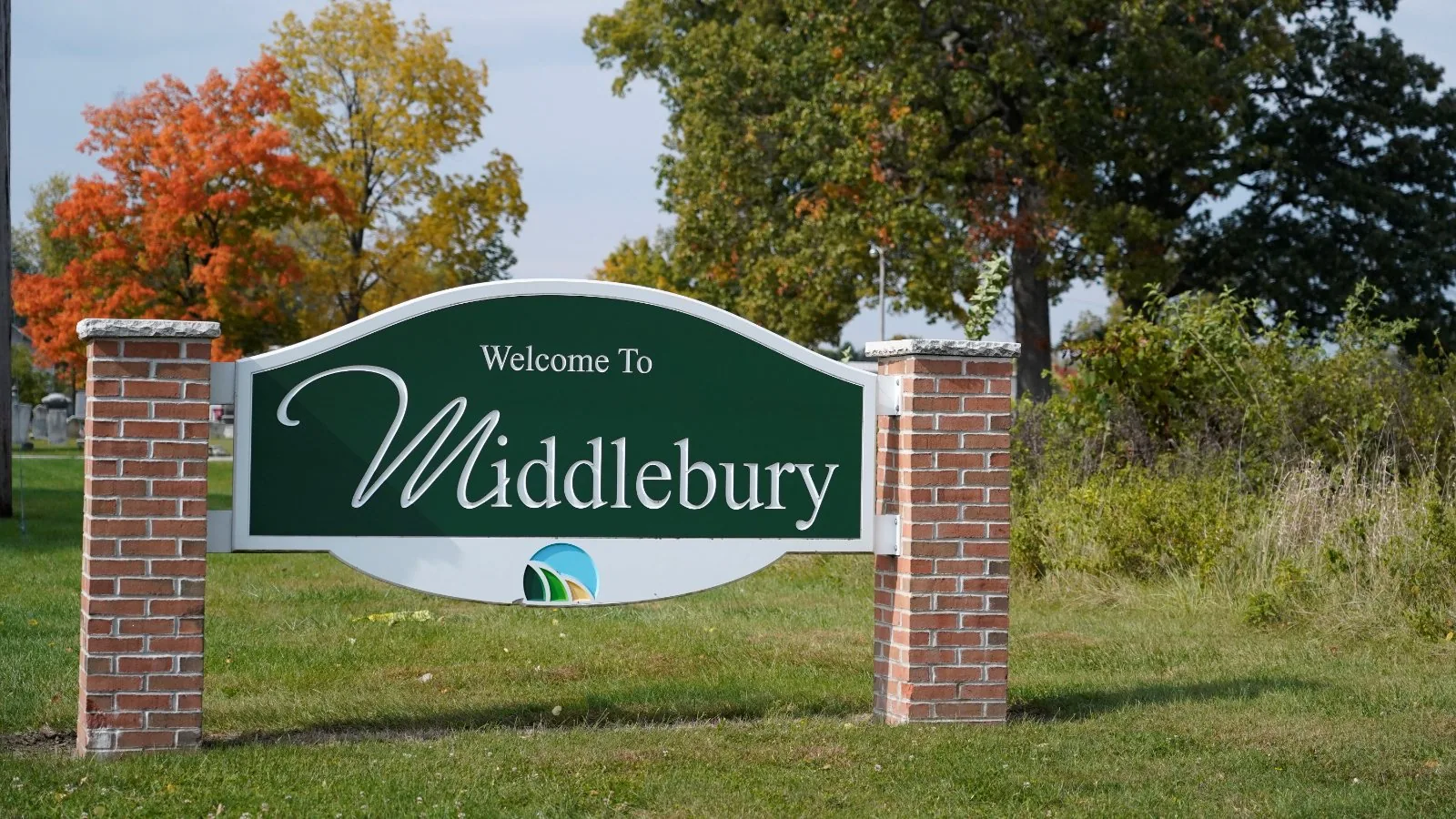
Middlebury is about 35 miles east of South Bend and has four major RV makers: Grand Design, Winnebago, Jayco and Coachmen. We work on low-slope and metal roofs, from a small repair to a full tear-off, and the phone is answered overnight and on holidays.
Assembly buildings and what is above the line
East of South Bend, large-format manufacturing and assembly plants dominate the building stock, and Thor Industries has major plants in Elkhart County and in Middlebury. Over an assembly floor, a leak does more than stain a ceiling: water can reach electrical gear, finished units and the floor where people walk, so the make-safe step moves fast.
We plan roof work around production. The plant contact tells us which bays are sensitive, when shifts start and where lifts and forklifts move, and the sequence follows. For a manufacturing plant roof, the first walk covers every penetration, every curb and every exhaust fan, because each one is a flashing that can fail separately from the field of the roof.
Exit 107 and the road east
Toll Road exit 107 serves the Middlebury area via US 131 and State Road 13, and the town lies about 35 miles east of South Bend. That distance shapes how we respond: a crew heading out on an overnight call plans for the drive, brings the materials for a temporary dry-in on the first trip rather than a second one and calls ahead so the building contact is at the gate.
When a storm crosses the towns east of South Bend, including Elkhart and Goshen, the calls are sequenced together. The first stops go to buildings with active water over equipment, people or finished product, and later stops go to exposed insulation and damage that can wait until morning. Callers are told where they are in that order and when a crew is expected.
Kitchens, suppliers and a destination
Middlebury employers include Culver Duck Farms, ARBOC Specialty Vehicles, Meijer Central Kitchen and Syndicate Systems, and the town's Das Dutchman Essenhaus draws over 750,000 visitors a year. A roof over a place that receives that many guests has a public side: a dripping ceiling is seen by customers, and wet floors carry liability. For a food operation, exhaust fans and grease residue also work against a membrane, and a restaurant roof needs its fans, curbs and drains checked on a regular schedule.
On a kitchen or dining building, we stage work for the quietest hours and keep access to entrances and deliveries open. The tenant notice is a short sheet for staff and managers, with the work area, hours and a contact. Where a building is open to visitors in peak season, we schedule major work for the slower part of the year when possible and use temporary protection when it is not.
What South Bend's record asks of a Middlebury roof
South Bend, about 35 miles west, averages 64.5 inches of snow a year. For a Middlebury roof, inspect parapets and equipment curbs for drift patterns, keep drainage paths clear and check flashing after a thaw. Snow weight and meltwater both matter: a drift loads the deck beside a curb, and water can refreeze at a cold drain.
Hail is the other test. It leaves bruised membrane, dented vent caps and cracked sealant, and the damage often shows as a slow leak long after the storm. We check for hail damage on membrane and metal after any storm with stones, and we photograph every sign so the insurer sees the same roof we do.
Repair, recover or replace on a plant roof
The owner wants one answer from the first walk: how much of the roof is still working. A few failed penetrations over dry insulation can be repaired in place. Insulation that is wet across a whole bay points toward a recover or a replacement, and an infrared moisture survey shows the extent before anyone commits to a scope.
What moves the price on a plant roof is the count of curbs and penetrations, how much edge metal has to come off, access for lifts and how much production can tolerate. The code edition in force and any permit requirements are confirmed with the local building department before a replacement is priced, so the scope holds up when the permit is pulled.
For a facility that runs more than one shift, the work plan should say which roof bay opens first and how it closes before the next crew takes over. We identify staging, crane access, and the routes mechanical staff use, then keep penetrations and drains in the daily walk. A written handoff prevents a night shift from treating an unfinished section as a completed repair.
Commercial Roofing Questions
A bay is dripping and production starts in an hour. What can be done before the shift?
Move people and finished work away from the wet area, then call. The crew can assess roof access and temporary protection, and we coordinate the work with the plant contact. If insulation hides the entry point, interior containment may also help. Permanent repair follows when the roof is dry enough for the chosen materials.
Why do you check exhaust fans and curbs before the field of a plant roof?
Penetrations are common failure points. Each fan, curb and pipe has its own flashing, and each can open at a different time. Exhaust and grease residue can also soften the membrane around a fan, so the area around each unit gets a close look before we turn to the field.
A restaurant in a busy season needs roof work. How is it scheduled?
We schedule major work for the slower part of the year when possible, and in peak season we split it into small stages. Each stage is closed with a dry-in before the crew leaves, and deliveries and entrances stay open. The manager receives a short written notice for staff, so no one is surprised by noise or a closed access point.
Can hail from a storm like June 2019 harm a roof on a building 35 miles east of South Bend?
Hail can harm a roof wherever it falls. The June 2019 storms put 1 inch stones on South Bend, and any owner who sees hail at their own building should walk the roof afterward. Bruised membrane, dented equipment and cracked sealant are the signs we look for, and we photograph all of them.
How do you decide between patching a plant roof and replacing it?
We count the problems and map the moisture. A few local failures over dry insulation point to repair, and widespread wet insulation or seams that keep opening point to replacement. The written report lists each finding with a photograph, so the owner can compare the cost of repeated repairs with the cost of one planned replacement.
Related Roof Work
Talk to Our Team
Tell us where the water is landing, what the roof is made of and when the building is easiest to reach.
Phone: 555-555-5555
Email: [email protected]