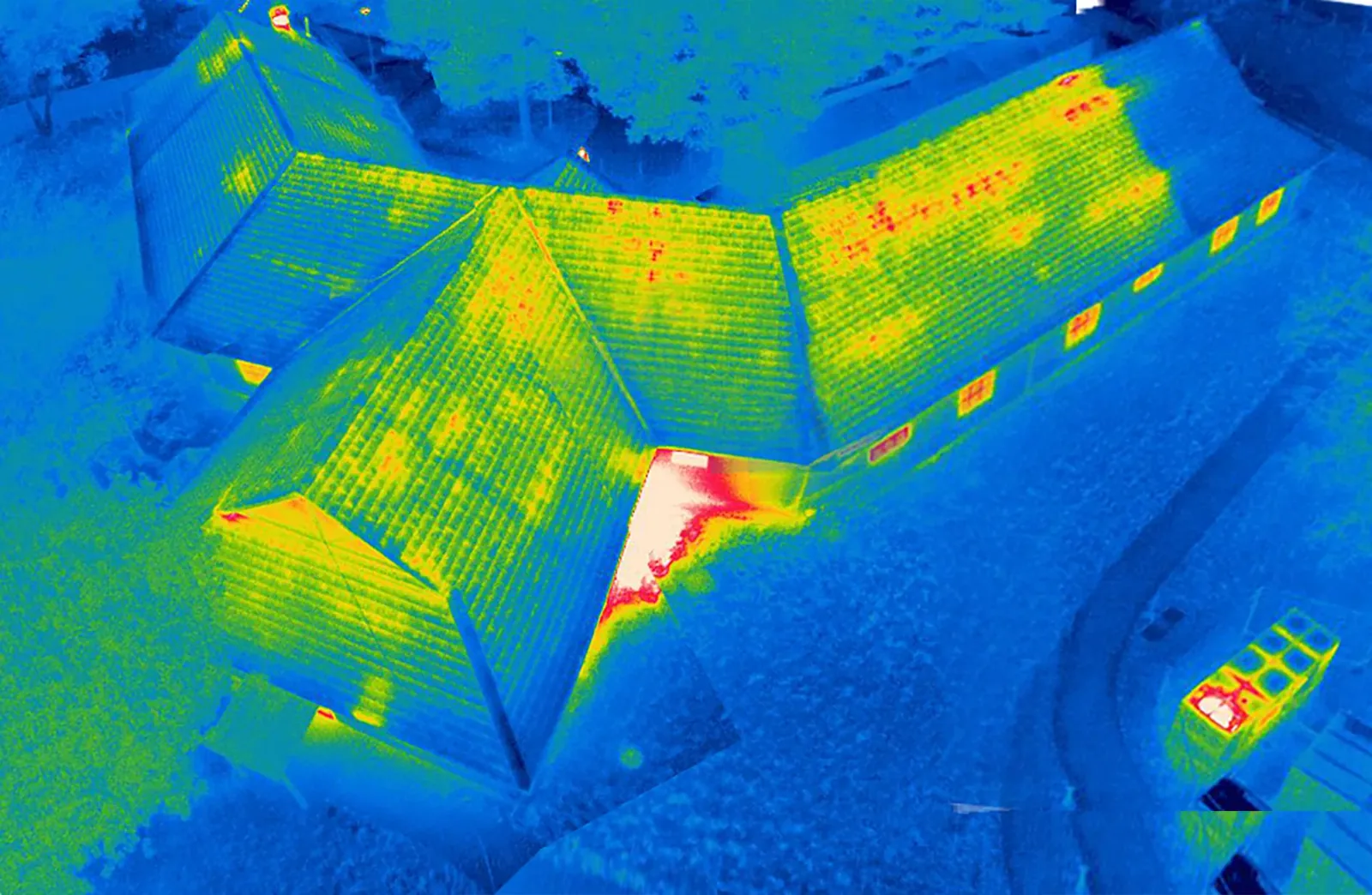
From the roof hatch, the membrane looks intact, and yet a tenant keeps reporting a damp ceiling that dries out by afternoon. Nobody can find a hole. That pattern usually means water is getting into the roof assembly at one point and spreading through the insulation, then drying and returning with the weather. On a flat roof in South Bend, IN, where measurable precipitation falls on about 148 days a year, hidden moisture is a common reason a roof costs more than it should. An infrared scan can identify patterns that merit testing, and core samples verify conditions at selected points without requiring broad tear-off.
Why wet insulation hides
A commercial membrane sits on top of insulation, and the insulation sits on the deck. When water gets in through a seam, a flashing or a puncture, it does not stay under the opening. It moves through the insulation joints, and it stays there, because the membrane above it blocks evaporation. Wet insulation loses much of its thermal value, adds weight to the roof and, in a climate with freeze-thaw from mid October to early May, the trapped water freezes and thaws repeatedly and damages the material and the deck. The surface can look perfect throughout. By the time a stain shows on a ceiling, the wet area is usually far larger than the stain suggests.
How the infrared scan works
Wet insulation holds heat longer than dry insulation. After a sunny day, the roof absorbs warmth, and when the sun goes down the dry areas cool quickly while the wet areas stay warmer for longer. A thermal camera picks up that difference as a pattern on the screen. We scan in the hours after sunset on a dry, clear day with light wind, walking the roof or flying it with a drone, and mark the patterns that suggest moisture. A drone-mounted camera covers large roofs quickly, while a handheld camera on foot picks out details around curbs and drains. Snow, standing water, rain and heavy wind all interfere, so we pick the window carefully and reschedule when the conditions are wrong.
Core cuts settle the question
An infrared image identifies patterns that may indicate moisture. A core sample checks the roof assembly at a selected point. At marked locations, and at a few areas that appear dry for comparison, we cut a small sample through the membrane and into the insulation, then examine it and check it with a moisture meter. Dry, firm insulation at one sample point supports a different conclusion from wet, dark or crumbling material; findings are interpreted with the scan and nearby roof conditions. Each sample can be numbered, photographed and recorded on the roof sketch, then closed with a compatible repair method selected for the assembly and conditions.
The map you receive
The deliverable is a roof plan with the wet areas outlined, the core locations numbered and a photo log tied to each number. On the roof itself, we mark the boundaries of the wet areas so a crew can find them later. The written findings describe how large the wet areas are compared with the whole roof, where they sit relative to drains, curbs and edges, and what the likely entry points are. Wet zones that line up with ponding often point to a drainage problem, the kind of ponding water condition that has to be corrected or new insulation will get wet again. Zones around a single penetration point to a flashing detail instead. The map makes those patterns visible.
The map is most useful when it distinguishes a measured sample from an area inferred from thermal patterns. Each marked zone should connect to recognizable roof details such as a drain, curb, wall line or grid reference. An owner can then compare the likely affected area with the roof's overall size and decide which samples or repairs should be prioritized. Interpret the map alongside a close look at the membrane, deck and drainage; together, those observations show how moisture patterns relate to the roof assembly.
What the map decides
This is the point of the survey. If the wet area is small and isolated, the insulation can be cut out and replaced, and a commercial roof repair restores the roof. If the roof is dry across most of its field, a recover overlay may be a sound option. If wet insulation is widespread, a recover can trap moisture; a full replacement may be the better path after the affected assembly and deck are assessed. Without the survey, those choices are guesses, and a wrong guess is expensive. The survey also provides the evidence for a capital plan, with the scope matched to the roof.
Timing, tenants and sensitive roofs
Because the best scan happens after sunset, the work usually takes place when most tenants have gone, and core cutting is quiet and brief. At a large plant in Elkhart or the Mishawaka industrial area, a hidden wet zone can extend beyond the visible stain; a scan can help identify where follow-up testing is useful. Spring after the thaw and early fall before the average first freeze on October 18 are the common windows. Some roofs have more at stake than others. The Union Station Technology Center leads the redevelopment of the former Studebaker complex on the southwest edge of downtown South Bend and is described as northern Indiana's largest data center, so a hidden leak over equipment of that kind is a serious risk. Owners of data center roofs and other sensitive buildings can schedule a survey every few years to catch moisture before it reaches the space below.
Commercial Roofing Questions
Can infrared find wet insulation through snow or standing water?
No. Snow, ice and standing water mask the surface temperature pattern, and the readings become unreliable. We schedule scans for dry, clear conditions after the roof has been in the sun, which in this region means late spring through early fall for most roofs. If a leak is active in winter, we stop the water for now with a temporary dry-in and book the survey for the first good stretch after the thaw.
How accurate is an infrared scan on its own?
Thermal patterns can indicate areas for follow-up, but different roof materials, shadows, equipment and surface debris can affect the image. Selected core samples and moisture readings can help verify conditions at those points. If findings differ, the roof assembly and additional observations should be considered before repair decisions are made.
Do the core cuts damage the roof?
A core cut creates a small opening that must be repaired with a compatible method. The location is documented so it can be checked during later roof inspections. The repair approach should account for the membrane type and weather conditions.
How often should a roof be scanned?
Scan frequency depends on roof condition, leak history, storm exposure and upcoming repair decisions. Owners can use inspection findings and maintenance records to decide whether another survey is useful; roofs with known moisture concerns should be assessed before a recover or replacement scope is set.
Does wet insulation always mean the roof has to be replaced?
No. It depends on how much is wet and where. A few isolated wet areas can be cut out and replaced, with the membrane repaired over them, and the rest of the roof can keep serving. Widespread moisture changes the answer. The map gives you the share of the roof affected and the likely cause, so the repair or replacement scope is matched to what is actually wrong with the roof.
Related Roof Work
Talk to Our Team
Tell us where the water is landing, what the roof is made of and when the building is easiest to reach.
Phone: 555-555-5555
Email: [email protected]