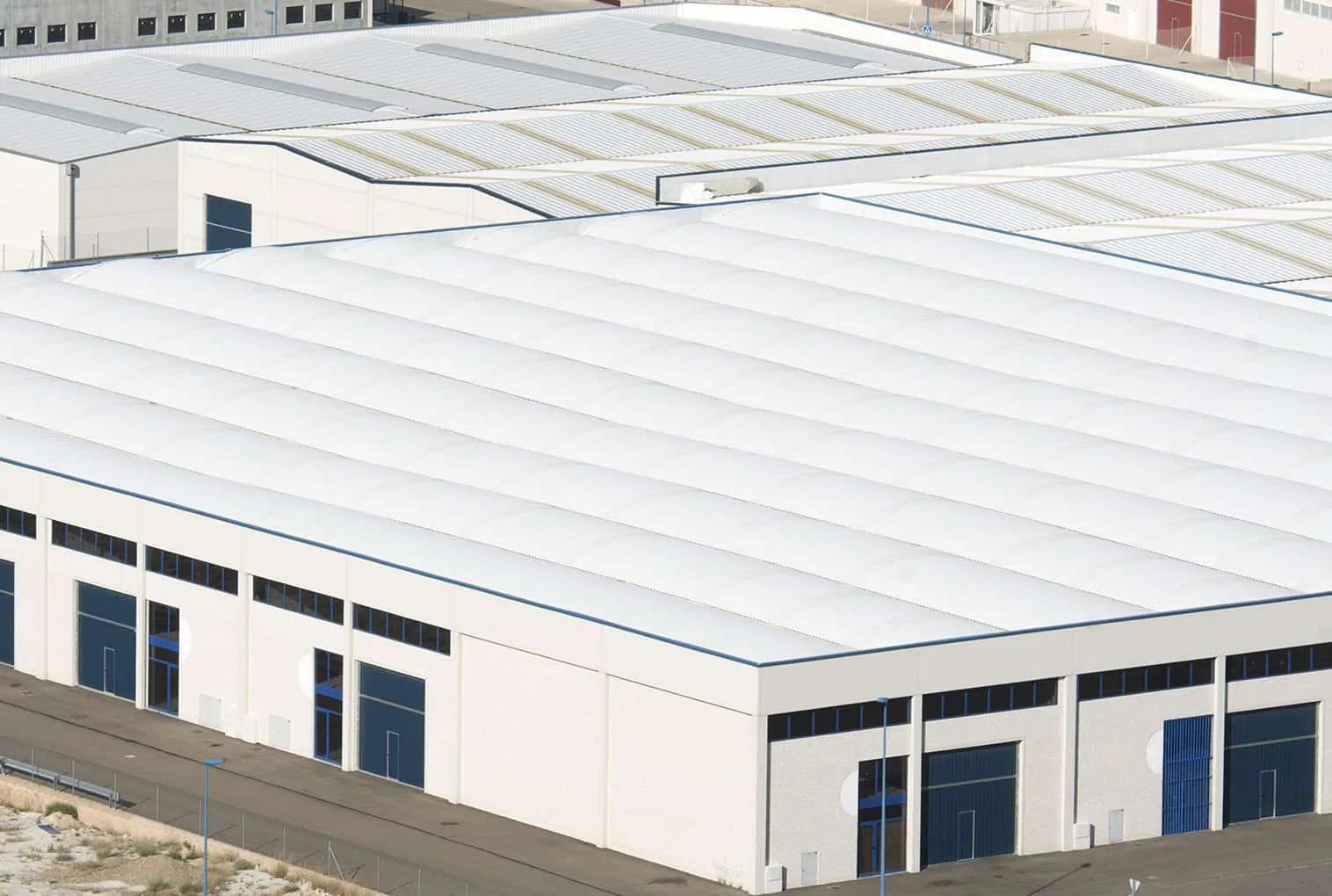
A seam probe slides along the edge of a white lap on a flat roof in South Bend, IN, and the tip catches in a gap that nobody could see from the parapet. That small snag is how most single-ply trouble announces itself, and it explains why a TPO roof succeeds or fails on workmanship more than on the sheet itself. TPO is a thermoplastic membrane rolled out in wide widths, with every seam fused by hot air into one continuous surface. Done carefully, it gives a property manager a bright, reflective roof with very few places for water to get in. Done in a hurry, it leaves a long run of laps to worry about every spring. When the findings on an aging roof point toward a full replacement, TPO is among the first systems worth pricing, and the order in which a crew builds it tells the manager exactly where to look once it is finished.
The weld is the roof
Each TPO seam is made by a hot-air welder that softens two sheets just enough to fuse them, followed by a pressure roller that sets the bond. Sheet temperature, wind across the deck, dust on the surface and the walking speed of the operator all move the result, so the crew test-welds a scrap before each shift and again whenever the weather turns. After welding, every seam is probed along its full length with a metal pick, pressing along the edge to find any stretch that did not fuse. A weld that peels under the probe is redone on the spot. Cut edges at the end of a work day are sealed, and the photo log records each probe pass, so the property manager holds a record of what was tested and not only a promise that it was.
Fastened, adhered or ballasted
The sheet reaches the deck in one of three ways, and the building makes the choice. Mechanically fastened systems use plates and screws along the seams, which suits wide, open roofs where speed matters and the deck takes fasteners well. An owner reroofing one of the industrial spaces listed at the South Bend Airport Business Park, which run from 70,000 to 165,000 square feet each, should find the attachment method named on every bid, because it moves the labor, the schedule and the wind rating more than the brand of sheet does. Fully adhered systems glue the membrane to the insulation or cover board, which gives a smoother surface and suits roofs with many penetrations or tall walls, though adhesive wants warm, dry substrates that November and March do not always supply. Ballasted systems rely on loose stone for weight, which adds dead load that the structure must also carry beneath a drifted load of snow.
The weld window narrows in fall
South Bend sees its first 32 degree freeze around October 18 and its last around May 1, so the installation calendar tightens well before the holidays. Welds want a dry sheet with no frost or meltwater film, and adhesives want a substrate that has not gone cold and damp. When a job runs into November, we work in small sections, close every edge before the crew leaves, and seal the temporary tie-ins against snow that can arrive off the lake with little warning. The membrane keeps working in the cold, but it moves. A climate with a recorded range from -22 F to 104 F asks a roof to expand and contract through every season, and flashings set too tight at a wall will pull away over a few winters. We leave controlled slack at the transitions so the sheet can shift without tugging at its own seams.
Where TPO gets hurt
The weak points are predictable. Hail is one: the June 1, 2019 storms put one inch stones on South Bend, 0.7 inch stones on Mishawaka and stones up to 1.25 inches near Crumstown, and stones an inch or larger can bruise a sheet laid over soft insulation. After a report like that we walk the field looking for round fractures and crushed board under the surface, and we document what we find for the hail damage repair and for the insurer. Kitchen exhaust grease is another, because it breaks down TPO near restaurant fans, so those areas get walkway pads and a grease guard, and a grease-heavy roof may be better served by PVC. The third is standing water. After a downpour like the 4.88 inches recorded in South Bend over 24 hours on August 2 and 3, 1995, low spots near the drains hold water long enough to age the sheet, which leads to tapered insulation or ponding water repair.
Insulation, code and the white sheet
A white membrane earns its keep in July, but in a South Bend winter the same surface sits under snow for weeks, so insulation depth does more of the work. Indiana currently enforces the 2014 edition of its commercial code, which adapts the 2012 model code, and the energy provisions point to the 2010 state edition with ASHRAE 90.1-2007 behind it. A pending rule would move the state to the 2024 model code, though its start date is still blank in the draft. Before we price a TPO scope we ask the building department which edition it is applying to the permit, since insulation thickness and wind-uplift attachment both follow from that answer. Where reflectivity is a goal on its own, our cool roof installation work starts with the same questions.
What the manager keeps
Several makers sell TPO, among them Carlisle SynTec and GAF, and each publishes its own details for seams, corners and terminations. We install and repair to the details of the sheet that is on the roof. When the last seam is probed, the manager's file gets the photo log, the probe record, the product data and whatever manufacturer paperwork fits that system. In April we return to pull on the corners and test the laps at the walls, now that the sheet has lived through a full run of frosts. On a different roof section, EPDM roofing may be evaluated against the deck, attachment and repair history.
Commercial Roofing Questions
Is a white roof worth it when snow covers it half the winter?
The color pays back in summer, when a reflective surface keeps heat out of the rooftop units and the space below. In winter the insulation, not the color, carries the load, so we size the insulation first and treat reflectivity as a bonus.
How can I tell whether the seams on my existing TPO roof are failing?
Walk the laps after a hard rain and look for lifted edges, dirt lines that stop short of the seam, or small ridges where the sheet has pulled apart. Water that stains the ceiling in a straight line often follows a bad seam. We probe the full length of the seams during a visit and photograph every open spot, so you can see exactly where a repair is needed.
Can a TPO roof go down in November, or should the bid wait for spring?
Work continues into the cold months when the crew can keep the sheet dry and welds test clean, and it stops when frost or meltwater film cannot be controlled. A bid that starts late in the season usually plans for small, sealed sections and a clear stopping point. If the roof is leaking now, a temporary dry-in carries the building through winter and the full install waits for a stable stretch.
Why do some TPO roofs split along the walls after a few winters?
Flashing that was installed with no slack at the wall gets pulled every time the roof contracts in the cold. Over a few winters the sheet tears at the corner or at the termination bar.
Does one inch hail ruin a TPO roof?
Not automatically. Stones that size can bruise the sheet over soft insulation or crush the board beneath it, and the damage is often subtle from above. We check with a moisture meter and a close walk of the field after a storm, then give you a written record. Roofs with firm cover board underneath tend to come through better than those with exposed foam.
Related Roof Work
Talk to Our Team
Tell us where the water is landing, what the roof is made of and when the building is easiest to reach.
Phone: 555-555-5555
Email: [email protected]