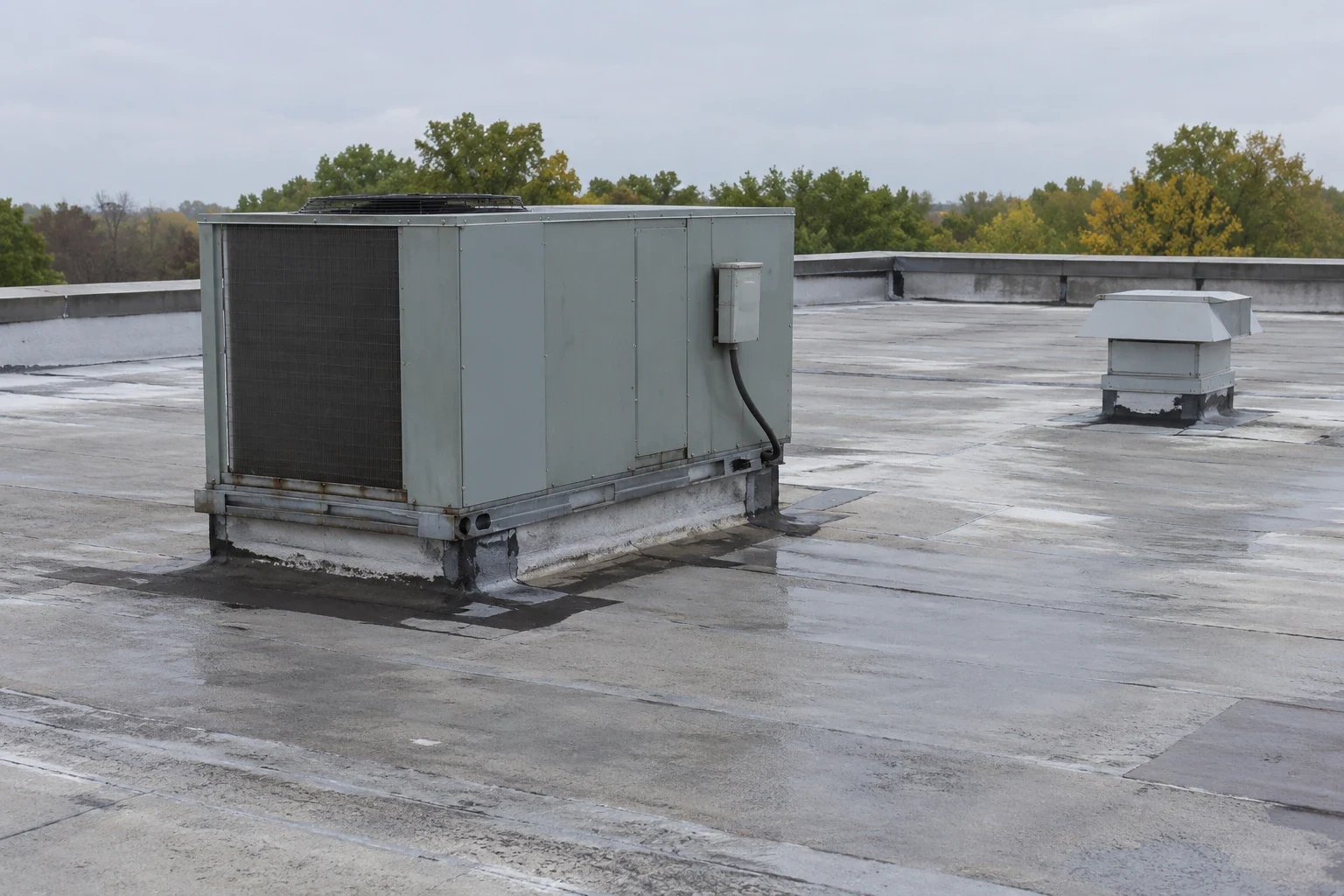
A planned repair often begins with a short list the property manager already has: three tenant complaints, one photo of a split seam, and a flashing that has been lifting at the wall since the fall. Nothing on that list is an emergency yet, which is exactly why it is worth fixing now. A planned repair in South Bend, IN is the work done between the first sign of trouble and the leak that stains a ceiling, and it gives the owner a chance to address known conditions before they spread. The sequence is straightforward: inspect, document, prioritize, then complete the agreed repair scope.
Start with the list you already have
The first call is a conversation about what you have seen: where the drips appeared, what the weather was doing that week, which tenants noticed and whether anyone has patched before. We take that list to the roof, on site, with the building plans if they exist. We walk every seam, every wall flashing and every penetration, not only the areas named in the complaints, because the visible leak is often several feet from the actual opening. Each finding is photographed and tagged in a photo log with its location on a simple roof sketch. The findings help the property manager distinguish active failures from routine aging and set the repair scope from observed conditions.
Seams, flashings and details
Membrane repairs fail at details far more often than in the open field. We look for open or split laps, seam failure where welds or tapes have released, cracked sealant at terminations, and blistered or ridged areas where moisture has moved underneath. At walls and curbs we check base flashing, counterflashing and termination bars, because flashing failure lets water in behind an otherwise sound membrane. Pipe boots, pitch pockets, drain bowls and skylight curbs get the same attention. Each one is pressed, probed and photographed, and we record whether the issue is cosmetic, active or already letting water into the insulation. That record becomes the priority list for the repair.
The repair has to match the membrane
A repair that does not bond to the existing roof is a delay, not a repair. Thermoplastic membranes such as TPO and PVC are repaired with heat-welded patches on a cleaned surface. EPDM relies on primers and splice or seam tape and needs a clean, dry edge to hold. Modified bitumen and built-up roofs take compatible cold adhesive or heat-applied patches, with attention to granules and gravel. Metal roofs usually need fastener, seam and sealant work. We identify the membrane first, then choose the repair materials that are compatible with it, because mixing incompatible products is how patches release in the first winter. Where an old repair has already failed, we remove it and prepare the area correctly rather than adding another layer on top.
Repairs that wait for the thaw
South Bend roofs go through freeze-thaw from the first freeze, which averages October 18, to the last in the spring, around May 1. The recorded range runs from minus 22 degrees to 104, and the movement across that range opens seams and pulls flashing away from walls. In cold weather some adhesives and sealants will not cure properly, so temporary protection may be appropriate while permanent work waits for temperatures and moisture conditions suitable for the specified materials. Snow and ice change the plan too. Ice at the drains can back water onto a roof that is otherwise sound, so drain and overflow conditions should be checked before other repair details. A heavy winter leaves its own damage, from torn membranes to snow and ice roof damage at the drains.
What the property manager receives
When the repair is done, you receive the photo log with before and after images, a written description of what was repaired and what was not, and a priority list for anything left. The list is sorted by urgency: repair now, monitor, or budget for next season. That list can go straight into a roof condition report, so the decision on the next dollar has a record behind it. Tenants hear about the work through a short tenant notice, and a follow-up inspection after winter can check whether repaired details have moved or developed new moisture. In Mishawaka, where retail services and small industry operate alongside major routes such as US 20 and State Road 933, a building with several tenants under one membrane gets a notice coordinated with the on-site manager so every suite hears the same thing.
When repair stops making sense
A repair is appropriate only while the surrounding assembly can support it. When the same details fail repeatedly, if the insulation has gone wet across a wide area, or if the membrane is brittle and cracking at the field, the next patch is spending money on a roof that cannot hold it. At that point we lay out the alternatives. A roof coating restoration can extend a sound roof, and a full replacement resets the clock when the roof is finished. We show the findings that lead us there, so the decision is yours and not ours.
Commercial Roofing Questions
Which repairs can wait and which cannot?
Anything letting water into the building or into wet insulation should be done first, and active leaks go ahead of everything else. Cosmetic issues, such as small surface cracks in sealant on a dry roof, can wait for the next scheduled visit. We rank every finding on the priority list, so you know what is urgent, what to monitor and what to budget for. If water is entering the building now, an active leak is handled before the planned work.
Will repairs affect my manufacturer warranty?
Manufacturer warranty terms can set conditions on who may repair the roof and which materials are allowed. Before work begins, we ask for the warranty documents and read the repair conditions, and we describe in writing what the warranty requires and whether our repair method meets it. If the manufacturer must be notified or must approve the work, we tell you that first, so the warranty is not the casualty of a good repair.
How do you decide between a spot patch and a larger section repair?
We look at the condition of the membrane around the damage. If the surrounding material is sound and the insulation is dry, a spot repair may be appropriate. If the area is brittle, wet beneath, or has several failed details clustered together, we recommend replacing a larger section so the repair edge lands on good material. A small patch on a failing area leaves the same weakness a foot away. The photo log shows why we chose the size we did.
Do repairs hold through a South Bend winter?
A properly matched repair on a prepared surface can perform through winter when the assembly and installation conditions support it. The risk is a repair made in cold or damp conditions where adhesive or sealant cannot cure, which is why we separate temporary dry-in work from permanent work. After a hard winter we recommend a follow-up visit once the thaw is complete, to check seams and flashings and catch anything that moved. Finding a developing problem before further weather affects the assembly can help limit the repair scope.
Can repairs be done while tenants are working?
Tenant work can continue when the affected roof area, site safety plan and operations permit it. Repairs are usually quieter and shorter than larger roof work. We give tenants notice, schedule noisy tasks away from critical hours, and keep equipment off the walkways. For healthcare, school or manufacturing tenants with strict quiet or access rules, we set those limits in the plan beforehand. Anything done after hours is arranged with the property manager ahead of time, so nobody is surprised by a crew on the roof.
Related Roof Work
- Seam Failure Repair
- Flashing Failure Repair
- EPDM Roofing
- Snow and Ice Roof Damage Repair
- Written Roof Condition Reports
- Mishawaka
- Roof Coating and Restoration
- Commercial Roof Replacement
- Commercial Roof Leak Repair
Talk to Our Team
Tell us where the water is landing, what the roof is made of and when the building is easiest to reach.
Phone: 555-555-5555
Email: [email protected]