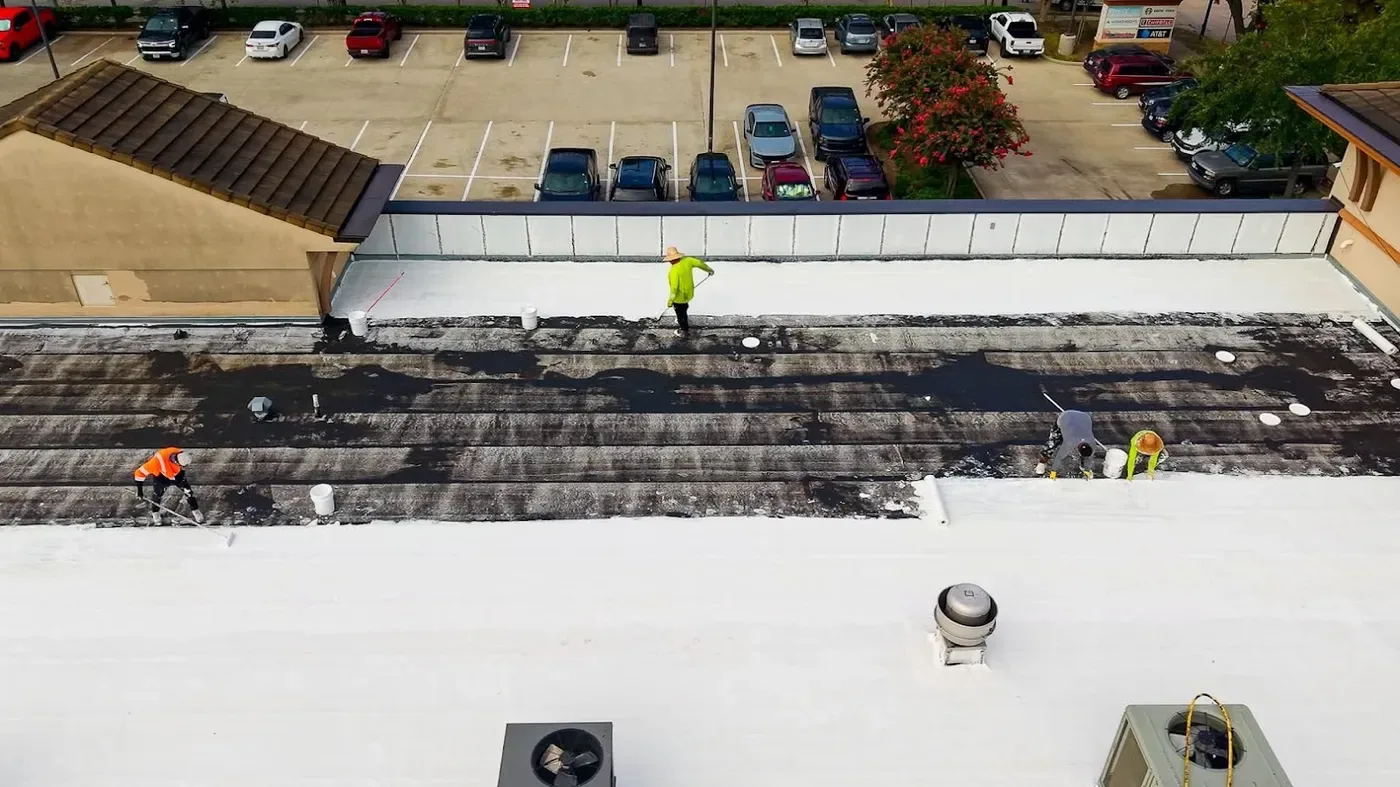
Dry core samples are the best news a roof can give an owner. The cuts come back clean, the insulation underneath is still firm, and the only complaint is a membrane that has turned chalky and thin after years of sun and cold. That is the moment a restoration coating becomes a reasonable question, and it is the moment we walk a property manager through before anyone prices a thing. A coating on a sound roof in South Bend, IN can add years of service for far less disruption than a tear-off. A coating on a wet roof only seals the problem in. Everything about the job, from the first survey to the last photograph, is built to tell those two roofs apart.
Which roofs qualify
A coating belongs on a roof whose bones are good. We want a membrane that still has material left in it, seams that are tight or can be made tight, a deck that is dry and sound, and insulation that has not soaked up water over the years. The only honest way to confirm that is to test it, so the first step is an infrared moisture survey, then core cuts wherever the scan shows a cold, wet reading. If the scan finds wet insulation across a large share of the roof, we say so plainly and talk about replacement instead. If it finds a few wet pockets, we cut those out and replace the insulation, then proceed. The coating is only the last layer of a decision built on what the roof is actually holding.
Cleaning and repair come first
Most coating failures are really preparation failures. The surface has to be washed until the old chalk, mildew, dirt and loose granules are gone, because a coating bonds to the membrane, not to the grime on top of it. After that we repair everything that would let water in: open seams, cracked flashings, failed sealant, fastener heads that have backed out, and punctures from foot traffic around rooftop units. Our crew treats this as commercial roof repair done in a particular order, with a primer and an adhesion test patch before the full application. If a test patch peels, we change the primer or the system before we spend an owner's money on the whole roof. Preparation eats more days than the application does, and it governs how the coating looks in its fifth winter.
Choosing silicone or acrylic
The two coatings we apply most behave differently once the roof is wet. Silicone coatings tolerate standing water, which matters on a flat roof that holds a shallow pool near a drain for a day or two after every storm. Rain or snow measurable enough to count falls on roughly 148 days of the year here, so a roof with any low spots will see that pool often. Acrylic coatings reflect heat well and cost less, but they are better suited to roofs that drain cleanly, because long exposure to ponding can break them down. Dirt pickup, the surface of the old membrane, and what the owner plans for the roof afterward all go into the choice, and we explain it in writing before the order is placed.
A short window between freezes
Coatings cure on a dry surface in moderate temperatures, and this market does not offer many such days. The average last freeze is around May 1 and the first fall freeze comes near October 18, and the stretch between them still includes plenty of damp days. In practice a coating season runs from late spring into early autumn, and a crew loses days to rain, dew and cool mornings. An owner who asks for a proposal in August is competing for a short remaining window, so the scope is best settled in winter, when a dry day for the survey and core cuts is easy to find on a cleared roof. The roof then goes into the first dry stretch of May with its materials already ordered.
Tenants stay in the building
Coating work is quieter than a tear-off, which is why it suits buildings that cannot close. Even so, a tenant should hear about it first. We give the manager a written notice that names the dates, the areas of the roof in use each day, and the odor that fresh coating can carry. Fresh-air intakes on the rooftop units are covered or switched off once the facility team has agreed to it, and the crew sets up its staging away from entrances. A medical suite, a food tenant or an assembly plant of the kind that dominates the building stock around Elkhart may need an adjusted schedule, and we plan that with the building engineer before anyone mobilizes. The approach is the same one we use for occupied building reroofing, with a lighter footprint.
What stays on file afterward
When the last coat is down we record the work. The owner receives photographs of the roof before cleaning, after repair and after coating, plus a record of the product used, the quantity applied and the areas that received extra material at seams and penetrations. That record is what makes the next visit useful, because a crew in ten years can see precisely what was done and why. We pair it with a spring and fall maintenance visit so that drains, flashings and coated seams get looked at while they are still small. Owners of industrial space such as the buildings listed at the South Bend Airport Business Park can hand that file to the next tenant or buyer without anyone guessing, and the same goes for a Mishawaka retail owner.
Commercial Roofing Questions
Can you coat a roof that already leaks?
Sometimes, but only after the leaks are traced and the wet material is dealt with. We find the entry points, repair them, and cut out any insulation the scan marks as saturated before a coating goes down. Coating over active leaks traps moisture, which can blister the new surface and spread the damage across the deck. If the survey shows the water has gotten into most of the roof, we will recommend a full replacement instead, with the evidence in front of the owner.
How long does a coating last before it needs attention?
Ask for the condition of the roof at five years, not a promise of a number. A coating that was applied to a clean, repaired surface and then inspected twice a year tends to stay in good shape for a long time. One that is left alone while drains clog and ponds form wears out early. Our spring and fall visits include a look at coating thickness at seams, wear along walk paths, and any peeling near penetrations, so the owner knows when a maintenance coat is due.
Does a coating change how the roof handles snow and ice?
The surface can be slicker when it is wet or iced, which matters to anyone walking the roof in winter. We add walk pads along the routes to rooftop equipment and drains, so a technician is not stepping on bare coating in January. Drift behavior is set by parapets and equipment, not by the surface, so a coated roof still collects snow in the same places. We flag those spots during the first winter after the job.
Is a coating cheaper than a recover or a replacement?
Usually the coating costs less, but the right comparison is what each option leaves behind. A coating extends a sound roof without adding weight or removing material, while a recover adds a new membrane over the old one and a replacement starts over from the deck. Cost moves with the amount of repair needed, the number of penetrations and how much access the crew has. We price all three options when the survey leaves the choice open.
Will the building lose heat or gain cooling benefits from a coating?
A white or light-colored coating reflects sunlight, which can ease cooling loads in summer on a building with significant rooftop air conditioning. It does not add meaningful insulation, so winter heating is unaffected by the coating itself. If the owner wants thermal improvement, that comes from adding insulation, which is a different scope.
Related Roof Work
- Infrared Roof Moisture Surveys
- Commercial Roof Repair
- Silicone Roof Coatings
- Acrylic Roof Coatings
- Occupied Building Reroofing
- Preventive Roof Maintenance
- South Bend Airport Industrial Park
- Roof Recover and Overlay
- Commercial Roof Replacement
Talk to Our Team
Tell us where the water is landing, what the roof is made of and when the building is easiest to reach.
Phone: 555-555-5555
Email: [email protected]