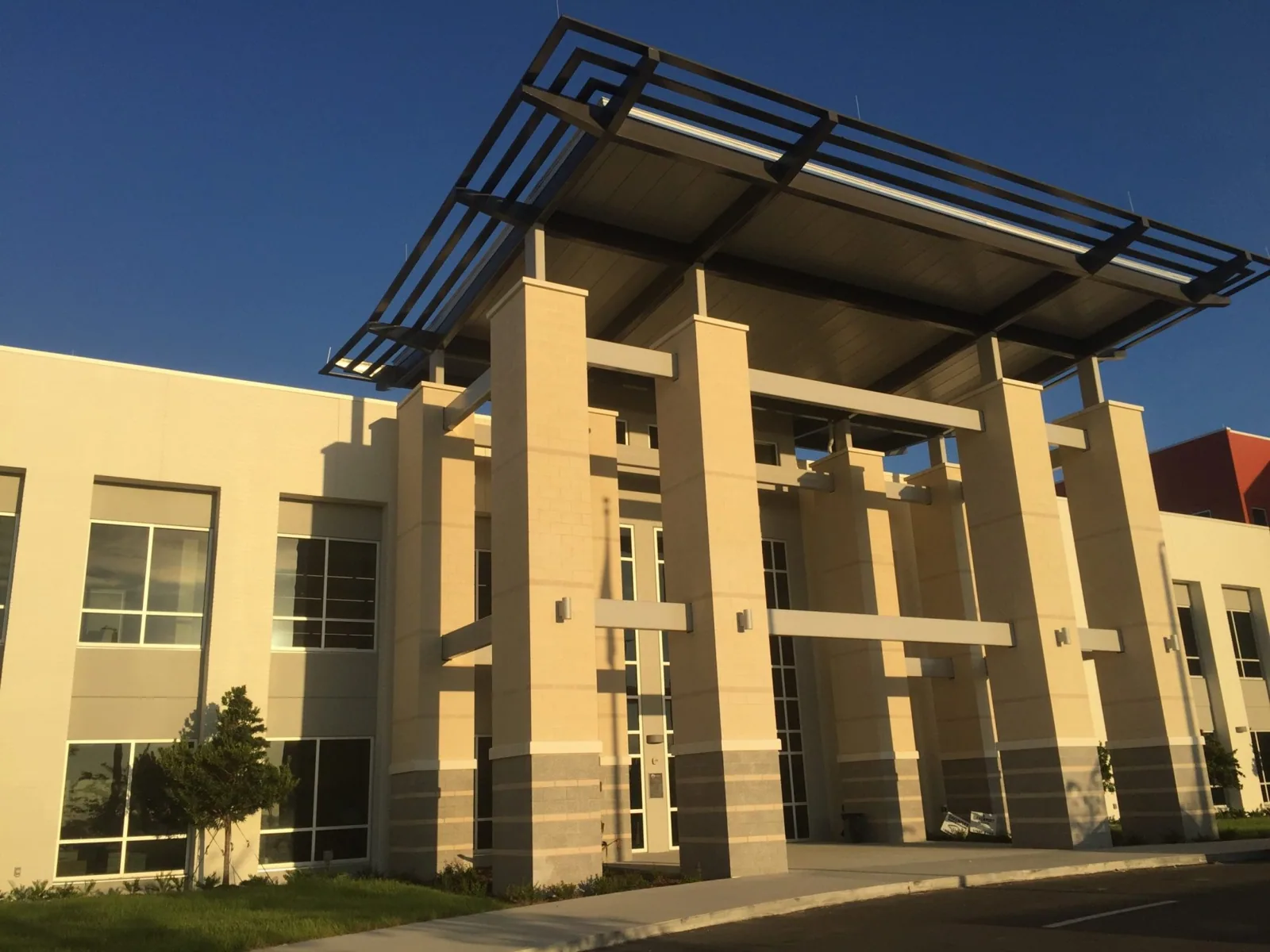
A board packet goes out on Friday with a roof line that has doubled since spring, because a gym roof patched twice this winter let go a third time over the weekend. The business manager has the invoices, the facilities director has the photographs, and the superintendent has a question that neither can answer yet: is this the last patch or the first of many? Districts around South Bend, IN face that question across a spread of buildings, and the roofer on the phone is expected to supply an answer that a board can act on.
We start with a safe building, then a written finding. The crew can clear drains, trace the leak and set a temporary dry-in; photographs document the conditions found. The written finding can describe what failed and compare the options by tear-off, insulation, access and phasing. A district that keeps a roof condition report for every building turns the Friday surprise into a line on a plan.
What the board asks first
Board members ask three things in a fixed order. Is anyone at risk? What does this cost now? What does it mean for next year? We build the first response to answer them in that sequence. The crew makes the area safe and dry on the day of the call, so the first question is closed before the meeting. The cost of the repair is separated from the cost of any larger decision, so a board can approve the one without being pushed into the other. And the finding says whether this roof belongs on the replacement list, so next year's budget is built from evidence. Nothing in the report requires a board member to understand membrane chemistry, only photographs and plain statements.
The gym roof that keeps leaking
Most districts have one roof that consumes the repair budget. It is usually over a gym, a cafeteria or a long corridor, and it has been patched every winter by someone who did the right thing each time. We count calls instead of dollars. Three leak calls on one roof in two seasons is a signal. We then cut cores to see whether the insulation is wet, scan with infrared after sunset to map the wet area, and compare the extent of wet material with the cost of replacing that section. If the wet area is small, a targeted repair holds. If it has spread, patching only moves the water. The answer is put on paper for the board, with both paths priced in the same terms.
Capital years and roof years
Roofs fail on the weather's calendar, not the fiscal year. About 148 days of every year bring measurable precipitation to South Bend, so low-slope roofs here shed water through many cycles, and a seam that opens in one winter leaks in the next thaw whether or not the budget has room for it. That is why a district benefits from a plan that spans several years. We rank roofs by condition and by what lies beneath, put the worst on the earliest dates, and leave sound roofs on maintenance. With roof capital planning in hand, a board can present the whole sequence to taxpayers and then execute it in pieces, funded however the district chooses, without being surprised by a roof that was never on the list.
June to August, with the buses parked
Summer is the long window, and every district wants it at once. A tear-off needs consecutive dry days, a clean deck and a place to stage materials away from bus lanes, which means a request that arrives in late May is competing with the rest of the county. Districts that order in winter or early spring get a better schedule. We stage the work building by building, close each section before the crew leaves each evening, and keep a written fallback for anything that must be complete before students return. Work that cannot wait for summer, such as a failing section over a classroom, is planned as a separate small project, and a commercial roof replacement may be phased across two summers.
After a storm, before the next class
Storms do not wait for the school calendar, and a summer storm can arrive while a building is empty or in summer session. The October 12, 2016 microburst that swept from Northside Boulevard to Longfellow Road in South Bend showed how locally wind can strike, and the June 1, 2019 storms put 1 inch hail on South Bend and 0.7 inch in Mishawaka. A district without roofing staff needs someone who walks every roof afterward. We check edge metal, copings, rooftop units and the membrane for dents, fractures and lifted seams, and we photograph findings before any repair changes the evidence. That record is what an insurer needs, and the steps for hail damage roof repair are the same on a school as on any other building.
Papers for the auditor and the insurer
Public money comes with paper. Plans for a replacement go to the local building department and are reviewed against the 2014 Indiana Building Code, a state adaptation of the 2012 IBC, with the 2010 energy code and its ANSI/ASHRAE 90.1-2007 standard governing insulation. Specifications should name the system and the insulation, and bids should compare like scopes. We write scopes in that form, supply photographs and condition ratings for each building, and keep a repair log. Triton, headquartered in Bourbon, Penn-Harris-Madison, whose schools serve Granger, and South Bend Community School Corporation all answer to the same statewide building code. When a storm loss goes to a carrier, the adjuster and the insurance restoration contractor work from the same photographs, and a district faces the same scrutiny of public money as any of the area's public agencies.
Commercial Roofing Questions
How many patches are too many on one school roof?
Count calls rather than dollars. Three leak calls on one roof within two seasons is a signal, and a repair near the same spot twice means the water has another way in. At that point cores and an infrared scan show whether the insulation is wet, and the board can compare a targeted repair with replacing the affected section.
What should a roof report include for a board packet?
One page per building is enough: a photograph of each roof section, a rating for remaining life, the leak history, and a recommended action with a reason. Repair, replacement and maintenance items sit in separate groups, with cost drivers described plainly. A board member who has never climbed a roof can then see what is urgent and what can wait.
Can a roof program continue if a bond or referendum does not pass?
In a reduced form it can. Maintenance visits, drain clearing and targeted repairs are modest and keep the worst roofs from getting worse. The condition reports remain useful, because they tell the district which buildings to fund first when money returns. Roofs with wet insulation stay on top of that list, since delay lets the damage grow.
Is summer the only time to replace a school roof?
Summer is the longest window, not the only one. A fall or spring project is possible on roofs away from classrooms, such as a bus garage or a storage wing, and an urgent section over occupied rooms can be done in phases with noise and fume controls. Cold weather limits adhesives, so winter work is mostly repair and dry-in.
Who checks the roofs after a hailstorm if the district has no roofing staff?
After a storm, a roof walk can document dents, fractures, lifted seams and damage to metal. A report goes to the facilities director and, if a claim is filed, to the district's insurer. Hail damage on a membrane may not show from the ground, so the walk is worth doing even when nothing appears wrong.
Related Roof Work
Talk to Our Team
Tell us where the water is landing, what the roof is made of and when the building is easiest to reach.
Phone: 555-555-5555
Email: [email protected]