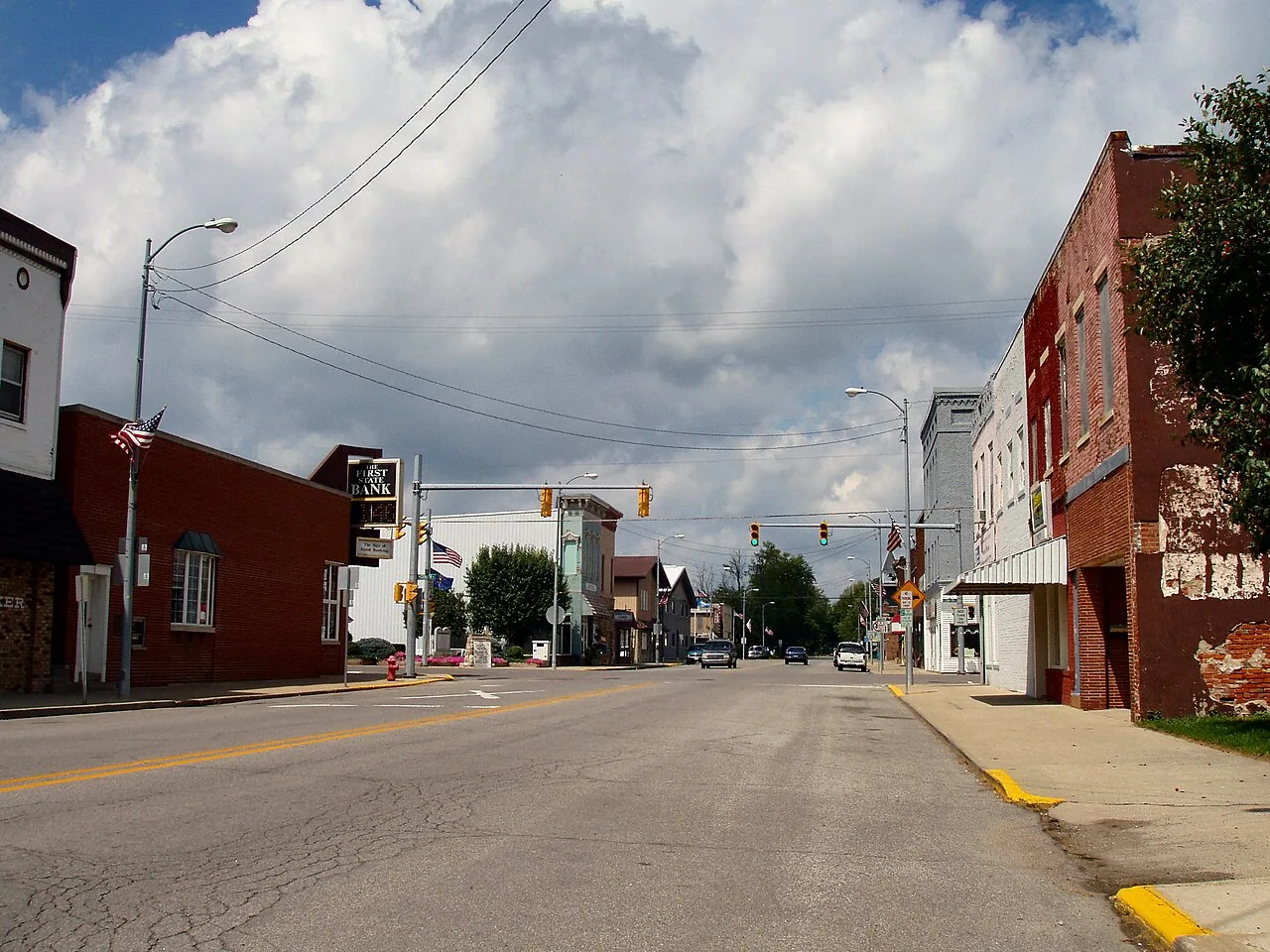
Monday morning after a weekend freeze, an office manager notices water beading on the housing of a ceiling light, and the only sensible next move is to switch that circuit off before anyone touches the fixture. Bourbon, IN is a 1.15 square mile town of 1,698 residents in Marshall County, about 15 miles from Plymouth, and it is home to the Triton School Corporation headquarters. Our crews handle flat and metal commercial roofs for owners in town, and a call like that one gets the same treatment anywhere: make the space safe, stop the water, photograph everything, and then plan the permanent repair on a schedule the owner can follow.
Water at a light fixture comes first
Water that reaches wiring changes the order of the whole visit. We ask the occupant to shut off the affected circuit at the panel, keep people out from under the stained area and move anything valuable aside, and then a crew goes onto the roof to find the entry point. A stain beside a light often follows a ceiling cavity from some distance away, so the crew checks the nearest drain, the nearest rooftop unit and the nearest wall before anything else.
Once the opening is found we tarp or patch it, set up a temporary dry-in that holds through the night, and send the manager the photo log with the wet areas marked. The permanent repair follows after the thaw or the next dry window, whichever the roof allows.
State Road 331 and the way in
Bourbon sits about 15 miles from Plymouth, and State Road 331 connects Bremen south 12 miles to Bourbon. For an urgent call, the owner can identify the municipality, roof access point and condition below the leak. Road and site access details help the team plan a response, while the immediate guidance is to keep people away from wet electrical areas and protect contents where it is safe to do so.
The same planning applies to scheduled work. A replacement in a small town works best when equipment, dumpsters and material deliveries are sequenced to arrive together, and we agree on where they go with the manager during the first walk.
When the owner is a school corporation
The Triton School Corporation is headquartered in Bourbon, and a public school body brings its own calendar to a roof project. Funds come through a budget cycle, work needs board approval, and the weeks when buildings are empty are limited. A written condition report with photographs and ranked options is what a board can act on, and that is the form it takes for school roofing and for any of the school districts that must justify a roof budget.
During the school year the plan changes: a fenced work zone away from walks and entries, noise windows that keep classes and offices undisturbed, and a staff notice that says where the crew will be each day.
Triton and the local work calendar
Bourbon is home to the Triton School Corporation headquarters, so school-related roofing work can involve a budget cycle, board approval and a narrow window when buildings are less occupied. The same planning discipline helps other local property owners coordinate access and set a realistic project scope.
The first walk reads whatever repair history the roof carries. We map the patches, cut a core where the surface suggests trouble, and use an infrared moisture survey to find insulation that has stayed wet under a sound-looking sheet. A roof with two or three generations of repair often looks worse than it is, and sometimes looks better than it is, which is why the scan comes before the quote.
Lake-effect weeks and the load on the deck
In South Bend, the November 2022 lake-effect event delivered 30.2 inches during its first 20 days, while Mishawaka received 20.7 inches during the event. South Bend's annual average is 64.5 inches. Those figures illustrate why owners in the broader area should check drainage before winter and after major snow events, while site conditions determine the right inspection and snow-management approach.
Snow adds weight evenly across a flat roof and unevenly where it drifts against a parapet or a rooftop unit. When removal is needed, it starts at the drift lines, leaves a thin layer on the membrane and keeps clear of drains and edges, working with plastic tools so the sheet is not cut. The same sequence carries into snow and ice damage repair once the thaw exposes what the weight did.
Deciding between another repair and a new roof
The numbers that matter are the share of insulation that is wet, the remaining condition of the sheet at seams and flashings, the count of repairs in recent winters and the cost of one more emergency visit. When a building needs a new roof, owners who plan it as a funded project through roof capital planning usually avoid paying for emergency work twice. We bring the written report, the photo log and a range of options to that conversation, and we leave the decision with the owner.
For a school or public building, the roof record should name the affected room, the access route, and the work window that avoids normal use. We also separate emergency dry-in from permanent repair in the written scope, so a board can approve the lasting work without losing track of the step that protected the interior first.
For a small commercial property, the owner can keep a simple roof file with inspection photographs, repair dates, product information and notes about recurring interior stains. Before a project, identify where lifts or material can be staged and whether tenants or staff need advance notice. In Bourbon, school-related work can also require coordination with the Triton School Corporation's calendar and approval process; the roof inspection should still determine the assembly, repair history and best construction window for each building.
Commercial Roofing Questions
Water is running down inside a wall beside a light switch. Is that an electrical emergency?
Treat it as one until a licensed electrician says otherwise. Shut off the circuit at the panel, keep people away from the wet wall and call us for the roof side. We tarp the opening, find where the water entered and photograph the path, so the electrician and the insurer both have a record of what got wet.
What information helps coordinate an emergency response to a rural building?
Share the municipality or general property area, the access point, what is at risk below the roof and any gate or escort requirements. Emergency roofing response is available around the clock, including holidays; arrival and repair timing depend on conditions, access and the roof assembly. Keep people clear of wet electrical areas while response is coordinated.
The administration office has been patched three times in two winters. What should the board hear before a fourth patch?
That pattern usually means the water is traveling beyond the visible leak, often into insulation that stays wet. An infrared survey and a few core samples will show whether the problem is local or spread across the roof, and the board then has a recommendation based on measured wet area and the cost of one more emergency visit.
How much snow is too much for a flat roof?
Snow load limits depend on the building's design and current conditions. If the roof shows deflection, cracking, unusual sounds or active leakage, keep people away and have a qualified professional assess it. Any snow removal requires safe access, appropriate equipment and a plan that avoids damaging the membrane or overloading one section.
A replacement here is reviewed under which code?
Confirm applicable building-code and permit requirements with the local building department for the specific project before setting insulation or fastening details. The required scope can depend on the work proposed and existing roof assembly.
Related Roof Work
- Commercial Roof Leak Repair
- Plymouth
- Bremen
- School Roofing
- School Districts
- Infrared Roof Moisture Surveys
- Snow and Ice Roof Damage Repair
- Roof Capital Planning
Talk to Our Team
Tell us where the water is landing, what the roof is made of and when the building is easiest to reach.
Phone: 555-555-5555
Email: [email protected]