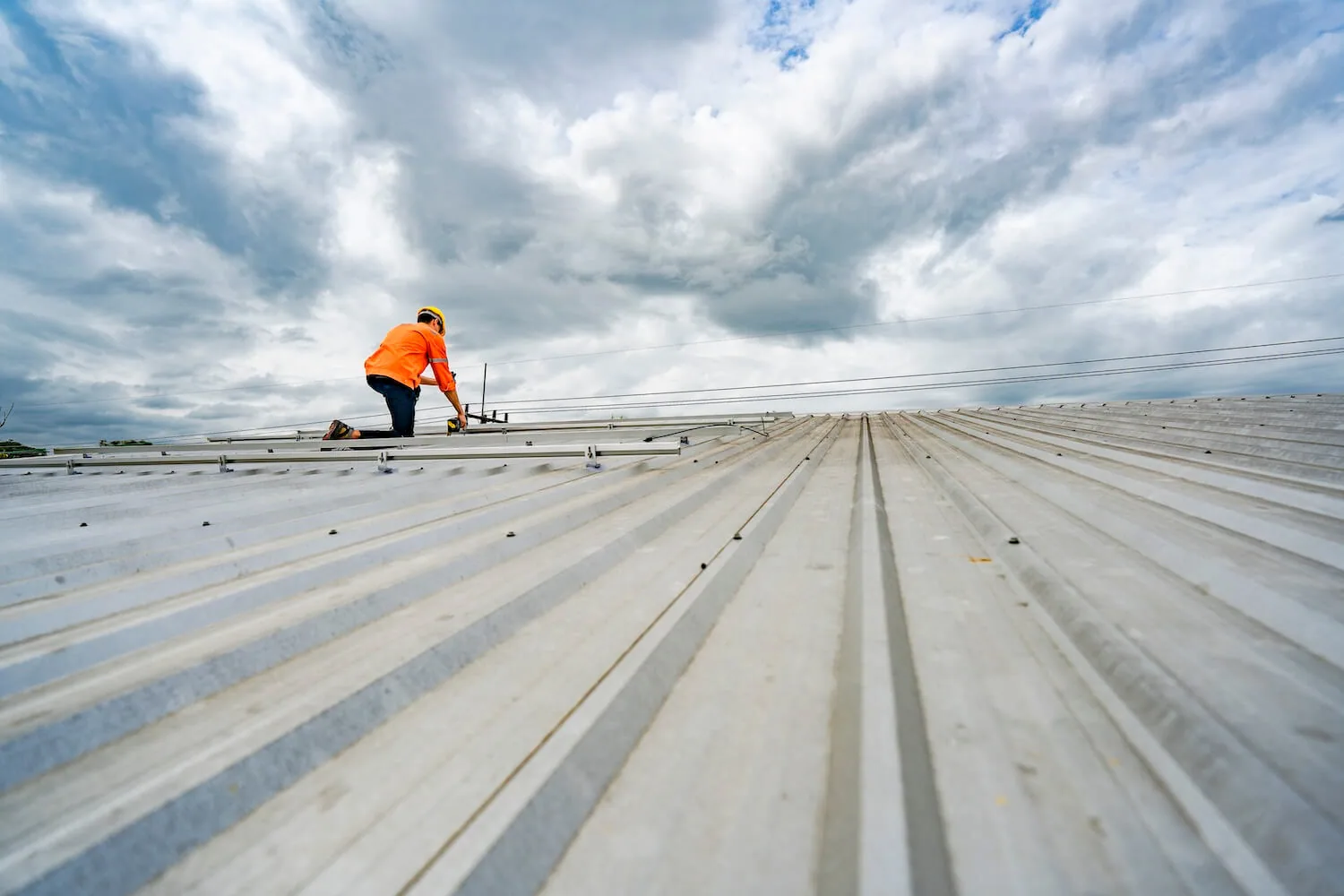
The capital committee meets in the second week of January, and the roof line on its agenda is the one that gets pushed down the page every year. Somebody asks which roofs are actually due, somebody else says the oldest one has not leaked lately, and the meeting moves on to the parking lot. For an owner in South Bend, IN the cost of that habit shows up in March, when the thaw exposes a roof that should have been scheduled two budgets ago and the work now has to be done as an emergency instead of a plan. Capital planning for roofs is the practice of deciding, building by building and year by year, what each roof will need and when the money has to be there.
We build the plan from the roof, not from a spreadsheet of installation dates. A crew walks each building, reads the condition, and writes down what the roof can still do, what it will probably need next, and what it costs the owner to wait. The committee gets a document it can act on in the same meeting, and the manager gets a calendar that respects the way winter works in this market.
A budget year for every roof
Each roof in the plan is assigned one of three positions: repair and hold, restore, or replace, with a target year attached. Repair and hold means the membrane and insulation are sound enough that spot work keeps the roof dry for several more seasons. Restore means the insulation is dry and the surface is worn, so a coating or a recover over the old roof extends service. Replace means the insulation is wet, the deck is soft, or the seams are failing faster than repairs can follow. We state the evidence beside each position so the committee can see why one building moved ahead of another. A roof that moves from restore to replace between two annual reviews tells the owner something the installation date never could.
Remaining life is a range
Nobody can promise that a membrane has seven years left, and a plan that pretends otherwise falls apart the first time a hard winter arrives. We give each roof a window, an early year and a late year, and tie the window to the conditions that would pull it earlier. South Bend's recorded swing runs from -22 F to 104 F, and the roof expands and contracts across that range every year, so a membrane with brittle seams near an equipment curb will not last as long as its neighbor in the open field. Drainage matters just as much. A roof that holds water for days after every rain ages faster than one that clears in an hour, and the plan marks which drains and slopes shorten which windows.
What the code in force asks of a new roof
A replacement is a permitted project, and the code edition in force sets what the new roof has to include. The state's homeland security department names the 2014 Indiana Building Code, derived from the 2012 International Building Code, as the commercial edition now applied by local building departments, and the energy code in force points to ANSI/ASHRAE 90.1-2007. A pending commission rule would move Indiana to a 2026 code drawn from the 2024 International edition, but the draft leaves the effective date blank. A cautious owner plans a roof that will still satisfy the next edition, which usually means asking about insulation thickness and wind uplift now, while the design can still change. That question belongs in every commercial roof replacement scope before the assembly is finalized.
Winter decides when money can be spent
Freezing nights begin around October 18 and last until about May 1, which leaves a working season that is shorter than the budget year. Adhesives, welds and sealants need dry, moderately warm conditions, so a plan that assigns a major replacement to January is a plan that will slip. We schedule the large projects for late spring through early fall and keep the winter months for the work that can be done safely in the cold, such as snow load checks, drain clearing and temporary repairs after snow and ice damage. A plan that notes the same pattern in the next three years lets the owner place purchase orders early enough for materials to be on site when the weather opens, which is how projects start in May instead of July.
Staging a big building across years
Some buildings are too large to replace in one season without stopping the business under them. At University Park Mall along the Grape Road corridor, the mostly single-story enclosed complex covers 918,559 square feet and has more than 4,300 parking spaces. A roof program there is staged by section, with entrances and food areas sequenced around the retail calendar. The former Studebaker complex in the Renaissance District is being redeveloped as a technology campus of more than a million square feet. Its roof work follows redevelopment phases, with occupied areas protected as sections move forward. Our multi-site programs use the same staging logic.
The plan the committee reads
The finished plan is short enough to read before a meeting. It lists every roof with its position, its window, the evidence for both, and a ranked list of what happens if the work slips by one year. The pages that matter most are the ones about deferral, because deferring is a decision with consequences, such as wet insulation spreading, deck corrosion and an interior claim. We keep the underlying roof condition reports attached so anyone can check a conclusion against the photographs. Each year the plan is updated from the new visit, and a roof that aged slower than expected moves down the list, which is good news that rarely makes it into a spreadsheet.
Commercial Roofing Questions
How far ahead should a roof plan look?
Five years captures most of the decisions, because a roof that is not due inside five years rarely needs its money reserved yet, and a roof due inside two years needs engineering and a permit. We also keep a longer view for the oldest buildings so the committee can see the cliff before they reach it. The shorter window gets revisited every year after the fall visit.
Do we replace a roof the year it starts to leak?
Not automatically. A roof with a handful of leaks at details such as flashings and curbs may need repairs rather than a new membrane, and spending replacement money on it wastes the remaining life. A roof where cores show wet insulation across the field is a different case, because the leaks are only the visible part. We look at the cause of the leaks before recommending the year.
What does the plan assume about snow and ice damage?
It assumes South Bend's winters will happen again. About 64.5 inches of snow a year is the average, and the November 2022 lake-effect storm put 22.7 inches on the airport in one event, so a plan that treats winter as an exception is a plan that underbudgets. We include a modest contingency line for storm repairs and mark the roofs most exposed to drifting at parapets and rooftop equipment.
Can the plan cover a building we are about to buy?
Yes, and a buyer often needs it more than a seller does. A first-year plan built from a walk and moisture readings gives an acquisition team a defensible number for the roof portion of the deal and a sequence for the following years. When time before closing is short, a due diligence survey supplies the evidence and the plan follows from it.
Who updates the plan when the budget changes?
We do, at the owner's request. If the committee cuts a year of funding, the plan shows which roofs move and what each move risks, so the cut is made with the consequences in front of the room. The same applies in reverse when money appears, and the ranked deferral list tells the manager exactly which project to pull forward.
Related Roof Work
Talk to Our Team
Tell us where the water is landing, what the roof is made of and when the building is easiest to reach.
Phone: 555-555-5555
Email: [email protected]