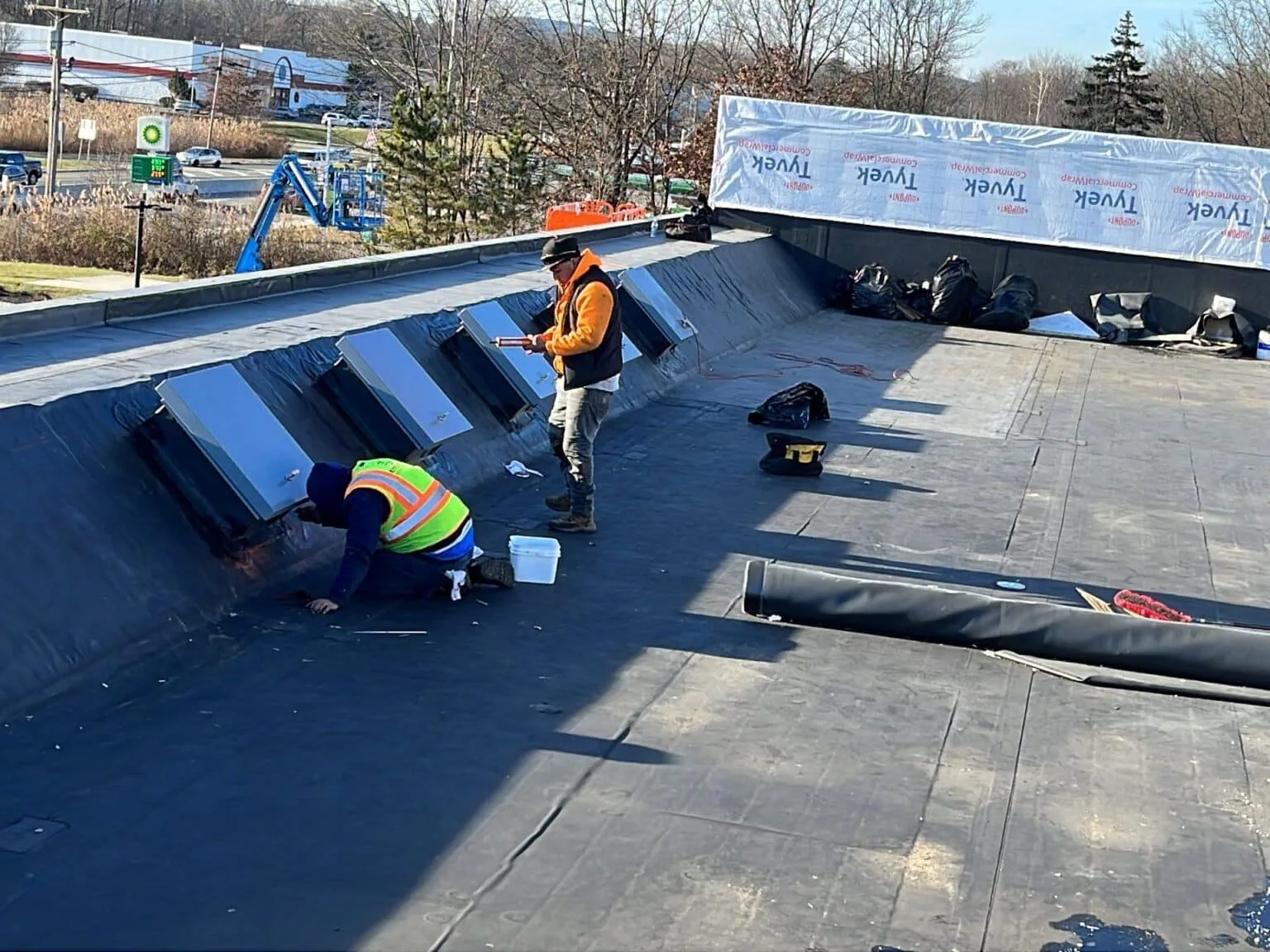
The repair invoices on one South Bend, IN building have started to look alike. The same seam near the north parapet, the same drip over the same ceiling tile, the same patch put down after the same January thaw. Nobody decides to replace a commercial roof on a good day, and the question on the property manager's desk is whether one more patch is worth paying for. The answer comes from what is under the membrane, not from what the surface looks like.
A full tear-off removes the old system down to the structural deck, corrects what the old roof got wrong, and puts a new assembly on the building with a clear start date for its service life. The work runs in a fixed order, from the first walk across the roof to the follow-up visit after the first thaw.
What we find before we price it
The first visit is on site, on the roof, with a moisture meter, a probe, a camera and time to look. We walk every field, seam, flashing and drain, and we cut small cores through the membrane to see what the insulation underneath actually holds. Dry, firm insulation can often stay in place as a base. Wet, crushed or spongy insulation cannot, and that single finding changes the scope more than any other. Where the roof is large or the surface is hard to read, an infrared and core-cut moisture survey maps the wet areas so the tear-off scope rests on a picture and not a guess. Everything goes into a photo log: the cores, the deck where we can see it, the drains, the edge metal and every penetration. The property manager receives that log with a written scope, so the decision to replace is made with the same evidence we are using.
The tear-off, in order
Replacement runs in a sequence, and the sequence is what keeps a building dry. Before any membrane comes off, we set up staging, protect the walls and walks, and agree where debris leaves the property. We size each open section around the crew, forecast and assembly so it can be protected as work progresses; exposed decking needs a planned dry-in before weather changes. In each section we strip the old membrane and wet insulation, then look at the deck. Corroded steel deck is cut out and replaced, and damaged wood or concrete is repaired before anything new goes down. New insulation and a cover board follow, then the membrane, then the flashings, edge metal and drain details, which is where a rushed roof fails first. The system itself, whether TPO, modified bitumen or another membrane, is settled before the crew arrives, so no one chooses a product on a roof with weather moving in.
Slope and drainage get fixed here
A tear-off is the one time an owner can correct slope. Measurable precipitation falls on about 148 days a year in South Bend, so a low-slope roof has to move water off quickly, and ponding at the low corners is usually a design problem that patching never solves. Tapered insulation built up toward the drains, new sumps where the old ones sat high, and drains and scuppers that are sized and cleaned for a heavy downpour all belong to this stage. The energy code comes up here as well. The Indiana Energy Conservation Code in effect is the 2010 edition, which adopts ANSI/ASHRAE 90.1-2007, and a full replacement is normally the moment the insulation level is discussed with the local building department. We plan the insulation and cover board with that review in mind and flag it early, because it can change thickness, edge heights and flashing details.
Winter sets the calendar
A South Bend year brings 64.5 inches of snow on average, the first freeze arrives October 18 and the last comes May 1, so the season for adhesives and sealants is short. We plan backward from the cold, with large tear-offs in the warm months and cold-weather details only where the product allows them. Snow also changes the scope. Drift load piles against parapets and rooftop units, and an older roof that carried that weight for years may show deck deflection or loose fasteners once we open it. Snow removal before and during the job is a line in the plan, and ice at the drains is cleared before it can back water under a half-finished edge. When a job straddles the seasons, we dry in every section at night and finish the remaining details after the thaw.
Tenants hear about it first
The work happens above people, so they hear about it before it starts. We prepare a tenant notice with the start date, the noisy phases, the days that loading areas and roof hatches are affected, and a number to call. Rooftop units are protected or shut down for short, scheduled periods, and fresh-air intakes are covered during adhesive work. On a job in downtown South Bend near the Renaissance District, which is redeveloping the old Studebaker complex, that planning includes deliveries, staging and any lane closure the street requires. Healthcare, school and warehouse tenants each have quiet hours, and we write the sequence to fit them.
What the finished roof hands you
At the end the property manager receives a closeout package: the photo log from first walk to final flashing, the system documentation, and the manufacturer warranty paperwork that applies to what was installed. A follow-up visit after the first thaw checks seams, flashings and drains once the roof has been through a real freeze cycle. From there, an annual preventive maintenance visit keeps the drains open and the details sealed.
Commercial Roofing Questions
How do I know the roof is past patching and needs replacement?
Three findings usually decide it: wet insulation across a large part of the roof, seams and flashings failing in more places than patches can keep up with, and repair costs that repeat every winter. We confirm with core cuts, not by judging the surface. If the insulation is wet in only a few small areas, targeted repair and a maintenance plan can be the better spend. If it is wet widely, the money is going into patches over a failing base, and we will say so in writing with the photos beside it.
Can the building stay open during a tear-off?
In nearly every case, yes. We work in sections, dry in each one daily, keep walkways and entrances protected, and give tenants advance notice of the noisy phases. Hospitals, schools and manufacturing floors set their own limits, such as no work above a surgical suite or no hot work during a shift, and we write those limits into the sequence before the job starts. Where a tenant cannot tolerate any disruption, we schedule that area for nights or weekends.
Does a new roof have to meet a newer code than the old one?
Replacement work is reviewed against the code the state has adopted. The commercial code in effect is the 2014 Indiana Building Code, which follows the 2012 IBC, with the 2010 energy code behind it. The state also has a pending rule to adopt the 2024 International Building Code, and the effective date has not been set. We check the current status with the local building department at the start of each scope, because wind uplift, insulation and drainage requirements can all change a replacement.
Should I recover over the old roof instead to save time?
A recover can be the right answer when the existing insulation is dry, the deck is sound and only one roof layer is in place. It is the wrong answer over wet insulation, because the new membrane traps the moisture and the problem returns. A recover overlay goes ahead only once core cuts and moisture readings confirm the base is dry.
What time of year is best to replace a commercial roof here?
Late spring through early fall gives the widest window, since adhesives and sealants cure properly and large sections can be dried in without fighting snow. If a roof is failing now, we make it safe with a temporary dry-in and plan the permanent work for the right weather instead of forcing a tear-off into January.
Related Roof Work
- Commercial Roof Repair
- Infrared Roof Moisture Surveys
- TPO Roofing
- Modified Bitumen Roofing
- Roof Drains, Scuppers and Ponding Correction
- Roof Insulation, Tapered Systems and Cover Board
- Downtown South Bend
- Preventive Roof Maintenance
- Roof Recover and Overlay
Talk to Our Team
Tell us where the water is landing, what the roof is made of and when the building is easiest to reach.
Phone: 555-555-5555
Email: [email protected]