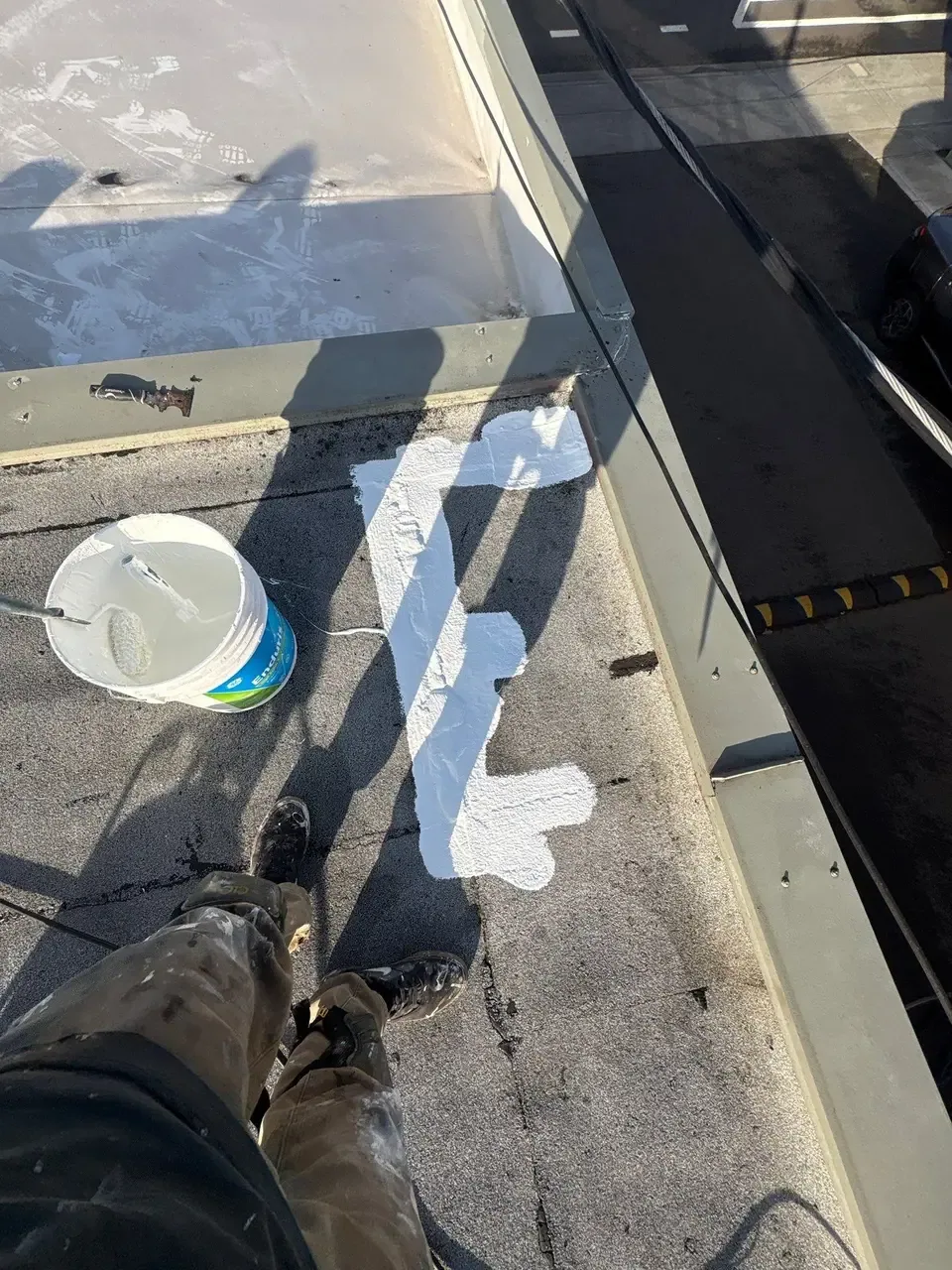
A ceiling tile browns at the corner of a second-floor suite, and by the time the tenant emails the property manager, the stain has doubled. The first instinct is to send someone up to look for a hole. On a commercial roof in South Bend, IN that rarely works, because water enters at one point and travels along insulation, deck flutes and framing before it shows itself somewhere else entirely. Stopping a leak means following the water backward, in order, until the opening is found, and that is the sequence we use to locate the likely entry point before recommending a repair.
Water travels, so we start inside
The first call gives us the suite, the ceiling location and the weather of the past few days. A crew goes to the interior first and photographs the stain, the ceiling grid and any wet insulation visible above the tiles. Moisture readings on the ceiling and the deck underside show how far the water has spread and in which direction it is moving. On a steel deck, water follows the flutes and can drop a long way from where it entered. On concrete or wood, it tends to stay closer. From those readings we draw a likely path back toward the roof, and only then do we climb up, with a plan for where to look. If the path is unclear, an infrared and moisture survey across the suspect area shows where the insulation is holding water.
Drains and scuppers come first
Before we hunt for punctures, we check whether water is leaving the roof at all. South Bend averages measurable precipitation on about 148 days each year, and the city recorded 4.88 inches in 24 hours. Owners of low-slope roofs should keep drainage paths clear and check overflows before heavy rain. Ice at the drains after a cold snap, leaves and debris in a scupper, or a blocked overflow can leave water standing at the low corner for days. Water that stands pushes through every weak lap and flashing nearby. We clear the drains and scuppers, check whether the roof is holding water in a depression, and treat any spot where water stands as a ponding water problem with a repair of its own. Some leaks stop, or at least slow, at this step.
The usual suspects, in order
Once the roof drains freely, we work through the places leaks start. Penetrations come first: pipe boots, conduit supports, vent stacks and the flashing around each skylight and penetration. Then wall and parapet flashings, where counterflashing may have pulled loose. Then seams and laps, edge metal and coping joints, and finally the open field of the membrane, which can carry punctures from foot traffic or a dropped tool. Rooftop equipment is a repeated offender, since HVAC technicians open panels and disturb curbs. A controlled water test can help isolate a suspected detail when conditions allow it; the test area is limited so water is not introduced broadly across the roof.
A repair is stronger when it follows a confirmed path. We compare the interior stain with roof slopes, drain locations, deck direction and any wall or equipment transition above it. If two likely entry points remain, separate tests can help distinguish them rather than spreading sealant across a broad area. The closeout record should identify the detail repaired, materials used and nearby conditions that merit monitoring.
Protecting the building during repair planning
While we find the permanent answer, we make safe. That can mean temporary protection over the opening using a compatible membrane, sealant or secured cover, selected for the roof assembly and site conditions. The goal is to reduce further exposure while permanent work is planned. Wet ceiling tile and insulation that threaten to fall are removed or reported to the property manager. If the leak is part of a larger storm event or involves structural concerns, it moves to emergency roof repair, with overnight response and a longer dry-in. Either way, the building is protected before the paperwork starts.
Scheduling the permanent fix
A temporary repair in January is not the finish. The permanent leak repair is scheduled when the specified materials can cure under the actual temperature and moisture conditions. In colder months, a compatible temporary measure may be needed until permanent materials can be installed properly. The scope covers the opening itself and the wet material around it. Insulation that has absorbed water is cut out and replaced, since leaving it traps moisture and spreads damage. Flashing is rebuilt to the existing membrane and tested. A planned repair on adjacent weak details is often added, so the same wet weather does not find the next failure. A follow-up inspection can check the repaired detail and nearby roof areas after weather has tested the assembly.
Tenants, insurers and the record
Every leak call creates a record: the photo log from the interior and the roof, the readings, what we found and what we did. That record helps the tenant understand which areas were affected and what protection or follow-up has been recommended. An insurer may also ask for dates, photographs and a description of the cause. If a storm caused the opening, the photo log is arranged the way an adjuster reads an insurance claim file: dated, located and tied to the cause. We keep tenants informed through a short notice describing the work and the follow-up. In Elkhart, where RV and manufacturing employers are part of the local economy, the notice also names the bay or section so the right supervisor can plan around it.
Commercial Roofing Questions
Why does the leak show up so far from where the water gets in?
Water follows the path of least resistance under the membrane, through insulation joints, along deck flutes and down framing, before it finds a gap in the ceiling. On steel decking, that path can run dozens of feet. That is why we start with interior readings and trace backward instead of examining only the roof area above the stain. Where the path is uncertain, moisture mapping narrows the search and prevents us from repairing the wrong detail.
Can a winter leak be protected while permanent repair waits for suitable conditions?
Temporary protection may be appropriate if the roof can be accessed safely and the material is compatible with the assembly and weather. Keep people away from wet electrical areas, protect contents where safe, and share the roof access rules. Permanent repair timing depends on the products specified and actual site conditions.
Is roof cement over the spot a good fix?
It is a stopgap at best. Cement slathered over a flashing or crack hides the problem, cracks again as the roof moves through freeze-thaw, and makes the later proper repair harder because the surface must be cleaned of it first. We prefer repairs compatible with the membrane, applied to a cleaned and prepared surface. If an emergency requires a quick patch, we label it as temporary and schedule the permanent one.
Does a leak mean the insulation is wet and needs replacing?
Not always. Moisture readings and, where appropriate, core samples help determine whether insulation is damp, saturated or unaffected. The repair scope should target the observed condition and identify any concealed material that may change the work.
What should an owner do before contacting the insurer?
Prioritize immediate safety and document visible damage before conditions change, when it is safe to do so. Review the policy and carrier instructions for notice and temporary-protection requirements. A roofer can inspect the roof, describe observed conditions and provide photographs or a repair scope for the owner to share with the insurer.
Related Roof Work
- Infrared Roof Moisture Surveys
- Roof Drains, Scuppers and Ponding Correction
- Ponding Water Roof Repair
- Skylight and Penetration Flashing
- Emergency Commercial Roof Repair
- Commercial Roof Repair
- Roof Insurance Claim Assistance
- Elkhart
Talk to Our Team
Tell us where the water is landing, what the roof is made of and when the building is easiest to reach.
Phone: 555-555-5555
Email: [email protected]