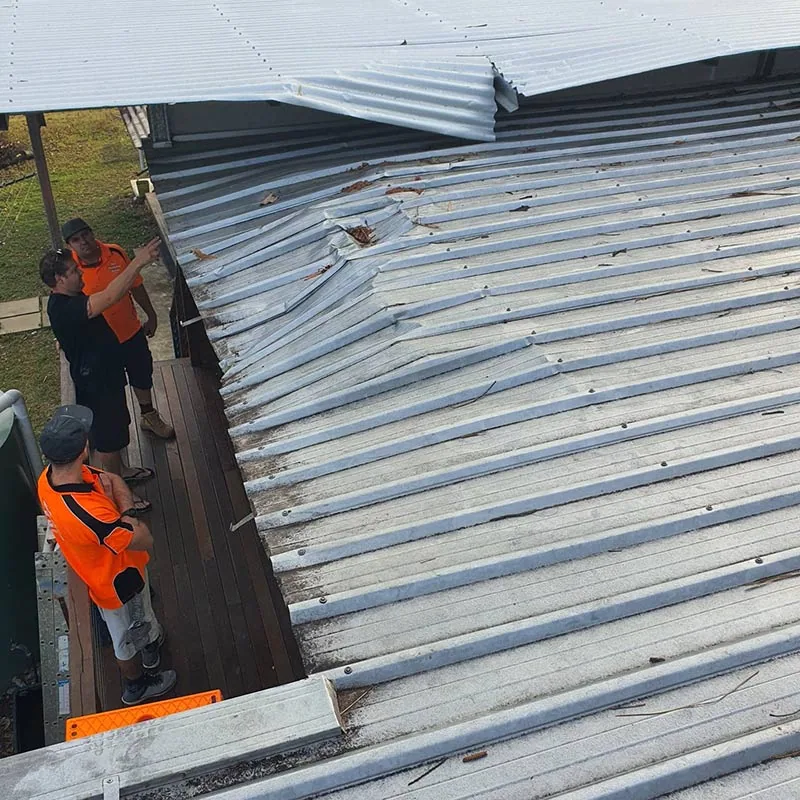
After a hail or wind event, an owner may need to coordinate temporary protection, an inspection and a conversation with the insurance carrier. A roof in South Bend, IN holds visible evidence of the event and its existing condition. We document observed damage with photographs, measurements and written findings, then organize the information so the owner and adjuster can discuss the roof scope from a common record.
Before the adjuster comes
The most useful work happens before the carrier shows up. We photograph the roof in the condition we found it, including wide shots that show where each close-up belongs, and we mark every finding on a roof plan with a number. Anything we remove to make the building safe, like a torn flashing or a piece of crushed insulation, is photographed and set aside rather than thrown into a dumpster. We keep receipts and time records for the temporary protection separate from the permanent scope. Policy requirements vary, so owners should check their terms and carrier instructions. A record of temporary protection, materials and observed conditions can help the owner explain what was done after the loss; an emergency roof repair assessment can document roof conditions and immediate protection needs.
The written findings
After the first visit the property manager receives a report that reads in plain language. It lists the date and cause of loss as the owner understands it, the condition of each roof area, the specific damage we observed, and the evidence that ties it to a particular event. Where it matters, it separates storm damage from ordinary age, such as general surface wear, shrinkage at seams or old patches that failed on their own. Moisture readings from an infrared moisture survey and images from a drone inspection go into the file when the roof is large, steep to reach, or unsafe to walk. The report distinguishes observed conditions, recommended work and any proposed pricing so each item can be evaluated clearly.
Good documentation separates observation from interpretation. A photo should show the detail close enough to identify a split seam, displaced edge or impact mark, then include a wider view that locates it on the roof. Notes can identify the roof section, material, dimensions and whether moisture was present beneath the surface. If the cause is uncertain, state what is visible and what additional inspection could clarify it rather than assigning a cause without evidence. A concise scope can distinguish temporary protection, localized repair and any larger work under consideration.
Walking the roof with the adjuster
When the adjuster arrives, we meet them at the access point with the roof plan and the photo log in hand. We walk the same route we walked the first time, point to each numbered finding and answer technical questions about how the membrane is built, why a certain flashing failed, or what a repair at that spot would involve. Coverage decisions belong to the owner and carrier. Our role is to explain roof conditions, repair details and supporting documentation in clear terms for that discussion. If the adjuster requests a core cut or closer look at a seam, the parties can agree on a suitable inspection method and coordinate access for that work.
Snow, wind and hail each leave different evidence
Losses in this market come in several forms, and each one is documented differently. During the November 2022 lake-effect event, South Bend's airport recorded 22.7 inches and Mishawaka recorded 20.7 inches; the first 20 days of that month totaled 30.2 inches in South Bend. Roofs that carried that weight can show deflected decking, sagging purlins, torn flashings at parapets and water where ice blocked a drain. Wind loss looks like lifted edge metal and a peeled perimeter, and a tornado like the F3 of October 24, 2001, which tracked across northwest South Bend toward Niles, is the kind of event that drives debris through a membrane. For hail damage, impacts are counted and mapped on the roof plan so the pattern is visible.
When the estimate comes back short
Carrier estimates and roof scopes do not always match. One point to compare is the repair area: opening a roof assembly can reveal wet insulation beyond the visible surface damage, which should be documented before the scope is finalized. Another is the code. Applicable code and permit requirements depend on the project scope and should be confirmed with the local building department before the final repair is priced. When we find a gap we put it in writing with photographs, the moisture readings, and the code or manufacturer detail that drives it. The owner or their representative takes it to the carrier as a supplement. When additional conditions are found, document them before covering the affected area and coordinate the next scope with the owner and carrier.
Tenants, dates and the long tail
Claims for a multi-tenant building run longer than the roof work does, and the paper trail has to cover that stretch. We log the dates when interior leaks were reported, which suites were affected, when the building was made safe and when permanent repairs finished, because the carrier may ask for those dates for business interruption or interior damage. A manager responsible for a medical office near Mishawaka or a retail strip in the Grape Road corridor can hand the same log to the insurer and to tenants who ask. Insurance and restoration firms work from that same dated log, which ties the interior reports to the roof work. When water is still entering, commercial roof leak repair begins with tracing the entry and protecting the space below.
For a multi-tenant property, organize records by roof zone and interior space. A shared roof plan helps the manager connect each report to the affected suite, identify access restrictions and give tenants consistent updates. Keep temporary work, permanent repair proposals and follow-up observations in separate entries so a later reviewer can tell which condition was addressed at each stage. The owner can then discuss the contractor's roof findings with the carrier while retaining control of coverage and repair decisions.
Commercial Roofing Questions
How soon after a storm do we have to report the loss?
Reporting deadlines and requirements vary by policy. Review the policy and contact the carrier promptly after damage is identified. Photos taken before and after the event, maintenance records and inspection notes can help document the roof's condition and the date damage was observed.
Can you tell us whether the claim will be approved?
A roofing contractor can describe observed roof conditions, whether damage appears consistent with an event, and what repair work may be needed. The carrier makes the coverage decision under the policy. Clear photographs and a measured scope help the owner and carrier discuss the same roof conditions.
Who pays for the temporary repair while the claim is open?
Who pays for temporary protection depends on the policy, carrier process and agreement with the contractor. Keep receipts and a separate record of temporary work, and confirm reimbursement questions with the carrier or a qualified insurance professional.
What if the adjuster says the damage is old wear?
Ask the carrier or adjuster to explain the evidence behind the conclusion, then compare it with the roof plan, photographs and inspection notes. A second inspection may help clarify disputed conditions. The contractor can point to specific seams, impact marks or aged components without deciding coverage.
Should the contractor who documents the claim also do the repair?
The owner can choose whether the same contractor documents and completes the repair. Some owners prefer continuity; others seek separate bids. Keep the inspection findings and scope available so the repair team can understand the observed conditions and planned work.
Related Roof Work
- Emergency Commercial Roof Repair
- Infrared Roof Moisture Surveys
- Drone Roof Inspection
- Hail Damage Roof Repair
- Mishawaka
- Insurance Adjusters and Restoration Contractors
- Commercial Roof Leak Repair
Talk to Our Team
Tell us where the water is landing, what the roof is made of and when the building is easiest to reach.
Phone: 555-555-5555
Email: [email protected]