A restoration lead is standing in a second-floor suite with two air movers running and a ceiling tile that keeps weeping, and nobody can say whether water is still coming in. The adjuster has a date of loss and a claim number but has not seen the roof. The owner wants the tenant back at work. In South Bend, IN that three-way wait is common after a hard storm, and the roof is the one piece nobody has opened yet. Our first question is simple: has anyone been up there since the weather passed, and did they photograph it before they touched anything?
That is where we start. A crew goes up, makes the building safe, records the roof as it sits and writes down what is storm damage, what is old and what is still unknown. The restoration contractor inside hears whether the water has stopped. The adjuster receives a photo log keyed to a roof plan, with a written cause and scope that can be read without a second trip. The owner on the other side of the same loss gets that same record through roof insurance claim assistance, and we never speak for what a carrier will decide.
Who needs what in the first hour
Each party in a loss needs something different from the roof, and the first visit has to serve all of them. The restoration crew needs the leak stopped so drying equipment can work, because an open penetration and wet insulation undo a day of extraction overnight. The owner needs tenants safe and the building closed up. The adjuster needs the roof left as found long enough to see it, or photographed well enough that nothing is lost. So the crew clears the drains, covers the open area with a temporary dry-in and photographs every step. The emergency roof repair response goes out at any hour, since water damage does not wait for a claim number.
Storm damage and age on one roof
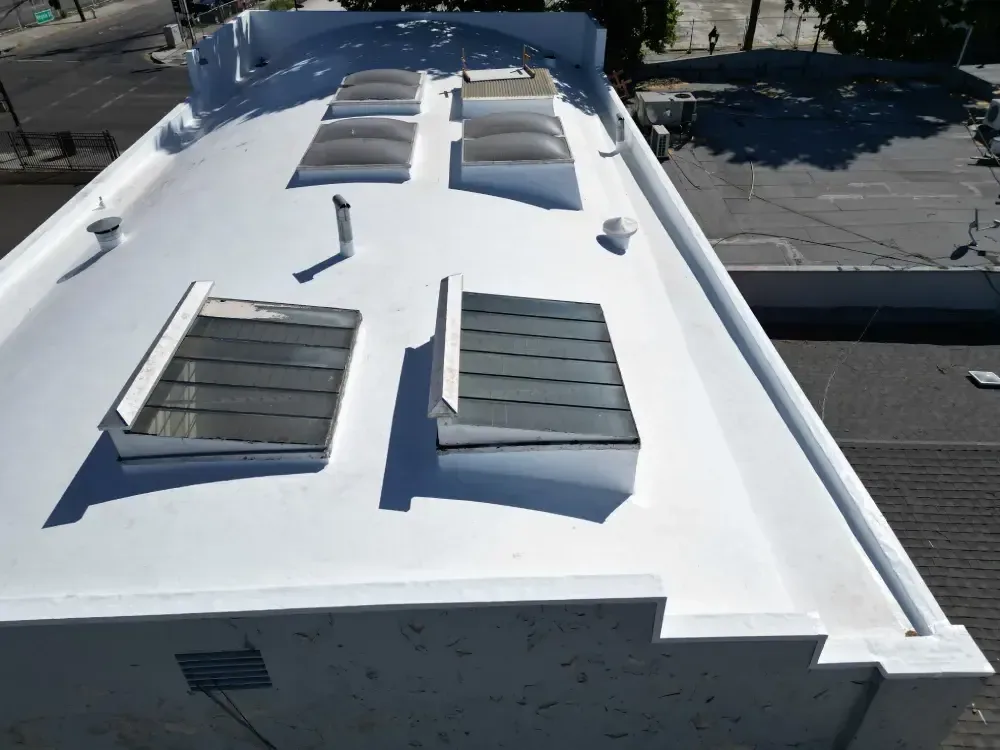
A roof that has seen a few lake-effect winters carries both kinds of damage, and the report has to separate them. We look at whether impacts cluster on one exposure, whether metal on the roof is dented in the same pattern, whether punctures sit on seams or out in the field, and whether cracking is fresh or weathered. A drone pass gives a fast overview without loading a damaged roof, and the drone inspection images tell the crew where to probe on foot. Where we suspect insulation is bruised or soaked beneath an intact surface, an infrared scan at dusk shows the wet areas, and cores confirm them before anyone writes a scope.
Dates of loss and the weather record
A claim stands stronger when the date of loss lines up with the record. On June 1, 2019 hail measured 1.25 inches near Crumstown, with 1 inch in South Bend and 0.7 inch at Mishawaka, and stones of that size can bruise insulation without opening the membrane. October 12, 2016 brought two EF0 tornadoes, wind damage along West Indiana Avenue and a microburst path between Northside Boulevard and Longfellow Road. The October 24, 2001 outbreak put an F3 across northwest South Bend and an F2 between Mishawaka and Osceola. When an owner reports damage, we compare the address with those tracks and say plainly when the wear on the roof predates the storm. For hail damage and tornado damage alike, the weather record and the photographs have to agree.
A file the carrier can read
The roof file is what an adjuster opens first, so we build it the way a stranger would want to read it. Every finding gets a number on the roof plan and a dated photograph taken before we touch it. The log records the time, the temperature and the weather on the day. Moisture readings are tied to the same numbers. A short cause statement says what we think happened and what we could not determine. When part of the roof at the St. Joseph County Services Building in Mishawaka gave way on April 1, 2016 after high wind and rain, the water reached the top floor, and a loss of that kind brings a long chain of trades that all lean on one accurate roof record.
Temporary work and where it is billed
Policies commonly expect the owner to protect the property from further damage, and carriers expect to see what that cost. Policy language varies, so the owner's carrier is the one to say. We hold temporary work to what the weather demands: a tarp or patch over the open area, loose edge metal secured, drains cleared. Each step is photographed before and after and invoiced as its own line, apart from the permanent scope. If the adjuster wants to see the roof before anything is covered, we agree a time and keep the crew off that area until then, unless people or contents are at risk.
Scope, supplements and code
Once the adjuster has seen the roof, we write the permanent scope against the carrier's estimate, line by line: membrane area, insulation replaced, flashing, edge metal and any code items. Hidden damage found at tear-off, such as wet insulation or a damaged deck, goes to the adjuster as a supplement with photographs on the day it is found, before it is covered. The statewide commercial code is the 2014 Indiana Building Code, which follows the 2012 IBC, and a repair large enough to reach the building department can bring current requirements into the area being rebuilt. We raise that before the estimate is settled. For building owners who manage through property management companies, the finished scope also feeds the reserve plan, and general contractors handling larger rebuilds receive the same drawings.
Commercial Roofing Questions
Should the roof be repaired before the adjuster visits?
Stop the water, but leave the evidence. We photograph the roof as found, place a temporary patch or tarp over the open area and hold permanent work until the adjuster has seen the damage and the scope is agreed. If the adjuster cannot come for several days, we send the photo log and a roof plan so the file is complete, and the carrier can decide whether a site visit is still needed.
What does a restoration contractor need from the roofer before drying equipment goes in?
A plain statement that the opening is closed, where it was and how we know. We confirm from above that the drains are flowing and the patch is sealed, then walk the wet area from inside with a moisture meter. If insulation above the ceiling is soaked, we say so, because drying a room under a wet roof assembly only lasts until the next rain. The restoration lead can then set equipment with some confidence.
How is a supplement handled when wet insulation turns up at tear-off?
Photographs go first: the exposed layers, a moisture reading and a tape measure showing the extent. The adjuster receives them the same day with a short note on the area and the depth of the damage, before new material covers it. If the carrier wants to inspect, we hold the section open and protect it. A supplement with dated images is much easier to approve or to discuss than one described later from memory.
Can you tell whether damage came from the storm in question or from an earlier one?
Sometimes the roof says so and sometimes it does not. Fresh impact marks, clean fractures at seams and debris still lying on the membrane point to a recent event, while weathered cracks and old patches point to age or an earlier loss. We compare what we see with the recorded storm tracks and say where we cannot tell. A candid report holds up better than one that claims certainty it does not have.
What happens when one storm damages a whole group of buildings?
Each building gets its own file, so the adjuster is not reading a combined stack. We triage across the group by exposure first, making the leaking buildings safe, then work through the rest, and the owner receives one running sheet showing every address and where its file stands. Roofs in different towns may have taken different hits, and the sheet keeps that straight.
Related Roof Work
- Roof Insurance Claim Assistance
- Emergency Commercial Roof Repair
- Drone Roof Inspection
- Mishawaka
- Hail Damage Roof Repair
- Tornado Damage Roof Repair
- Property Management Companies
- General Contractors
Talk to Our Team
Tell us where the water is landing, what the roof is made of and when the building is easiest to reach.
Phone: 555-555-5555
Email: [email protected]