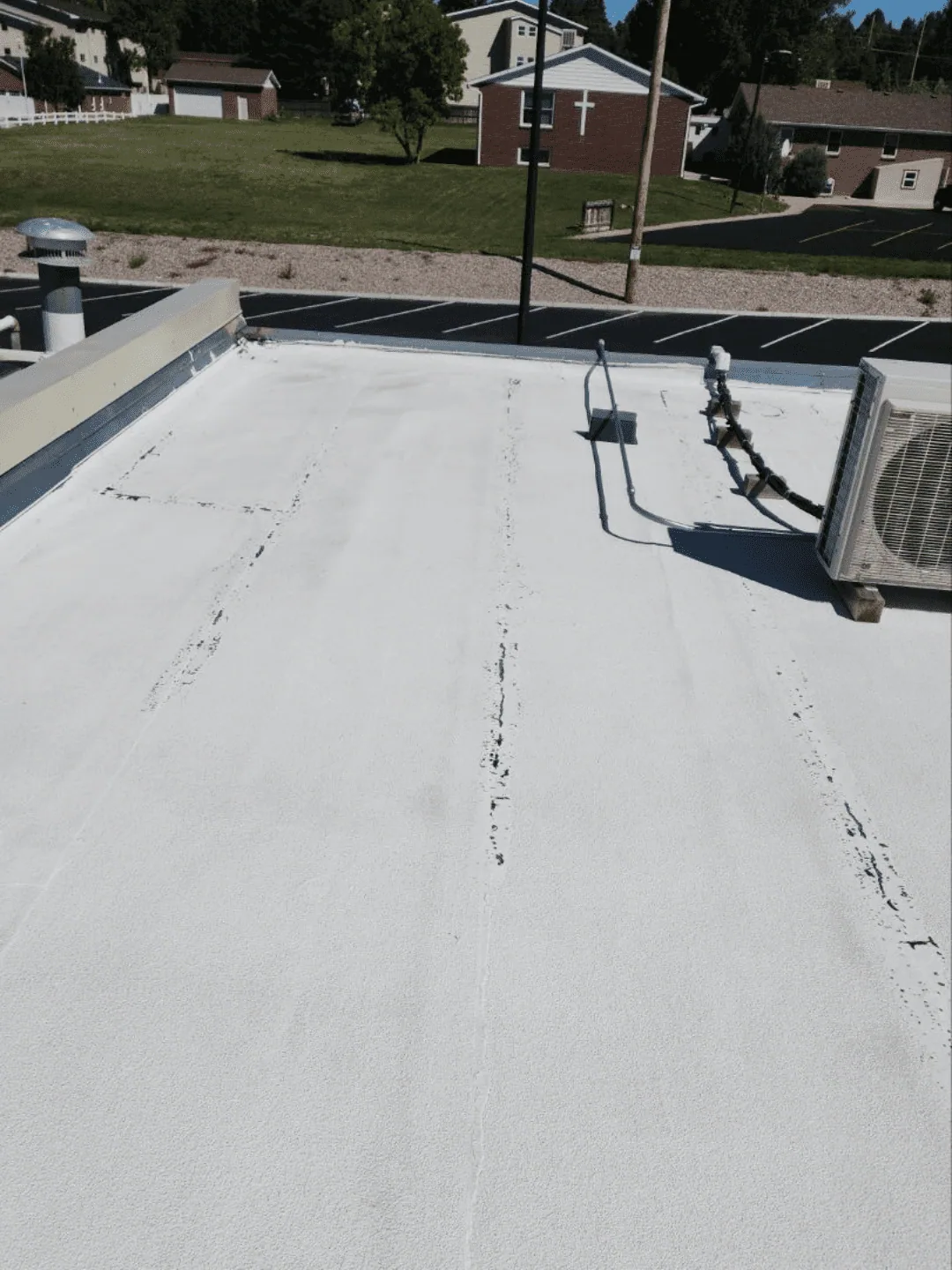
The phone rings at two in the morning after the wind has turned, and a night manager is standing under a ceiling that has started to sag. Nobody in that building needs a sales pitch. They need to know that someone is coming, what to do in the meantime, and what happens when that person arrives. Emergency response in South Bend, IN runs every hour of every day, including weekends and holidays, and it follows the same order each time: first call, make safe, dry-in, record, then a plan for the permanent repair.
The first call
When you call, a person answers and asks a short set of questions. Where is the building and which roof area is affected? Is water coming in, and where is it landing? Is anyone near the damage, and can that area be cleared? Are there electrical fixtures, server rooms or stock below the leak? We ask what the weather is doing and whether snow, ice or wind has been part of the event. While we dispatch a crew, we tell you what to do in the meantime: move people away from sagging ceilings, put buckets and plastic where they help, protect equipment, and stay off the roof. You do not have to diagnose anything. You only have to tell us what you see.
Make safe before anything else
On site, the first task is safety, not repair. The crew checks the access route, the roof edge and any areas where snow, ice or damage could make walking unsafe. Sagging or saturated ceiling sections are reported and, when it is safe to do so, opened to let trapped water drain in a controlled way instead of letting it collapse. Standing water at the drains is cleared, since a blocked drain adds load and feeds every opening on the roof. If there is any sign of structural damage, such as a deflecting deck, buckled framing or displaced rooftop equipment, we stop, tell the property manager and recommend an engineer before further work is done on that area.
Tarping and temporary dry-in
With the area safe, we close the opening. A temporary dry-in can be a sheet membrane patch, a sealed section of new roofing material or a tarp fastened to the deck and edges, never simply weighted down. South Bend has recorded a gust of 92 mph, and a loose tarp becomes a hazard in a wind. Seams are lapped to shed water, edges are sealed, and anything covering a damaged area is attached so it can hold through the night. In a storm, the dry-in may be the only work possible, and we are clear with the property manager that it is temporary. After a wind loss the tarp is the first defense, and after a tornado the dry-in goes on only once the structure has been checked.
What this market throws at a roof
Emergencies here come in recognizable patterns. Lake-effect snow can stack deep drifts against parapets, and one event in November 2022 measured 22.7 inches at the airport and 20.7 in Mishawaka. Summer storms bring hail, and the June 2019 storms put stones up to 1.25 inches near Crumstown, while straight-line wind has caused real damage, including along West Indiana Avenue in October 2016. In Mishawaka, high winds and rain on April 1, 2016 were followed by a partial roof collapse at the St. Joseph County Services Building, and the top floor flooded. These events underline the response order after a major storm: life safety first, then temporary water protection, followed by the permanent scope.
The record for your insurer
Before we cover anything, we photograph the damage and write down what we found, the time we arrived and what we did. That photo log, with before and after images, is what your insurer will ask for first, and it keeps the adjuster's questions short. The scope and cost of temporary work are listed separately from the permanent repair so an adjuster can follow them. If the loss is covered, we help with the insurance claim paperwork from that same record. The adjuster decides the claim. Our part is a record of the roof conditions observed and each temporary measure completed.
From dry-in to permanent repair
A dry-in buys time, and the permanent plan follows after conditions permit a proper inspection. After the emergency, we return for a follow-up visit once the weather allows a proper inspection, and lay out the options. That may be a targeted commercial roof repair, a fuller leak repair with a section of wet insulation removed, or a recommendation for broader work if the storm exposed an aging roof. Everything is tied to the same photo log, so the decision can be made calmly, and so tenants hear one clear plan.
Commercial Roofing Questions
After a storm hits the whole county, how is the order of arrivals set?
By priority, and we tell you where you stand in it. Life safety and active water entering occupied space come first, then open roofs over stock and equipment, then slow leaks. We explain the response sequence and keep the property contact updated as access, road and roof conditions are assessed.
Water is coming through over one suite. Do we have to close the whole building?
Usually only the area under the water, though what sits above and below it matters. A small leak over a vacant corridor is manageable with buckets and plastic. Water over electrical panels, a sagging ceiling or any sign of deck movement means clearing that area right away. The crew assesses it on arrival and tells the property manager what to close and what can stay open, and when there is any doubt about the structure, the space stays clear until it has been checked.
Can you tarp a roof with snow and ice on it?
Yes, with preparation. We clear snow and ice from the work area, check footing and edges, and remove water that has pooled at the drains. Adhesives do not cure in deep cold, so the temporary dry-in relies on mechanical attachment and sealed laps rather than on curing time. The permanent repair waits for the thaw. We tell you which parts of the work are temporary, so nothing is mistaken for the finished roof.
Is the dry-in wasted money if the roof needs replacing anyway?
No. A dry-in protects the building, the contents and the tenants from further damage while the real decision is made, and it keeps the loss from growing during the delay. If the roof is replaced afterward, the temporary material is removed with the old system. If the damage is repairable, the dry-in is the bridge. In both cases it limits what the insurer or owner will have to pay for later.
A drift is building against the parapet and nothing is leaking yet. Is that worth a call tonight?
Call while it is still only snow. A drift load against a parapet or a rooftop unit piles weight onto a small area of deck, and a lake-effect week can build one faster than anyone expects. We look at where the drift sits, whether the drains beside it are open or iced over, and whether snow removal should start overnight or can wait for daylight. Clearing a drift by hand with the membrane protected is a far smaller job than drying in a roof that sagged under one.
Related Roof Work
- Wind Damage Roof Repair
- Tornado Damage Roof Repair
- Mishawaka
- Roof Insurance Claim Assistance
- Commercial Roof Repair
- Commercial Roof Leak Repair
Talk to Our Team
Tell us where the water is landing, what the roof is made of and when the building is easiest to reach.
Phone: 555-555-5555
Email: [email protected]