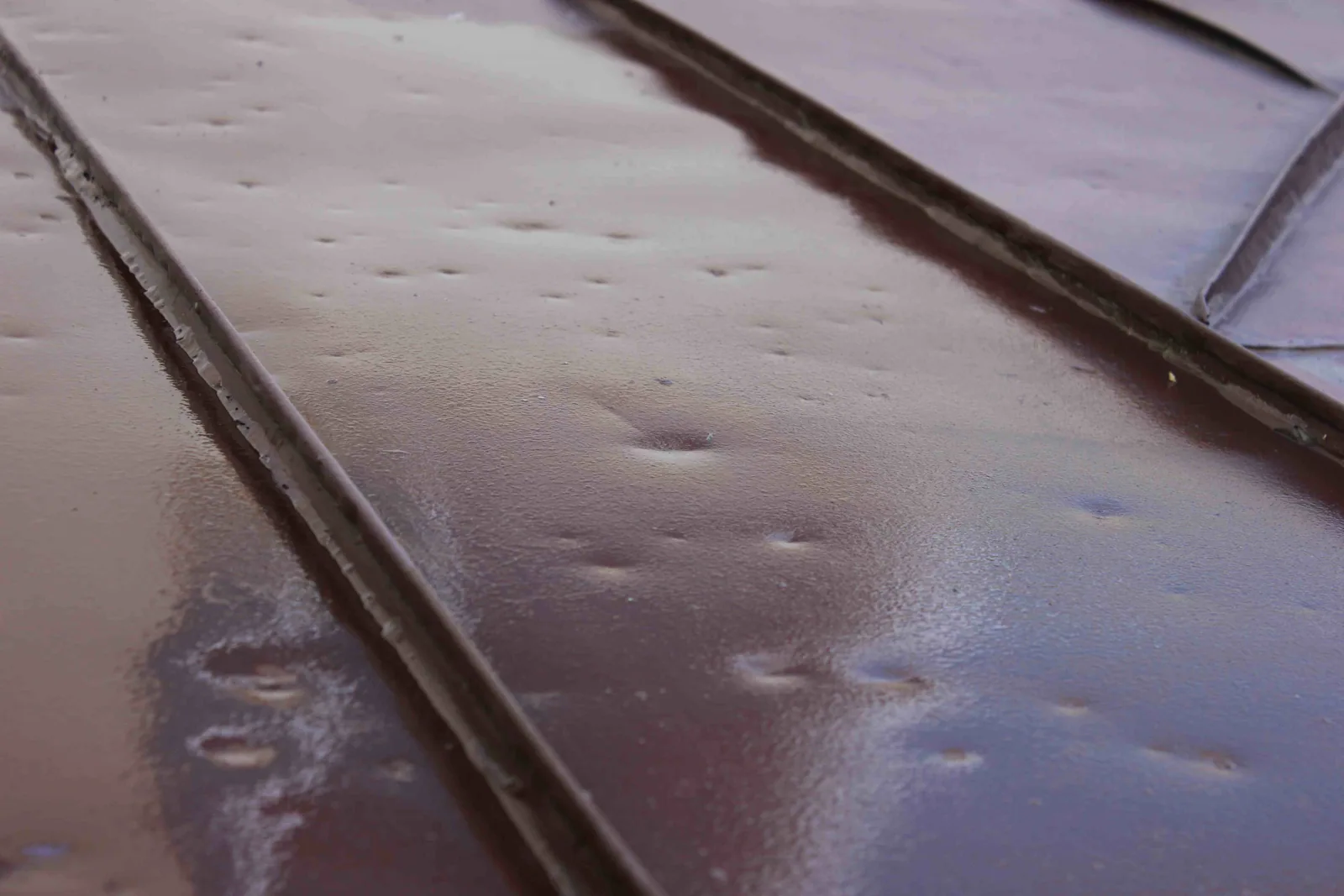
The leak shows up three weeks after the storm, long enough that nobody in the building connects the two. The first sign is a single brown ring on a ceiling tile in a suite whose windows show no hail damage at all. Up on the roof there is nothing dramatic either, only a scatter of small round marks in the membrane that look like dirt until a thumb presses on one and the sheet gives. Hail damage roof repair in South Bend, IN is largely a matter of proving what those marks are, where they stop, and how much of the roof beneath them has quietly stopped doing its job.
What a hailstone does to each kind of roof
Hail works differently on every roof. On thin single-ply membranes such as TPO, PVC and EPDM, a stone can fracture the reinforcing scrim or bruise the sheet so that it looks fine for a year and then cracks open. Modified bitumen and built-up roofs lose granules or gravel and show round fractures in the surface plies. Spray foam shows divots, and its coating cracks around them. Metal roofs dent, and on standing seam panels a dent can break the finish and open a seam. Under all of these, insulation board can crush, which leaves a depression that holds water. We find the damage on the surface and then confirm it below with a core cut, since the hit is often hidden under a sheet that looks intact.
Test squares, chalk and a straight count
Hail damage is argued by counting. On each slope we lay out a test square ten feet by ten, chalk every hit within it, photograph the square and record the count, then repeat on other slopes and at the corners. The numbers show whether the damage is even or concentrated on the side the storm came from. A drone survey maps the whole roof first, so the squares go where the pattern actually is, and an infrared moisture survey shows which hits have already let water into the insulation. Every hit is checked against older marks, such as blisters, foot traffic and weathering, because an adjuster will separate them, and the record should separate them first.
One storm, three sizes of stone
Hail rarely falls evenly. On June 1, 2019 the storms dropped stones as large as 1.25 inches around Crumstown, while South Bend measured 1 inch and Mishawaka only 0.7, so three different sizes were recorded in the one storm. A neighbor's roof report is therefore a poor guide to your own: the building next door may have been hit harder or lighter by a stone a few tenths of an inch different. A stone near an inch across can damage thin membranes and dent metal, so we inspect after storms of that size even when no leak has appeared. For the Grape Road corridor and the lots around it, the walk should come soon after the storm, before the next freeze fills every bruise with ice.
Making the roof safe once the ice has melted
After the storm we clear hail and debris from drains and scuppers, since melting stones can pack a bowl, and we cover obvious breaks in the membrane with temporary patches. Skylights, rooftop units and vent covers are checked on the first visit because they crack more readily than the field sheet. Tenants hear what the first walk found in a short notice with photographs. Where a break is open to the weather we dry it in during the same visit, and where the sheet is only bruised we mark it and watch it. Marked bruises are revisited at the follow-up visit after the first hard freeze, because ice finds the weakened spots before anyone else does.
Repair, restore or replace
The scope follows the count. A few scattered hits on a sound roof are patched and recorded. A pattern across a slope, with the sheet still pliable and the insulation dry, may suit coating restoration over repaired hits, which gives a watertight surface without removing the roof. Where the count is high and the board beneath is crushed or wet, replacing the affected slope, with a cover board that resists the next stone, is the more honest repair. We set the choices against the roof's age and remaining life, so the owner can compare repair, restoration and replacement side by side, and we state which version the damage supports.
The estimate, the gap and the second look
Claims move on the adjuster's estimate, and sometimes that estimate falls short of what the repair requires. We walk the roof with the adjuster when invited, compare our counts with theirs and put any difference in writing, as part of our insurance claim assistance. A policy may limit the window for filing, so owners should read theirs soon after any large storm. Storms that bring straight-line wind or a funnel along with the hail widen the scope, because a roof that has lost edge metal to wind damage or been struck by a tornado needs more than hail patches.
Hail review starts with the roof system and the direction of the storm, then moves across each field and edge in a consistent pattern. We photograph representative marks with a scale, note areas shielded by equipment, and keep the inspection route on the sketch. When a sample needs a closer look, we record the location before testing so the owner and insurer can return to the same spot. A dated follow-up after the surface dries helps distinguish impact damage from older wear.
Commercial Roofing Questions
Hail fell, but nothing is leaking. Is an inspection still worth the trouble?
An inspection after any storm with stones near an inch is worth scheduling. Bruised membrane and crushed insulation often take a season or more to leak, and a dated record made now is much stronger than one assembled after the damage has spread. If the roof is clean, the report says so and you have lost an afternoon.
How can we tell hail bruises from ordinary blisters in the membrane?
Hail marks are round, scattered, similar in size and concentrated on the slopes that faced the storm. Blisters are raised and tend to follow insulation joints or wet areas. A pinch test and a small core cut usually settle it, and the photo log shows both side by side.
Can a metal roof with dents but no leaks simply be left alone?
Dents alone are often cosmetic, and many owners leave them. We look for broken finish, cracked sealant and opened seams around the dents, because those are the spots where water gets in later. If none are present, the report records the dents so any future claim has a starting point.
Should we book our own inspection before the adjuster comes?
Schedule ours first when you can. The adjuster sees one visit, while our counts, photographs and moisture scan describe the whole roof and the insulation beneath it. We can also be on the roof when the adjuster is, and we mark the squares so both of us count the same places.
Does hail damage get worse over the winter if we wait for the claim?
It can. Bruises and cracks hold water, the water freezes and thaws between October and May, and each cycle widens the opening. If the claim is slow, we recommend inexpensive temporary patches at the worst hits and a second look after the first hard freeze, with the cost recorded for the insurer.
Related Roof Work
Talk to Our Team
Tell us where the water is landing, what the roof is made of and when the building is easiest to reach.
Phone: 555-555-5555
Email: [email protected]