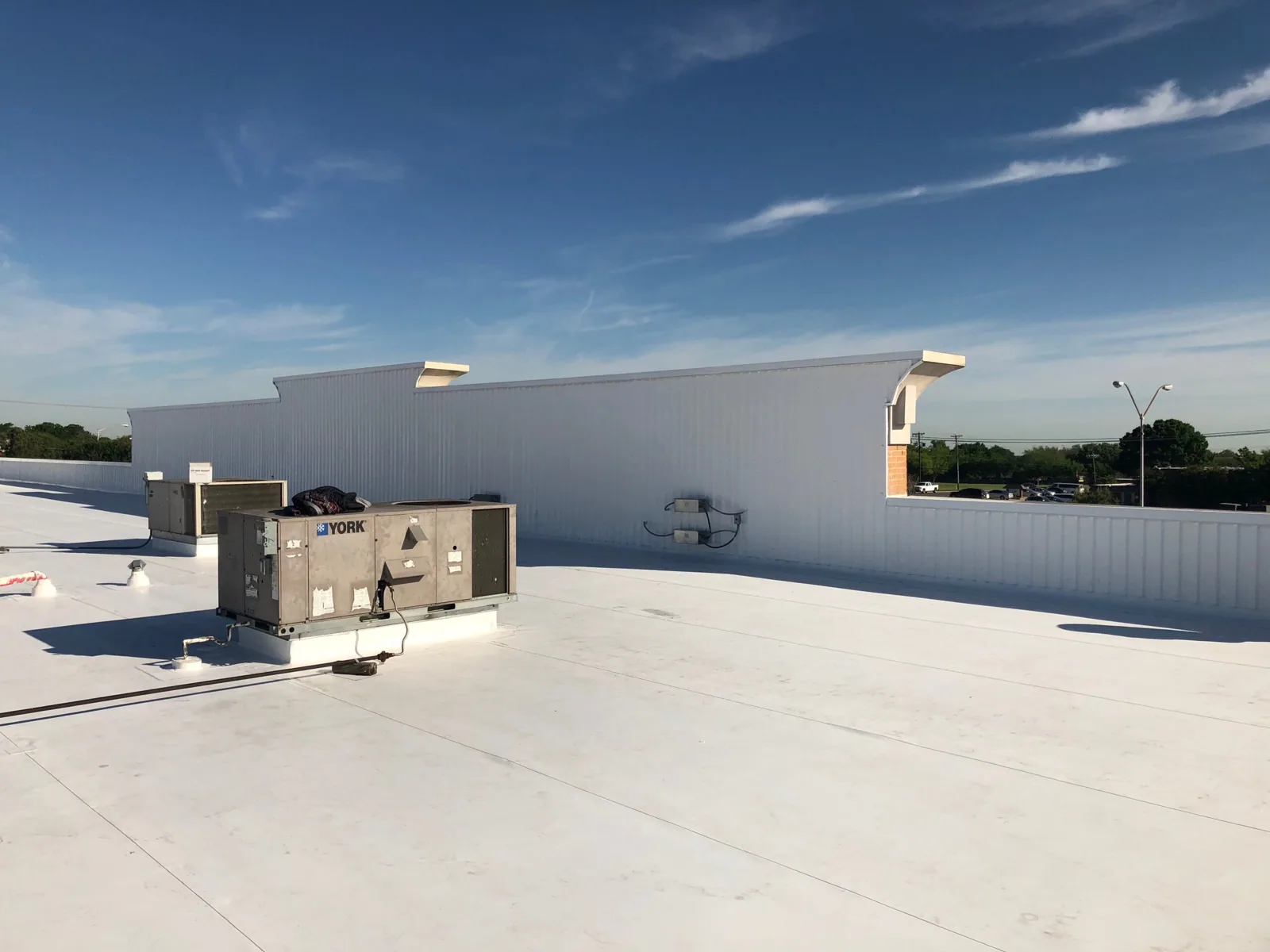
The first complaint of the summer can come from a mezzanine office under a dark roof, where a supervisor reports that the room never cools below the temperature of the warehouse floor. By July the rooftop units are running through the afternoon, and the person who pays the electric bill starts asking whether the roof itself is part of the problem. In South Bend, IN the answer is more balanced than most cool roof marketing admits. Summers are warm but moderated by Lake Michigan, winters are long, and a reflective surface behaves differently under 64.5 inches of snow than it does on a roof in the desert. We install reflective membranes and coatings here with that balance in view, and we tell owners plainly where the gain is real and where it is small.
What a reflective surface changes
A cool roof reflects more sunlight and releases absorbed heat more readily than a dark one. White TPO, PVC, KEE and EPDM membranes do this, and so do acrylic and silicone coatings applied over an existing roof. On a bright July afternoon a dark membrane can run far hotter than the air above it, and that heat moves into the insulation, the deck and the equipment sitting on the roof. A light surface runs cooler, which lowers the heat load on the space below and eases the strain on the units that serve it. The surface also expands and contracts less each day, which is easier on seams and flashing.
None of this replaces insulation. A thin or wet insulation layer wastes whatever the surface saves, so we look at the two together before anyone picks a color.
The winter side of the question
The average first freeze in South Bend arrives around October 18 and the last around May 1, so the heating season runs long. A reflective roof gives up a little of the weak winter sun that a dark roof would absorb, although a roof under a blanket of snow is reflecting anyway, and January is the month most likely to bring heavy snow. The trade is small for most buildings and larger for one with a heavy heating load and little cooling.
We ask what the building does in each season before recommending a surface. Where the cooling load is light and the insulation is thin, the money is often better spent on roof insulation and cover board than on the color of the top layer. Where summer cooling is a real line in the budget, the reflective surface earns its place.
Heat, cold and the wear on membranes
South Bend has recorded -22 F in January 1943 and 104 F in June 1988, and the swings between extremes are what tire a membrane. A reflective surface trims the hot end of that range in summer, which slows the aging of the membrane and the adhesives beneath it. It does nothing about the freeze-thaw cycles that run from October through May, so seams, flashing and drains still need the same checks after the thaw.
We treat a cool roof as one decision inside a larger plan. The surface, the insulation, the drainage and the edge metal each carry a share of the load, and a bright white membrane over a drain that ices up every February is still a roof with a problem.
New membrane or a coating over the old roof
Two routes lead to a reflective surface. A new white membrane, usually TPO, goes down as part of a replacement or recover, and it brings seams, flashing and insulation along with it. A coating goes over the existing membrane, which makes sense when the roof is sound and the insulation is dry. The state of what lies underneath chooses the route, not the color.
Before any coating goes down, an infrared moisture survey shows whether the insulation is wet, because a coating sealed over wet insulation traps the problem. Silicone tolerates standing water better, while acrylic suits roofs that drain well. Both go over a prepared roof as part of roof coating restoration, after seams, flashing and wet spots are repaired.
Buildings where the surface matters
Owners of large, lightly occupied buildings with a real cooling load feel the difference most. If a warehouse at the Indiana Enterprise Center in New Carlisle, which lists industrial spaces from 108,150 to 992,620 square feet, or at the South Bend Airport Business Park, which lists twelve spaces of 70,000 to 165,000 square feet, is cooled in summer, the roof surface is part of the cooling bill, and that belongs in any warehouse roofing decision.
East of the city, Elkhart has RV makers such as Forest River, Keystone and Thor Motor Coach running large plants, and any plant that keeps production moving through July feels roof heat on the floor below. For any of these buildings, we compare the cooling load against the heating load, the age of the roof and the next planned capital project, then give the owner a straight answer on whether the surface change is worth doing on its own or should wait for the next replacement.
How an installation goes
Reflective work depends on the weather window. Coatings need a dry roof and moderate temperatures, so the work belongs between the thaw and the first hard freeze of October. The first visit on site produces the moisture survey, a cleaning plan and a photo log of the existing surface. For a coating, crews wash the roof, repair seams and flashing, treat rust or blisters, and apply primer where the manufacturer calls for it before the coating goes on at the thickness the product requires.
A new white membrane follows the sequence of a replacement, one section at a time, so the building is dry at the end of every day. Tenant notice goes out before the work starts, and a follow-up visit after the first heavy rain checks the drains and the seams.
Commercial Roofing Questions
Will a white roof cost me heat during a South Bend winter?
A little, on paper. The winter sun is low and short, and the roof is often under snow, so the loss is small next to what the surface saves in summer for a building with a real cooling load. For a building that is mostly heated, the better money goes into insulation. We walk through the building's seasons with you before we recommend a surface.
Can we coat the roof we have instead of replacing it?
Sometimes. The roof has to be sound, the seams tight and the insulation dry, and we confirm that with an infrared survey and, where the owner permits, small core samples. If wet insulation turns up in one corner, we cut it out and replace it before coating. If it is widespread, a coating is the wrong tool and we say so.
How long does a reflective roof stay reflective?
Dirt, algae and ponded water dull a light surface over time, and ponding areas go first. A wash during routine maintenance restores a good part of the surface, and we record its condition on each visit so you can see the trend. A white roof also shows scuffs and storm marks plainly, which is useful after hail like the 1 inch stones South Bend saw on June 1, 2019.
What time of year should the coating go on?
Plan for the stretch after the thaw and before the first hard freeze, when roofs are dry and temperatures stay moderate. Booking in late winter gets the survey and the prep done early, so the crew can start when the weather turns. A coating applied on a damp roof or into a cold night will not cure the way the product data sheet describes.
Does a reflective roof change what the manufacturer expects from me?
Manufacturers publish their own cleaning, preparation and thickness requirements for membranes and coatings, and any warranty depends on following them. We read the data sheet before we price the job and install to it, and we keep the photo log that shows each step. Ask the manufacturer in writing about maintenance duties before you sign anything.
Related Roof Work
Talk to Our Team
Tell us where the water is landing, what the roof is made of and when the building is easiest to reach.
Phone: 555-555-5555
Email: [email protected]