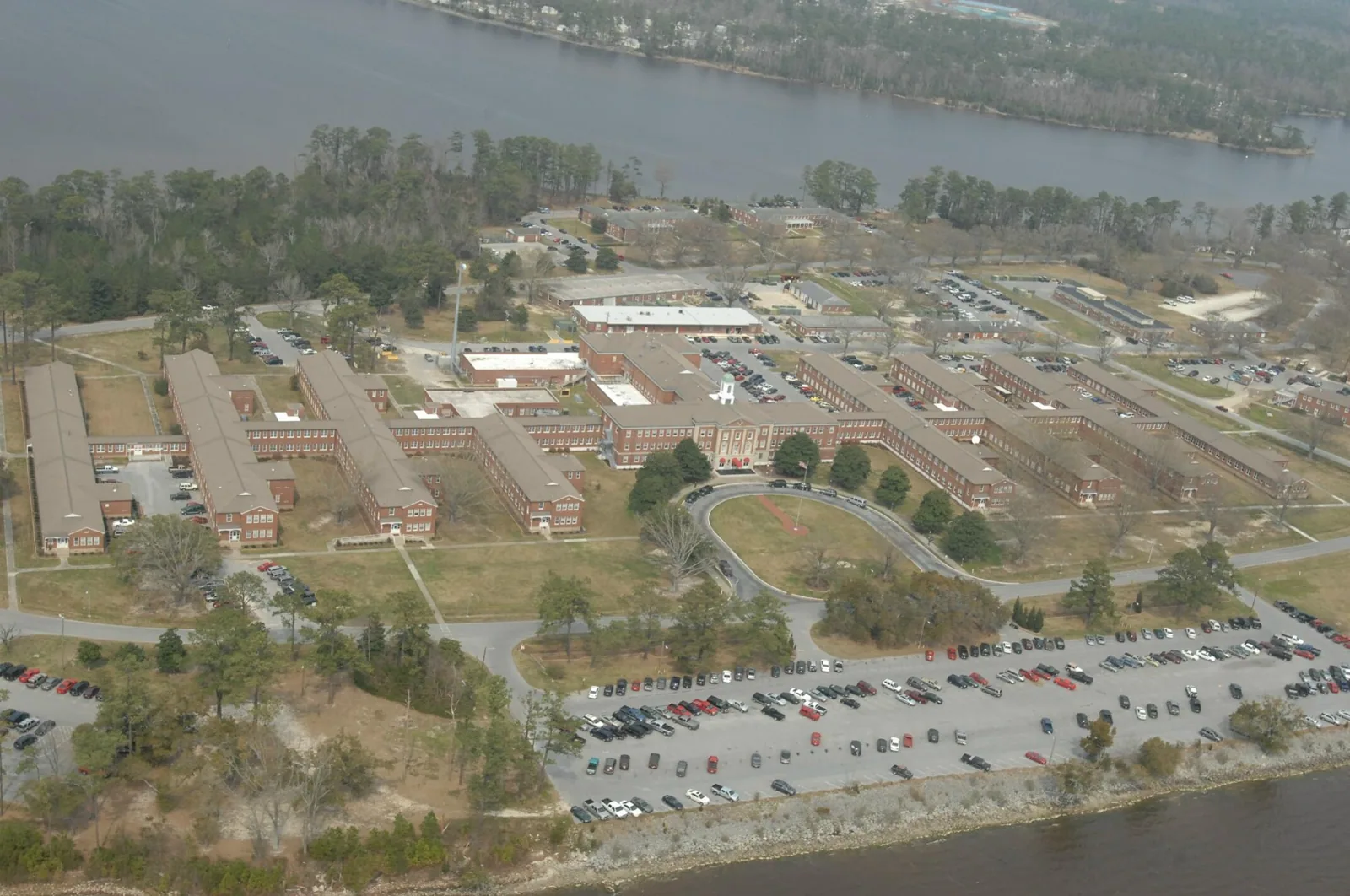
Roof work at a controlled-access facility needs coordination before materials or crews are scheduled. In and around South Bend, the relevant public facilities include Indiana Army National Guard readiness centers and armories, along with the VA St. Joseph County Health Care Center in Mishawaka. Each site establishes its own access, escort and photography rules. The roof scope should account for those requirements, the people using the building and the equipment or records stored below.
Getting through the gate
Entry rules vary by facility. A project may require advance visitor information, identification checks, vehicle controls, escorts or restrictions on cameras and drones. The facility contact should confirm the current process before the work plan is finalized. Roofing materials, tools and deliveries can then be coordinated with the access office so that the contractor's work fits the site's procedures.
When an escort or restricted access affects movement across the property, divide the roof into work areas that can be inspected and closed safely. Staging locations, daily tie-ins and weather protection should be reviewed with the facility contact. For an urgent leak, emergency roofing response is available around the clock, including holidays; access rules and roof conditions still govern what work can safely proceed.
Escorts and the working day
An escort changes the arithmetic of the day. If workers can only move around the site while accompanied, then every trip to the truck, the lunch break and the evening exit is counted in the schedule. We plan the roof in sections that can be completed and dried in during the hours when the escort is available, and the staging area is set as close to the roof as the facility permits so travel time is short.
The same rule affects emergencies. Getting back on a restricted site after hours is not as quick as it is at an office park, so the end of each working day leaves the roof tied in and watertight, and a named contact is arranged in advance for any call that comes overnight. A leak at a base is still a leak, and the emergency roof repair sequence applies, though the entry procedure has to be cleared before the weather arrives.
Roofing built to the Unified Facilities Criteria
Federal buildings are generally designed and specified to the Unified Facilities Criteria (UFC), which include criteria for roofing. In practice that means the materials, the wind uplift resistance, the insulation, the drainage and the inspection steps are written into the contract documents, and the contractor builds to them rather than proposing substitutions on the roof. Submittals go in before material is ordered. Approved products are used as listed. Inspections happen at stated points in the work, not just at the end.
That discipline suits us. We install and repair TPO, PVC, EPDM, modified bitumen, built-up and standing seam metal, and we keep the written trail the contract asks for. When the work is a full replacement, the written trail grows to include moisture readings, as-built details and a condition record kept in the form of a roof condition report.
Mission schedules and the weather
The mission sets the calendar. Guard units train on scheduled assemblies, drill weekends and annual exercises, and an armory used for assembly, classrooms and equipment storage is a building where a drip can threaten stored gear as well as people. The facility contact can provide training dates and identify rooms or equipment that require additional protection when the work schedule is developed.
Weather is the second calendar. South Bend averages 64.5 inches of snow annually. Drifted snow can accumulate against parapets and rooftop units, while ice can restrict drainage. The highest gust on record is 92 mph, and the October 24, 2001 outbreak put an F3 tornado near Crumstown, west of the city. The work plan should account for weather exposure, temporary protection and any follow-up inspection needed after the thaw.
The buildings around South Bend
South Bend's broader public-building network includes Guard and VA facilities. The Indiana Army National Guard maintains a South Bend Readiness Center, and Indiana operates armories statewide as assembly and training space, classrooms and equipment storage. The Elkhart Readiness Center, about 15 miles east, is in a $6.62 million modernization that covers building systems, facade improvements, parking, utility and site upgrades, and antiterrorism and force-protection measures. La Porte, roughly 30 miles west, and Warsaw, about 40 miles south, each have a Guard armory too.
In Mishawaka, the VA St. Joseph County Health Care Center is a single-story clinic of 88,109 square feet, finished in brick, Indiana limestone, aluminum storefront and curtainwall, that opened in September 2017. A working clinic has patients on site, so a roof there is worked the way a VA medical roof is worked: in sections, with interior protection and clear notice. An armory gets the same sectional approach, scheduled around the training calendar, as National Guard armory roofing requires.
What the facility office receives
When the roof is finished, the facility office gets the paperwork it needs: a written account of what was found, what was done and where, plus measurements, sketches and a photo log taken only where the installation permits. A follow-up inspection after heavy rain or thaw can check the repaired area. If a building is near Elkhart, La Porte or the Mishawaka, the same records keep the next contractor, the next inspector and the next budget cycle from starting from nothing.
Commercial Roofing Questions
Does a roofing crew have to be cleared before it reaches the roof?
The installation sets the rules, and they typically include a roster submitted ahead of time, identification checks and vehicle inspection at the gate. Our job is to supply names early, keep the roster stable, and plan the day around the escort. We work from the list the access office gives us.
What happens when the escort is late or the gate holds up the crew?
If access is delayed, the schedule may need to change. The day starts with the work that does not need a dry window, the roof is opened in small sections, and the crew should preserve time to close and protect any opened section before leaving. The work plan should identify the time and materials needed to protect each section under the day's conditions.
Can we take photographs of a roof on a base or at an armory?
Only as the installation allows. Security offices set the limits on cameras and drones, and we ask in writing before any camera comes out. If photographs are restricted, ask the facility contact which alternative documentation is permitted, such as written logs, sketches, measurements or numbered locations.
How do you work around drill weekends and training exercises?
National Guard units train on set assemblies, and the facility manager can share the relevant dates when they are available. We keep the open roof away from those dates and from rooms that store equipment, and each section should be closed against weather before the crew leaves. Weekend work is possible when the installation allows it and the access office confirms it.
Is roofing to the Unified Facilities Criteria different from ordinary commercial work?
The materials are familiar, but the paper trail is heavier. Submittals come before purchase, approved products are used as listed, inspections fall at set points, and the records stay with the contract. A crew that is used to taking notes and photographs as it goes finds the routine natural, and one that is not finds it slow.
Related Roof Work
- Emergency Commercial Roof Repair
- Commercial Roof Replacement
- Written Roof Condition Reports
- VA Medical Center and Clinic Roofing
- National Guard Armory and Readiness Center Roofing
- Elkhart
- La Porte
- Mishawaka
Talk to Our Team
Tell us where the water is landing, what the roof is made of and when the building is easiest to reach.
Phone: 555-555-5555
Email: [email protected]