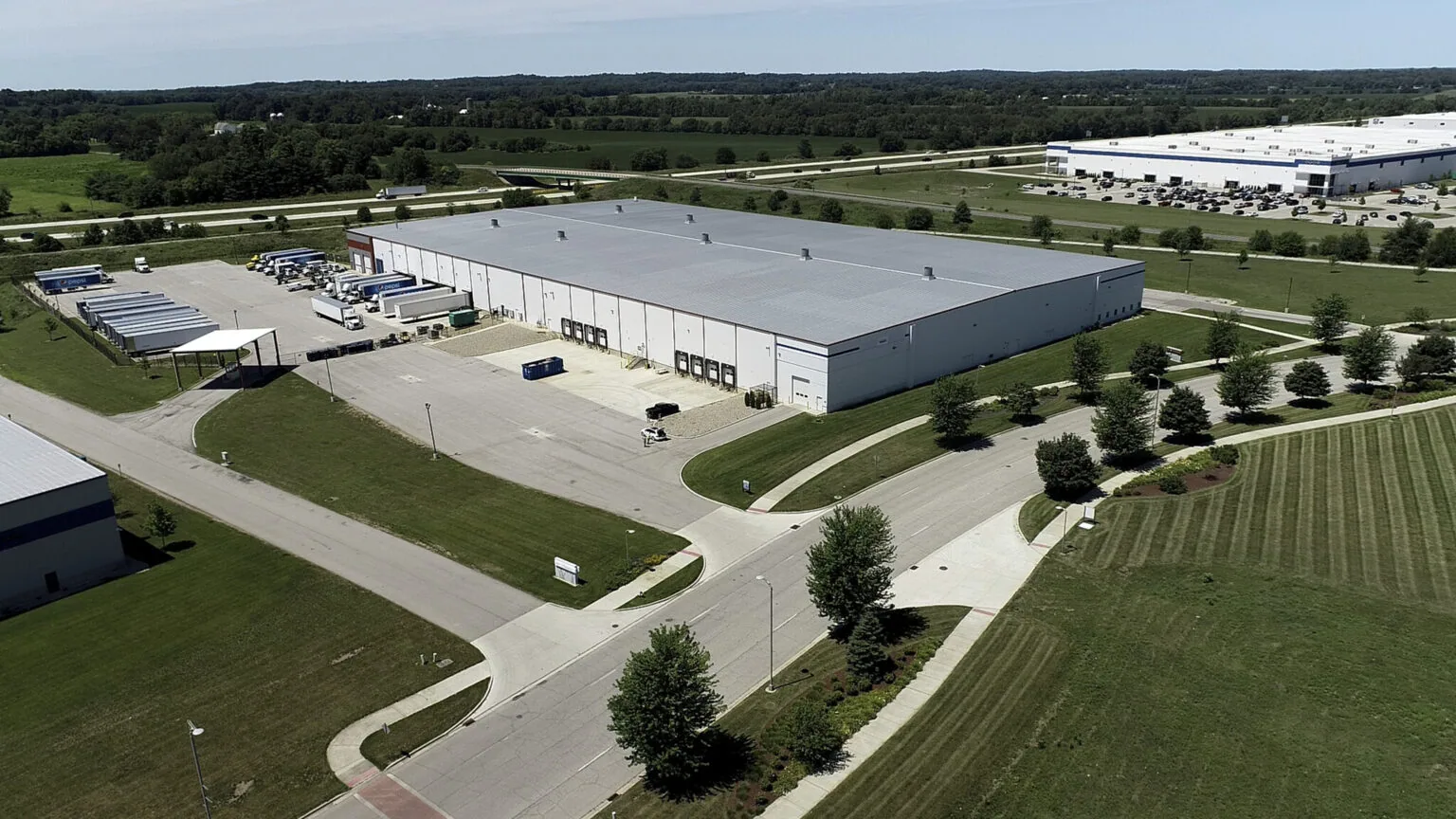
A drip over an active production bay becomes an operations question as soon as it reaches the floor. Commercial Roofing South Bend responds to roof leaks, storm damage, inspections, repairs, restoration, and replacement across South Bend, IN, Mishawaka, and nearby industrial communities. The first visit identifies the affected roof zone, checks the drainage path and nearby details, and sets a temporary dry-in when water is still entering. The permanent scope follows what the inspection can confirm.
Industrial activity in St. Joseph County is concentrated in South Bend, Mishawaka and New Carlisle, with employment areas such as Ignition Park and the Indiana Enterprise Center. Mishawaka combines small industry with retail and service properties. Those different operations bring distinct access and scheduling needs, so the inspection begins with the building's actual roof assembly and use.
Start with the affected bay
When water appears inside a manufacturing or warehouse building, the room below does not mark the roof repair boundary. We identify the affected bay, aisle, equipment, or stored material, then inspect the roof zone above and around it. Drains, scuppers, seams, curbs, wall transitions, and perimeter details can all route water away from the point where it first entered. The inspection records what is wet, what remains dry, and what cannot be reached without further testing.
A plant may keep assembly, loading, maintenance, and vehicle movement running while the roof is being checked. A useful plan names the access route, any area that must be kept clear, and how the interior will be protected if a test opening is needed. We can place temporary protection over an active leak and then schedule permanent work after the receiving materials and site requirements are understood. The facility contact gets the immediate safety and containment step before a larger replacement decision.
Mishawaka's industrial economy includes the AM General operation. At any production property, the roof may have a membrane over metal deck, a built-up assembly or another system. We confirm the layers, attachment, drainage, penetrations and service history before selecting a compatible leak repair.
Plan for snow, thaw, and wind
Snow changes the way water reaches a low-slope roof. South Bend averages about 64.5 inches of snow per year, and lake-effect accumulation can arrive quickly. Drifted snow may collect at parapets, rooftop units, and changes in elevation, while meltwater searches for a clear route to a drain or scupper. Ice at a drain can keep that route closed after the upper surface begins to thaw. We check outlets, low areas, edge details, and the path water takes before concluding that a roof has drained normally.
Freeze-thaw conditions extend from fall into spring. A seam or flashing that shifts through repeated movement can open gradually; water entering that gap may freeze again before a repair visit. The roof record should distinguish the visible opening from concealed moisture and note whether insulation needs closer testing. A drainage review can address blocked outlets and scupper transitions, while a modified bitumen assembly needs repair materials matched to its surface and existing layers.
Strong straight-line wind, hail, and tornadoes also appear in the regional record. After a reported event, we photograph displaced edge metal, punctures, impact marks, and affected roof zones. After a reported event, inspect each property for displaced edge metal, punctures, impact marks and affected roof zones. The written record should separate observed damage from areas that were not tested.
Keep production and repair in sequence
Before moving material to the roof, we confirm who authorizes entry, where the crew can unload, how roof access is reached, and when noisy or disruptive work can occur. A vehicle plant, data center, distribution building, and smaller industrial tenant will have different operating rules. Work is divided into the zones that can be protected and closed safely, with interior personnel notified before a leak area is opened or a temporary dry-in is changed.
We also identify any equipment service or structural question that belongs with another qualified party. A curb may need mechanical coordination before its flashing is removed. A support or loading concern needs appropriate design review before the final detail is set. The roofing proposal describes the tie-in, protection, and sequence enabled by those decisions rather than absorbing an undefined task into a generic repair line.
For an urgent leak, the first call starts a response at any hour, every day. We make the area safe, stop active water where conditions allow, and create a photo log of the temporary work. The follow-up visit then confirms what remains for a permanent correction. Our emergency response is planned around the affected operation, material route, and the time required to close the roof again.
Set the repair boundary from evidence
A visible split may call for a local seam repair if adjoining material is sound and dry. If insulation is wet, attachment has loosened, or the surrounding surface cannot accept a lasting tie-in, the affected area may be larger. We record those findings before comparing patch, recover, restoration, or replacement. Where the assembly is concealed, a controlled test opening can confirm what lies below, but its result applies to the area examined rather than every roof zone.
A written condition report can include photographs, roof-area marks, observed defects, and actions that remain outside the immediate work. This lets an owner compare immediate stabilization with a permanent repair without confusing those different scopes. Our commercial roof inspection can also record maintenance needs that should be addressed before water reaches the interior again.
The area around Mishawaka connects to the larger employment geography. Mishawaka follows US 20 and state routes 23, 331, and 933; South Bend’s Ignition Park is a separate technology and redevelopment area, and Elkhart has a substantial manufacturing base east of the city. A multi-site owner can group inspections by travel route while keeping each building’s condition, roof system, and scope separate.
Carry the inspection into the next visit
After permanent work, the closeout should show the roof zone repaired, materials installed, remaining limitations, and any return inspection that is needed. Photos taken from the same locations help compare later conditions. If a repair depends on an equipment adjustment or another trade’s confirmation, the record should name that open action instead of implying the roof alone resolved it.
For an inspection request, share the building use, symptoms and their timing, prior repairs, roof plans, production or tenant limits, and safe access hours. Those details help us set the first visit and choose what needs to be checked before work starts. We can explain the temporary protection step, identify the permanent repair boundary, and provide a written recommendation. The facility team then has a sequence it can coordinate with its operations and maintenance plans.
Commercial Roofing Questions
Will a leak over one production bay require a full roof replacement?
Not by itself. We inspect the entry route, surrounding seams and transitions, and any wet insulation or loose attachment before comparing a local repair with broader work.
What happens if snow or ice is blocking a roof drain?
We check the drain bowl, scupper, nearby low area, and safe water path. The immediate step is to restore drainage or protect the affected area where conditions allow, then record any membrane or insulation condition needing follow-up.
Can the inspection happen while manufacturing continues?
Often, with an access and protection plan agreed with the site contact. We confirm roof entry, work zones, material delivery, and any production limits before opening or repairing the assembly.
Does AM General’s presence determine what roof system is used in this area?
No. Local manufacturing context describes the area, not another building’s assembly. We identify the actual roof layers and compatible repair method at the property being inspected.
What should be included in the roof repair closeout?
The record should show areas opened and repaired, materials used, photographs, remaining limits, and follow-up actions. If another trade has an open task, it should remain visible in the closeout.
Related Roof Work
- Commercial Roof Leak Repair
- Roof Drains, Scuppers and Ponding Correction
- Modified Bitumen Roofing
- Emergency Commercial Roof Repair
- Commercial Roof Inspection
- Mishawaka
- Ignition Park
- Elkhart
Talk to Our Team
Tell us where the water is landing, what the roof is made of and when the building is easiest to reach.
Phone: 555-555-5555
Email: [email protected]