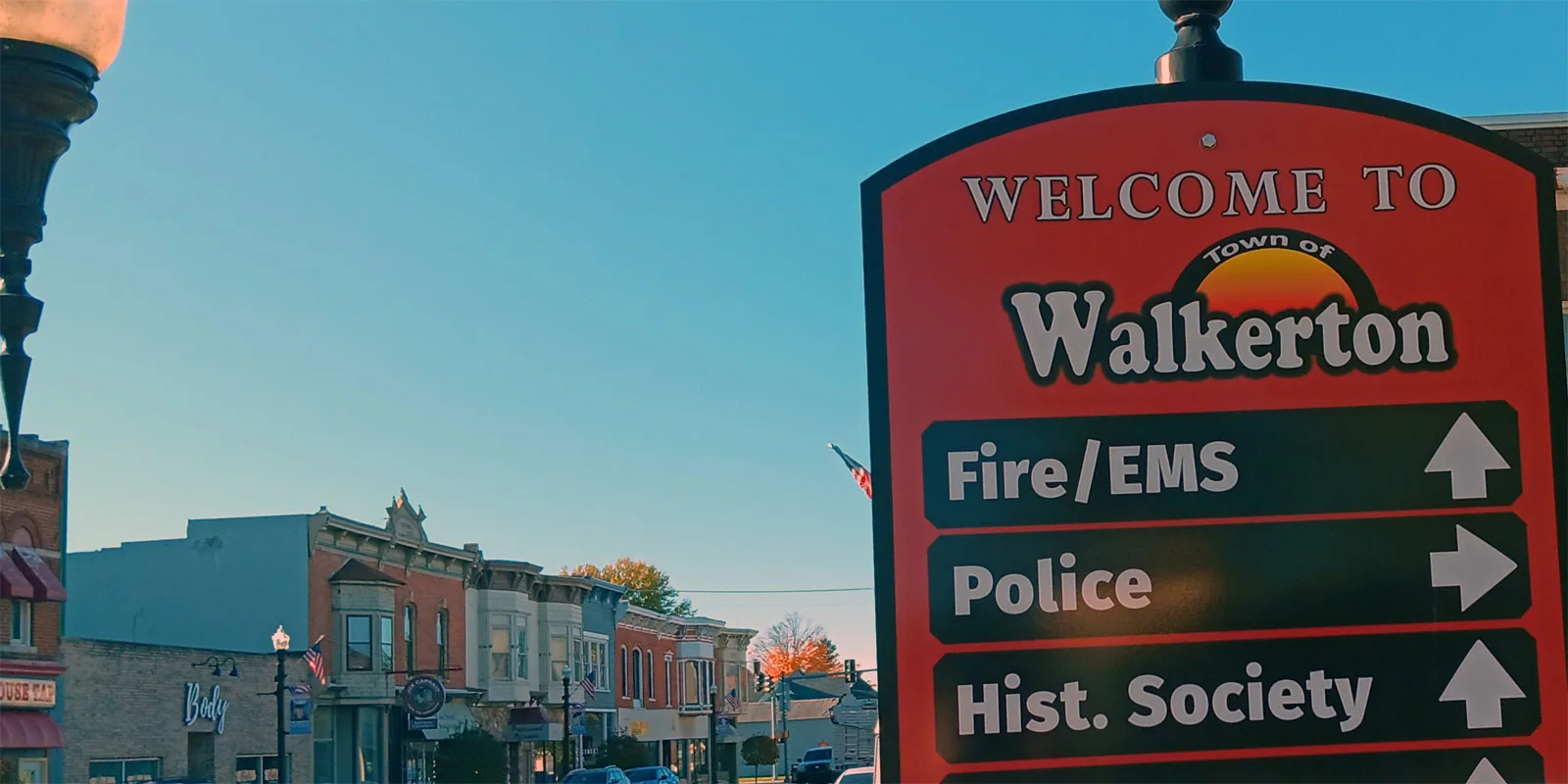
The first word from a Walkerton building often arrives as a photo texted from the parking lot: a brown ring on a ceiling tile, taken by someone who spotted it while locking up. Before anyone climbs a ladder, we ask where the stain sits against the exterior wall, the drains and any rooftop unit, because that placement points toward a drain, a flashing or a seam. Then the order holds steady. A technician gets on site, a crew makes the roof safe, and the property manager receives a photo log of what was found. Walkerton is a town of about 2,100 people in Lincoln Township, and State Road 23 runs through it before crossing South Bend, IN and passing the Notre Dame campus. We repair, recover, coat and replace low-slope and metal commercial roofs along that corridor.
What happens after the first call
Someone answers at any hour, and the first conversation is short and specific: which building, which suite is wet, whether water is still coming in, and whether anything electrical sits under the stain. If water is active, the priority is to stop it reaching the interior, so the first visit is a make-safe visit. That usually means clearing a blocked drain or scupper, sealing an obvious opening, and moving the tenant out of the wet area. We photograph everything before and after we touch it, because the insurer will ask for that record. The permanent repair is planned once the roof has stopped taking on water, and it is planned from the photos and moisture readings, not from the first guess.
Where a flat roof gives itself away
On a first walk we start at the low points, because water tells the truth about a flat roof. We look around each drain for standing water that outlasts the last rain, along the seams for lifted edges, and at every pipe, vent or curb where a penetration meets the membrane. Then we move to the perimeter, where copings, edge metal and wall flashings take the wind and the ice. Wet insulation under a dry-looking membrane changes the plan most often, so on a roof with a history of patches we recommend a moisture survey before anyone prices a repair. A patch over wet insulation looks fine for a season and fails at the first thaw. Our commercial roof inspection ends with a written report: each roof area rated, photographs tied to a simple plan, and the choices listed in the order we would take them.
Snow load, planned from the South Bend record
An average South Bend winter brings about 64.5 inches of snow, with January the month most likely to bring heavy snow. Its typical first freeze is around October 18 and last around May 1. In Walkerton, the roof's drainage, exposure and current forecast shape seasonal work and safe access. The lake-effect week in November 2022, when South Bend collected 30.2 inches in the first twenty days of the month, is the kind of stretch that shows which roofs have drift pockets against parapets and rooftop units. Ice at the drains is the pattern we watch most closely, because meltwater that cannot leave the roof finds the weakest lap. Clearing drains and scuppers belongs in a fall preventive maintenance visit, not in the emergency call after the thaw.
Repair, coat, recover or replace
Once the roof is dry and the findings are in hand, the owner has four honest paths. A repair fits local damage over dry insulation. A coating suits a sound membrane aging at the surface. A recover adds a new membrane over a dry, flat existing roof, and full replacement is right when insulation is wet across a broad area or the deck is compromised. Cost and timing turn on the same few things: how much insulation comes out, how many old layers sit on the deck, whether rooftop equipment must be lifted, how materials reach the roof, and how many workable weeks remain. Walkerton is in Indiana, so the statewide commercial code applies, currently the 2014 edition of the Indiana Building Code, written from the 2012 International Building Code. A pending rule would adopt the 2024 International Building Code as the 2026 Indiana Building Code, so we confirm the edition at permit time. A single-ply system such as TPO roofing is a common recover or replacement choice, with insulation thickness and attachment set by code and wind uplift.
Roofs that work around a calendar
John Glenn School Corporation serves Walkerton, and any roof a school district owns comes with a calendar attached. The workable window is summer, and the order of operations runs backward from the first day of classes: material lead times, permits, tear-off, dry-in and a punch walk before anyone returns. We lay that schedule out early so a business office can budget in the right year. The same planning applies to school roofing and to any owner who has to keep people away from a work zone, with fenced staging, notice ahead of noisy tear-off, and a clear path for deliveries. A written scope for school districts and township offices is built so it can be bid or compared without a second site visit.
Notice before the crew arrives
Everyone inside a small building notices a roofing job. Before tear-off, the manager gets a one-page tenant notice listing the noisy days, the entrances that stay open and where equipment will stage. We ask which suites have sensitive operations under the roof, such as a server closet or a food prep line, and cover those areas first. Each day ends with the roof dry, open edges sealed and loose material secured. A follow-up visit checks the seams and flashings after the roof has seen a real rain. If the same owner has buildings elsewhere, we run them as one program, whether the next roof is in Mishawaka or in downtown South Bend.
Commercial Roofing Questions
A stain showed up after a thaw but the roof looks dry. Where do we start?
Start with the drains and the lowest corner of the roof, because meltwater that stalled there is the usual culprit, then check the seams within a few feet of that spot. We photograph the stain from inside, trace it to the roof area above, and take moisture readings. High readings mean the insulation has been taking on water for a while and a patch alone will not hold. You receive the photo log the same day we are on site.
Do we need a permit to replace the membrane on a building in town?
A replacement or recover normally goes through the local building department, which applies the statewide Indiana code. We confirm the permit path before the scope is final, since insulation and wind uplift requirements follow the edition in force when the permit is pulled. A narrow repair may not need one. With a newer International Building Code pending in Indiana, check the edition again if a project slips into a later season.
Our school district wants roof work done by August. How early should it start?
Work backward from the first day of classes and allow for material lead time, permit review and a few spare weather days. Spring is the time to walk the roofs, set the scope and place orders, with tear-off in the summer break. Starting in late June on a large roof leaves no room for a rain delay, so the schedule is written with the district's calendar in hand.
Can a roof that has been patched many times be coated instead of replaced?
Sometimes, if the insulation under the patches is dry and the membrane is sound enough to bond a coating. A moisture survey answers that before anything is priced, because coating over wet insulation traps the problem. Isolated wet areas get cut out, the insulation replaced, and the whole roof coated. Broad wet areas make replacement the better use of the owner's money, and the written report says so.
Related Roof Work
- Commercial Roof Inspection
- Preventive Roof Maintenance
- TPO Roofing
- School Roofing
- School Districts
- Mishawaka
- Downtown South Bend
Talk to Our Team
Tell us where the water is landing, what the roof is made of and when the building is easiest to reach.
Phone: 555-555-5555
Email: [email protected]