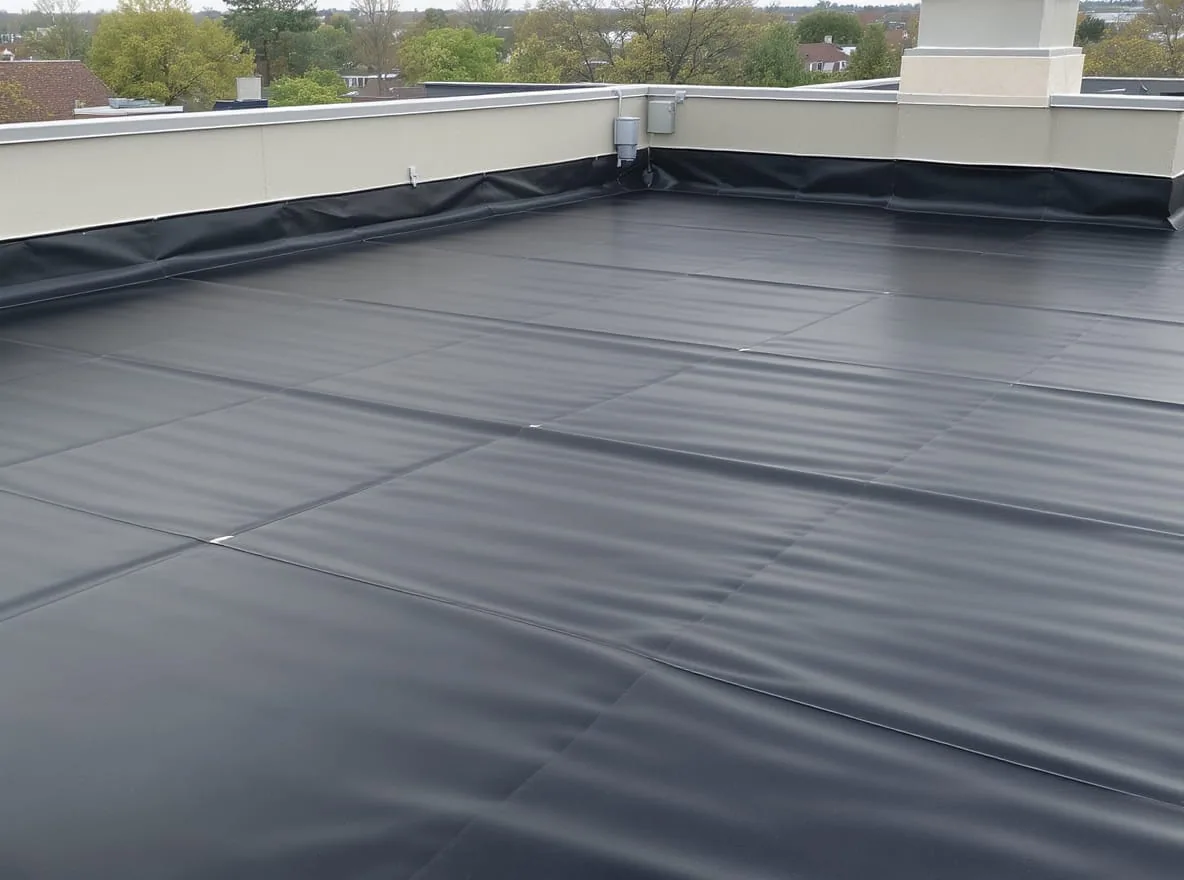
The insurer asks one question by email: who made the membrane on the plant roof? The maintenance planner opens the drawer and finds closeout papers with the name Firestone on every page, then looks at a recent product bulletin that says Holcim Elevate, and wonders whether those are two roofs or one. They are one maker. The company that was Firestone Building Products now sells under the Holcim Elevate name, so older paperwork and newer paperwork can describe the same sheet on the same roof. When the planner calls us in South Bend, IN, that mismatch is the first thing we sort out, because the repair, the photo log and the claim all need the right product name. We confirm it from the roll labels, the edge metal and a small sample, then put one clear identification into the file.
One roof, two names on the paper
Roofs that carry the Firestone name are still out there, and many are in good shape. UltraPly TPO is a thermoplastic single ply with heat-welded seams. RubberGard EPDM is a cured rubber sheet joined with tape or adhesive and, on some roofs, held down with ballast or fasteners. The brand has also sold PVC, modified bitumen, polyiso insulation and metal edge products, so one building can have several of these on different sections. We map which section is which, mark the map with the product we found and keep that map in the owner's file. A property manager who inherits three buildings and a drawer of old binders gets a single page that names every membrane across the portfolio.
Plants that run in long shifts
Elkhart is about 15 miles east of South Bend and is known as the RV Capital of the World, and manufacturers there include Forest River, Keystone and Thor Motor Coach, along with NIBCO and Elkhart Brass. Goshen adds more manufacturers, and manufacturing roofs often carry exhaust fans, dust collectors or air handling units that interrupt the membrane. We follow the plant's safety rules at the gate, work from the roof side and schedule noisy tasks with the supervisor. A plant roof that sees heavy rooftop traffic needs walk pads and sealed curbs, and a repair to an UltraPly seam near a fan housing must be welded on a surface cleaned of dust and oil film. Where lines run in shifts, we agree on a repair window before opening anything.
Reading UltraPly seams
A TPO seam can look fine for years and then lift at a corner after a hard freeze. We probe each seam edge with a pick, looking for gaps that are invisible from standing height, and we examine T-joints, the spots where three sheets overlap, because they carry the most stress. Dirt lines that stop short of the edge can show a seam that has started to open. If the sheet is chalking, the surface is aging; if it is cracking along a wall, the flashing may have been installed without slack. Repairs call for a clean surface, a patch welded with a hand welder and a probe test afterward. If frost or meltwater is on the sheet, we protect the opening and return when the surface is dry enough for a sound weld.
Wind, snow and the edge
The highest wind gust on record at South Bend is 92 mph, from August 22, 1996, and straight-line winds in October 2016 left damage along West Indiana Avenue. Wind goes to the weakest edge first, so we examine the perimeter, the coping and the termination bars on any membrane we are asked to repair. Snow brings its own work: drifts pile against rooftop units and parapets after the lake-effect weeks, and the weight adds up. We watch for ice at the drains, because blocked drains hold meltwater against seams that were not made to stay wet. After a wind loss, the edge metal and the flashings are documented before anything is replaced.
The first hour on site
For an emergency call, the first step is to establish what is leaking and what is below it. Once roof access is safe, the crew checks drainage, protects the opening and photographs conditions before the weather changes the picture. A good call includes the building name, what is leaking and what is underneath it, since a leak over a paint line or a stockroom changes the priority. The crew updates the manager, notifies the supervisor and starts a photo log. Our emergency roof repair work does not wait for business hours, and the permanent fix is planned from the evidence collected that night, not from a hurried guess.
What the planner gets back
After the work, the planner receives the identification page, the marked roof plan, the photo log and a summary of each repair, with the date, the location and the material used. Where the roof is a mix of TPO and EPDM, we mark each section so the next contractor sees what was done to which sheet. Owners who also have roofs under Sika Sarnafil or GAF details get the same format, so records across buildings line up. A second visit once the thaw is done confirms that the repairs are holding.
Where the roof records name an older product label, we preserve that name alongside the current system identification. The next inspection can then distinguish the sheet on the roof from the label on an old invoice, helping the owner match repair materials to the membrane actually installed.
Commercial Roofing Questions
Our closeout papers say Firestone. Does that change how you repair the roof?
The name on the paper does not change the repair. The sheet does, so we confirm whether it is TPO, EPDM or another type, and we repair to the details published for that sheet. Send us the papers and we will match them to what we find on site, then write one identification into your file so future repairs do not rely on the old binder.
A seam on our TPO roof near a rooftop unit keeps opening. What is going on?
Look for movement or contamination. A unit that vibrates, or a frequent foot route, can pull at a seam, and oil or dust can prevent a good weld. We clean the area, weld a patch with a hand welder and probe the edge. If the unit is the cause we recommend a walk pad or a curb adjustment so the repair does not fail again.
How do we protect production when the roof leaks over a line?
Tell us what is below the opening before we arrive. We can often stop the water from the roof side with a temporary dry-in while the line keeps running, and you decide what must be locked out. The permanent repair is then scheduled for a shutdown or a slower shift, so the plant keeps its output.
Is EPDM from Holcim Elevate a good fit for our heavy winters?
Rubber membranes stay flexible in cold weather, which suits a market with a freeze-thaw season from October to May. The weak points are seams, flashing and edges, not the field of the sheet. We check those areas after each thaw and keep drains clear so ice does not hold water against a lap.
Can we get a written record for a lender or a buyer?
Yes, and it is a common request. We provide the roof plan, the identification, the condition of each area and the repairs done, with dated photographs. It is built from what we saw on the roof and says nothing we could not show.
Related Roof Work
- Goshen
- Manufacturing Plant Roofing
- Wind Damage Roof Repair
- Emergency Commercial Roof Repair
- TPO Roofing
- EPDM Roofing
- Sika Sarnafil Roofing
- Elkhart
- GAF Commercial Roofing
Talk to Our Team
Tell us where the water is landing, what the roof is made of and when the building is easiest to reach.
Phone: 555-555-5555
Email: [email protected]