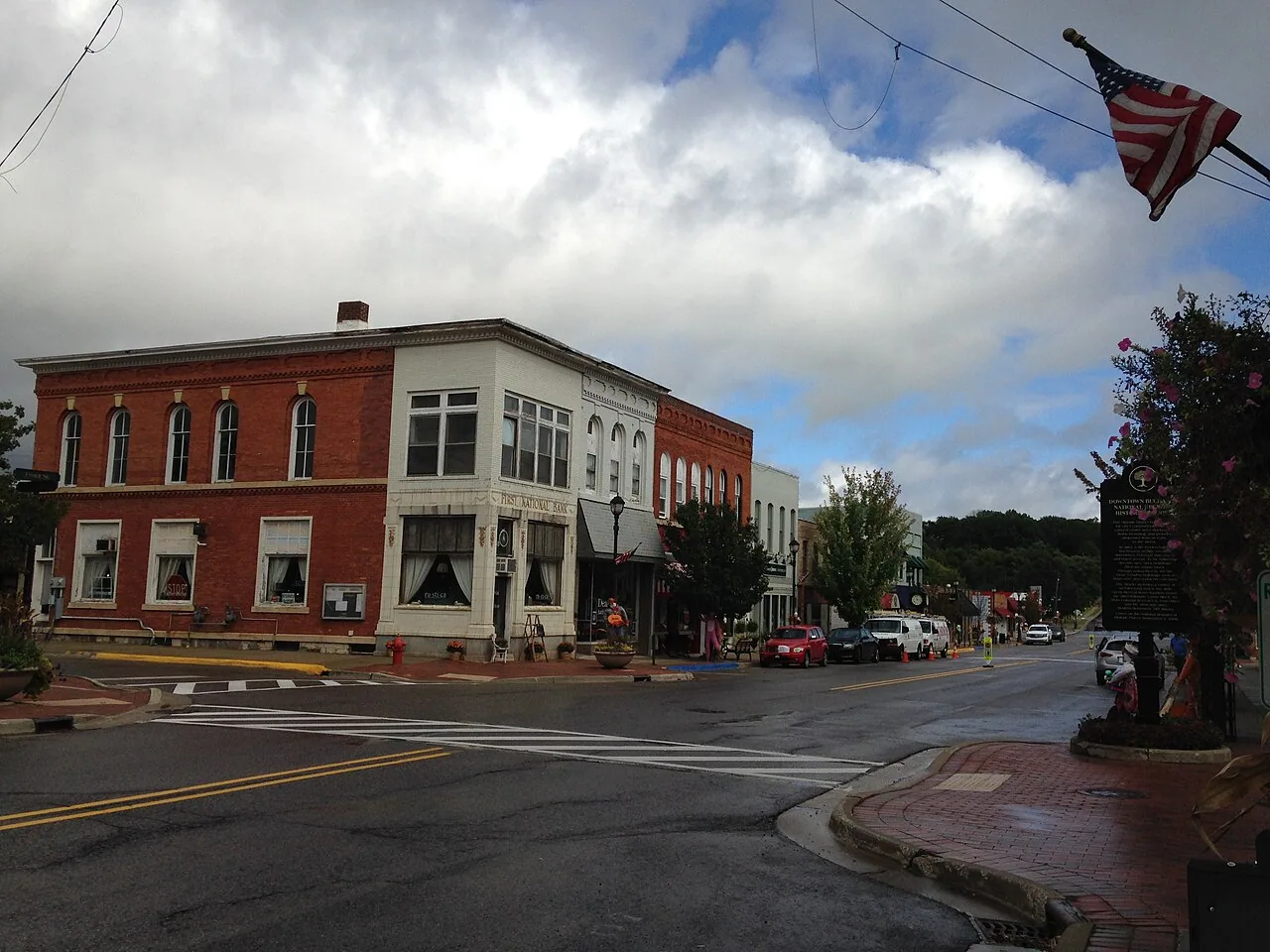
The call comes from a manager who has just taken over a building in Buchanan, MI and found a binder of old repair invoices and no roof plan. There is a stain over one office and a note from the last tenant about a leak that was patched twice. Our answer is to start from zero: walk the roof, sketch it, photograph every area, and record what is up there and how it is draining. Buchanan is about 20 miles from South Bend, IN, with 4,300 residents, 1.5 miles north of U.S. 12 and 2.3 miles west of U.S. 31. Clark Equipment Company, which built axles, forklifts and loaders, was the city's major employer until it left in the 1990s, and Electro-Voice, an audio equipment maker, also had its headquarters here. The low-slope and metal roofs that industrial and office employers need are the ones we repair, recover, coat and replace.
Building a roof record from nothing
When the history is missing, the roof itself has to supply it. We measure the roof areas and mark them on a simple plan, note the membrane type and how many layers show at the edges, and photograph every drain, scupper, curb and penetration. A moisture survey with infrared or a nuclear gauge shows where insulation holds water, and a few cuts confirm what the scan suggests. The result is a roof condition report the new owner can keep: a numbered plan, photographs, and a ranked list of work. Lenders and buyers ask for that record, which is why it also feeds into due diligence roof surveys when a building is bought or financed.
What the first call sets in motion
Someone answers at any hour, and we ask which building, where the water is showing and what is below it. If water is active, a technician goes up first to clear drains, find the entry and set up a temporary dry-in. We protect the interior before we touch the roof, move anything valuable out of the wet zone, and photograph the area for the insurer. The manager gets a photo log and a short written summary after the visit. Then we schedule the permanent repair after the roof has stopped taking on water, with a follow-up visit after the next rain to confirm the seams and flashings are holding. Nobody needs to decide a replacement while water is still moving through the building.
Roofs that outlast their first tenants
Where a building made for one large employer ends up divided among several smaller ones, the roof carries the evidence. Rooftop units were added, moved or abandoned, ducts and conduit were routed across the membrane, and every change left a penetration. A walk will show which units are live and which are dead weight, which curbs are flashed and which are only caulked, and where a worn path across the roof shows foot traffic. Removing abandoned equipment and closing its penetrations properly is often the cheapest improvement available. We handle that with commercial roof repair and, where a section is worn through, a section replacement that ties into the sound roof around it. On an office or lab portion, office building roofing details matter more for interior comfort.
Buchanan’s manufacturing history makes a roof record useful when ownership or occupancy changes. A dated plan can distinguish a current curb from an abandoned penetration, and it gives the next manager a clear starting point for drainage checks, repairs and capital decisions.
Weather, trucks and the Michigan side of the line
The nearest long weather record is South Bend's, with 64.5 inches of snow a year and a first freeze around October 18 and last around May 1. On October 24, 2001 an F3 tornado tracked northeast across northwest South Bend toward Niles, Michigan, and on October 12, 2016 two EF0 tornadoes crossed St. Joseph County, a reminder that rotating storms come through this region as well as snow. Material and crane access matters on a plan: Buchanan sits 1.5 miles north of U.S. 12 and 2.3 miles west of U.S. 31, so we check truck routes and staging before we schedule a lift. Before the scope is final, we confirm the local permit process, required submittals and inspection sequence with the owner and the appropriate building department. Owners with sites in Niles or Dowagiac can run them as one program.
Repair, restore or replace
With the record in hand, the choice is usually among three paths. Repair fits local damage over dry insulation. A coating or recover suits a roof that is sound but aging, and an EPDM roofing or similar single-ply replacement is the choice when insulation is wet or the membrane has failed across large areas. The drivers of cost and timing are the amount of wet insulation, the number of layers to strip, the equipment that must be lifted or reset, and the weather window before freeze-up. A planned preventive maintenance program, with drains and scuppers cleared each fall, keeps a patched roof in service while the owner budgets for a larger project. Each year the report is updated with new photographs, so the next decision is made from a record that grows instead of a fresh guess, and a lender or buyer can follow how the roof has been looked after.
A useful first visit ends with three things the owner can act on: a photo log keyed to the roof sketch, a list of active openings, and a written distinction between repairable surface wear and conditions that reach the insulation or deck. We explain which work can be done as a discrete repair and which decision depends on core results, so the next budget conversation starts with evidence from this building.
Commercial Roofing Questions
We bought a building and have no information about the roof. What should we do first?
Get it walked and documented before you spend anything on repair. A survey identifies the membrane, the layers, the drainage and any wet insulation, and it shows what is urgent and what can wait. You receive photographs, a plan and a ranked list of work. That record helps with budgeting, with lenders and with insurance, and it keeps the first repair from being a guess.
There are old rooftop units nobody uses. Should they come off?
Usually yes. Dead equipment holds water at its base, adds weight and leaves curbs that can leak. Removing it and closing the penetration with a proper flashing cuts the number of places water can enter. Before anything is lifted, we confirm that ducts and conduit are disconnected and that no utility still depends on it. The work is quick and one of the better returns on a roof budget.
What should we confirm before roof work starts in Buchanan?
Start with the local building department's permit and inspection requirements for the proposed scope. We confirm what drawings or product details are needed, coordinate access and inspection timing with the owner, and keep that process separate from the roof-condition decision. The proposal then describes the work and materials clearly enough for the owner to submit and track.
How can we tell if a leak is from the roof or from a rooftop unit?
We look at the timing and the stain. Water that appears only after rain or snowmelt points to the roof, flashing or curb, while water that shows up on warm, humid days with no rain points to condensation or a drain pan. A technician checks the unit, the curb and the membrane around it, and tests suspect spots. The report states which source it is, so the right trade does the repair.
Related Roof Work
Talk to Our Team
Tell us where the water is landing, what the roof is made of and when the building is easiest to reach.
Phone: 555-555-5555
Email: [email protected]