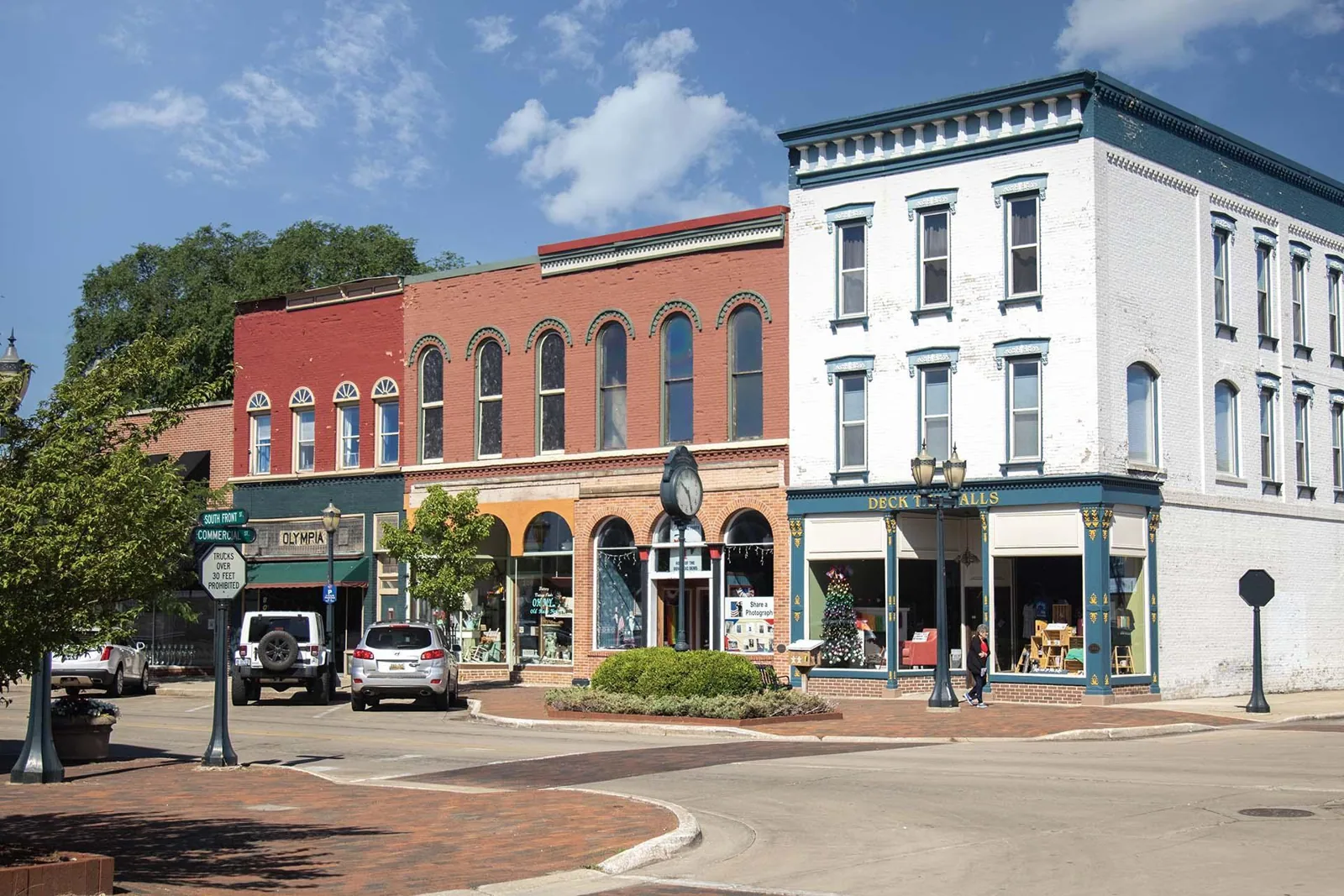
A property manager in Dowagiac, MI sends a photo of a ceiling stain along with the question that comes up wherever manufacturing came before the current owner: how do we find out what is up there? The right answer is that we go up and look, then write down what the roof is made of, how many layers it carries and where it is holding water. Dowagiac had 5,721 residents in 2020 and sits at the junction of M-51 and M-62. The city grew on stove and fishing lure manufacturing, including the Round Oak Stove Company and James Heddon's lures, and it has a municipal airport with a 4,700-foot paved runway and an Amtrak stop at Dowagiac Station on Depot Drive. We repair, recover, coat and replace commercial roofs across Michigan and Indiana, and in a city with this kind of building history the first job is always reading the roof.
The call, the visit and the photo log
Someone answers at any hour, and the first questions are practical: which building, where the water is showing, whether anything electrical or stored is under it. If water is active, we send a technician to find the entry point and set up a temporary dry-in, usually by clearing a drain or sealing a seam or flashing. Interior protection goes first, then the roof. We photograph the wet area, the roof above it and the repair, and the building manager gets that photo log with a short summary. If the building has more than one tenant, we ask who should receive tenant notices and who should hold the keys to the roof access. The permanent repair is planned from the findings, not from the first guess, and the follow-up visit comes after the next real rain.
What an older industrial roof can hide
Where a building has been in use for a long time, its roof often carries more history than anyone remembers. Layers added over layers raise the dead load and hold moisture between them. Penetrations from equipment that no longer exists remain, capped or patched. The deck underneath may be steel, concrete or wood, and the type changes how we fasten and how we judge damage. We start with a core sample or an infrared moisture survey to find where insulation is wet, then probe the deck at the worst spots. When the roof has several layers, we explain what a tear-off would involve and what a recover over the existing layers could and could not do. That choice comes up on manufacturing and warehouse buildings, flex industrial space included.
Matching a system to an aging building
Older low-slope buildings are often a good fit for a few systems. Built-up roofing is a proven choice when the owner wants a multi-ply surface and the structure can carry it. Modified bitumen roofing offers torch-applied or cold-applied options and handles foot traffic well. Where the existing membrane is sound but tired, a silicone or acrylic coating extends its service life, and our roof coating restoration work begins with cleaning and seam repair so the coating bonds. Cost and timing are driven by the same handful of factors on each: how much insulation is wet, the number of layers to remove, access for lifts and materials, and the weather window before winter. We show the owner each option in writing, with what it fixes and what it leaves alone.
Public buildings, an airport and a rail stop
Dowagiac Municipal Airport and the Amtrak station on Depot Drive are the kind of sites where roof work follows an owner's rules. Near an airfield, we ask the airport manager about crane placement, height limits and staging before a lift is scheduled. At a station or any building that receives the public, we plan around passenger flow, fence the work zone and keep entrances clear. Public owners usually need a written scope that several contractors can price without a return visit, so we write that document from the first walk. Roofs on government buildings follow those same procurement steps and the safety planning that comes with them.
Winter conditions and local permitting
South Bend averages 64.5 inches of snow a year, with the typical first freeze near October 18 and last near May 1. A November 2022 lake-effect period brought 30.2 inches to South Bend in its first twenty days. For a Dowagiac building, roof design and service planning start with the actual assembly, drainage and site forecast; after extended snow, clear drains and inspect parapets, curbs and flashing as access allows. For a Michigan project, we confirm permit and inspection requirements with the local building department and the property owner before setting the work sequence. Owners with buildings in Niles or Buchanan can have those reviewed in the same program.
Before setting a scope across the state line, we confirm the municipality, permit office, roof assembly, and any required review with the owner. The proposal names the work area, inspection method, and any condition that could change the sequence, such as wet insulation or a deck repair. That keeps a Michigan project tied to its own permit and building instead of importing an Indiana assumption.
On an industrial roof, a broad wet area calls for cores or other moisture checks before a surface repair is priced. If only a few seams or flashings have opened and the insulation stays dry, a focused repair may preserve more of the existing assembly. We show the distinction in the written options rather than treating every leak as the same scope. The report also notes which areas need protection now and which can be revisited after the roof dries.
Commercial Roofing Questions
Our building has had three roofs put on over the decades. Can another go on top?
Sometimes, but only after we confirm the existing layers are dry and the deck can carry the weight. A moisture survey and a few core cuts answer both questions. If the insulation is wet or the structure is marginal, a tear-off is the safer path. We put the options in writing with what each one costs in time, disruption and risk, and the owner makes the call.
We are a public owner. What do you need to prepare a scope that can be bid?
Access to the roof, any drawings or past repair records, and a sense of the budget cycle. From there we walk the roof, take photographs and measurements, and write a scope that lists each roof area, the work in each, and the materials. It is detailed enough for several contractors to price the same job. We can also attend a pre-bid meeting if the owner wants one.
A coating looks cheaper than replacing. When does it make sense?
A coating makes sense when the membrane is sound, the insulation is dry and the seams can be repaired. It adds years to the roof for a fraction of the disruption. If the survey finds wet insulation across a broad area, a coating seals in the problem and replacement is the better path. We tell the owner which case applies before any material is ordered.
What should we confirm before roofing work in Dowagiac?
Confirm the local permit process, required submittals and inspection steps before the scope is final. We review roof access and the existing assembly with the owner, then describe the proposed work and materials clearly enough for the permit process. If a project changes, we check the affected requirements before continuing.
Related Roof Work
Talk to Our Team
Tell us where the water is landing, what the roof is made of and when the building is easiest to reach.
Phone: 555-555-5555
Email: [email protected]