A commercial roof in Syracuse, Indiana has to work around what happens below it: open customer areas, stored inventory, equipment schedules and the next rain. We start with the interior symptom, then trace water through seams, penetrations, edges and drains to the roof detail that failed. A municipal building, shop, school or warehouse each has its own assembly and access needs, so we inspect the actual roof before recommending repair, restoration or replacement.
What we learn on the first visit
We begin with the interior symptom: where water appears, when it started, whether it is still active and what sits above it. On the roof, we follow the likely path through seams, penetrations, edges, drains and wall transitions. Photos capture the condition and measurements define its extent. If the owner has an old repair ticket, roof plan or warranty, we compare that record with what the field inspection shows rather than assume nothing has changed.
Moisture readings can identify wet insulation, while a small test cut may confirm roof layers, attachment and deck condition. We explain the test and restore the opening watertight the same visit. If the evidence points to plumbing, condensation or another source, we say so and describe the next useful check. That keeps the recommendation tied to the observed problem rather than to a predetermined service.
A town and its surrounding service area
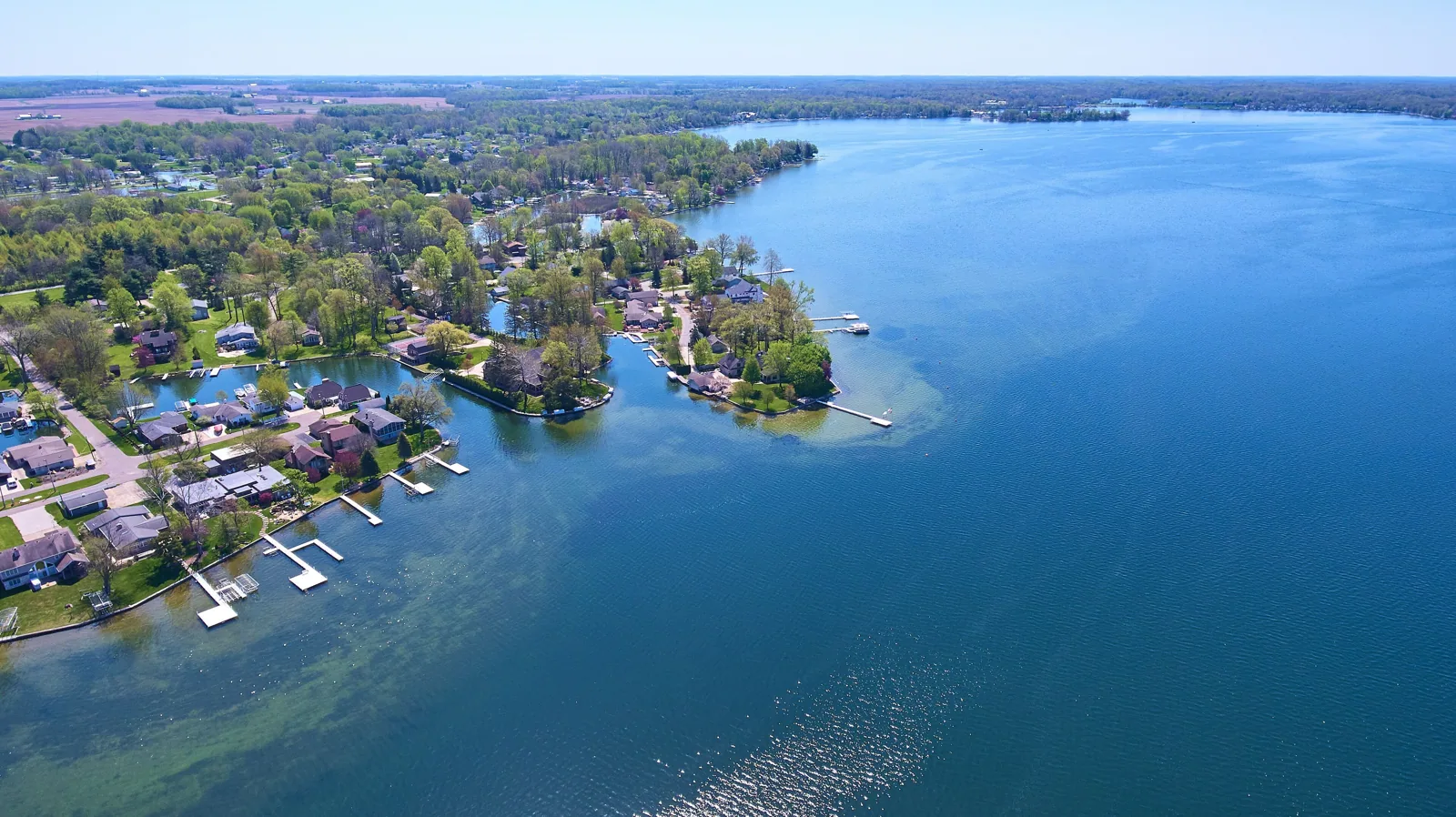
Syracuse is a town in Kosciusko County whose community goals include stable economic growth and decisions that serve the surrounding area. For a facility serving local staff and customers from nearby communities, the roof plan should account for access, loading paths and areas that must remain open. We confirm who controls roof access, when the space is occupied and which routes need to stay clear before work begins.
An owner can help the first visit go smoothly by sharing leak photos, prior repair records, a roof plan and entry requirements. We focus the inspection on the building itself: membrane, seams, curbs, drains and the path water may have taken. That lets the repair recommendation fit the roof instead of an assumption based on the property type.
When water is active
First, protect people and contents below the leak. Move inventory, cover sensitive equipment, set a collection point and avoid electrical hazards. If ceiling material is sagging or water is near energized systems, keep people away and involve the appropriate building professional. We can then assess whether the roof is safe to access and install a temporary repair if conditions allow.
A temporary measure is a bridge to diagnosis, not a substitute for it. We record where water entered, what we secured and what should be observed after the next rain. A permanent repair may require replacing a detail or opening the assembly to dry and replace wet materials. If the roof is too wet or unsafe to access, we explain the limitation and arrange the next step rather than improvise.
Seasonal conditions and drainage
Indiana roofs cycle through rain, snow, freezing and thawing. That movement stresses seams, flashings and sealants, while blocked drains can hold water against vulnerable details. During an inspection we check drainage paths, strainers, scuppers, low points and overflow provisions, then note whether ponding is isolated or persistent. We also look for displaced metal, loose fasteners, cracked sealant and evidence of moisture below the membrane.
Snow removal is not an automatic response to snowfall. Roof design, access, load limits and safe work practices matter, and owners should consult a qualified professional before crews step onto a snow-covered roof. A planned maintenance visit before winter can clear drains and address small defects. After a significant storm, a focused inspection can find damage before it becomes an interior leak.
Making a durable repair
We match the repair to the roof assembly. That means identifying membrane or metal type, confirming the substrate, removing incompatible patches and preparing a surface that will bond. At a leak, we check nearby seams and transitions as well as the visible opening; water may have traveled before it appeared inside. Repairs include compatible flashing and attachment, not just a bead of sealant over a symptom.
After the work, we photograph the repair and tell the owner what was completed, what remains to monitor and when maintenance should revisit it. If repeated repair would cost more or leave wet material in place, we explain the evidence for considering a recover or replacement. The owner receives options with scope and limitations laid out plainly.
When replacement becomes the better choice
Replacement is worth evaluating when moisture is widespread, the roof has several layers, attachment is failing or repairs keep returning. We verify those conditions using inspection, moisture mapping or test cuts before recommending tear-off. We also consider how the building will remain dry during construction, where material can be staged and how the work affects tenants or customers.
A complete proposal identifies the roof areas, demolition, insulation, membrane or metal system, perimeter details, curbs, drains, safety measures and cleanup. It states what is known about the deck and how concealed damage would be handled. If a recover remains feasible, we compare it against replacement and explain differences in weight, preparation, service life and future inspection access.
Selecting materials for the roof
Material choice depends on slope, existing layers, deck, drainage, penetrations, building use and the owner's maintenance plan. Single-ply membrane, modified bitumen, built-up roofing, coatings and metal systems can each fit some conditions. We assess the real assembly before comparing alternatives and verify that a proposed system is compatible with what remains.
A coating can extend a suitable roof when the substrate is sound, dry and properly prepared. It cannot solve saturated insulation or structural movement. A recover needs acceptable moisture conditions, attachment and edge height. A replacement provides access to the deck but increases demolition and disruption. The written scope explains these tradeoffs so the decision is based on the building rather than a sales label.
Routine roof care is most helpful when it records what was inspected and what changed. We check seams, flashings, edges, drains, penetrations and prior repairs, then provide dated photos and a prioritized list. The owner can separate immediate needs from items to budget for later. A repeatable record also helps a future contractor understand where leaks occurred and what was done.
Nearby service includes South Bend and Goshen. Explore commercial roof repair, roof inspection, school roofing and roof maintenance.
We schedule visits around the customer's calendar and can focus on a specific problem after a storm. The scope remains limited to the roof and areas the owner authorizes. If inspection points to structural movement or interior mechanical moisture, we document the affected area and coordinate the next evaluation with the appropriate trade.
Before a visit, note when the leak appears, what lies above it and whether prior repairs changed the pattern. Share any roof plan, warranty or access rules. Those details help us focus the inspection and protect the right interior spaces.
Commercial Roofing Questions
Do you offer emergency leak response in Syracuse?
Call with the location of the leak and what is at risk below. We will assess urgency, access and safe response options before dispatch.
Can you quote a replacement from photos?
Photos help with triage, but a roof walk and moisture or test-cut checks may be needed to confirm scope, layers and deck condition.
Can a coating fix an old roof?
Only if the existing assembly is compatible, dry and sound enough for restoration. We inspect first and explain when coating would hide a larger failure.
What information speeds up the first visit?
Share roof plans, prior repair notes, known leaks, access rules, building hours and any spaces that need extra protection.
Related Roof Work
Talk to Our Team
Tell us where the water is landing, what the roof is made of and when the building is easiest to reach.
Phone: 555-555-5555
Email: [email protected]