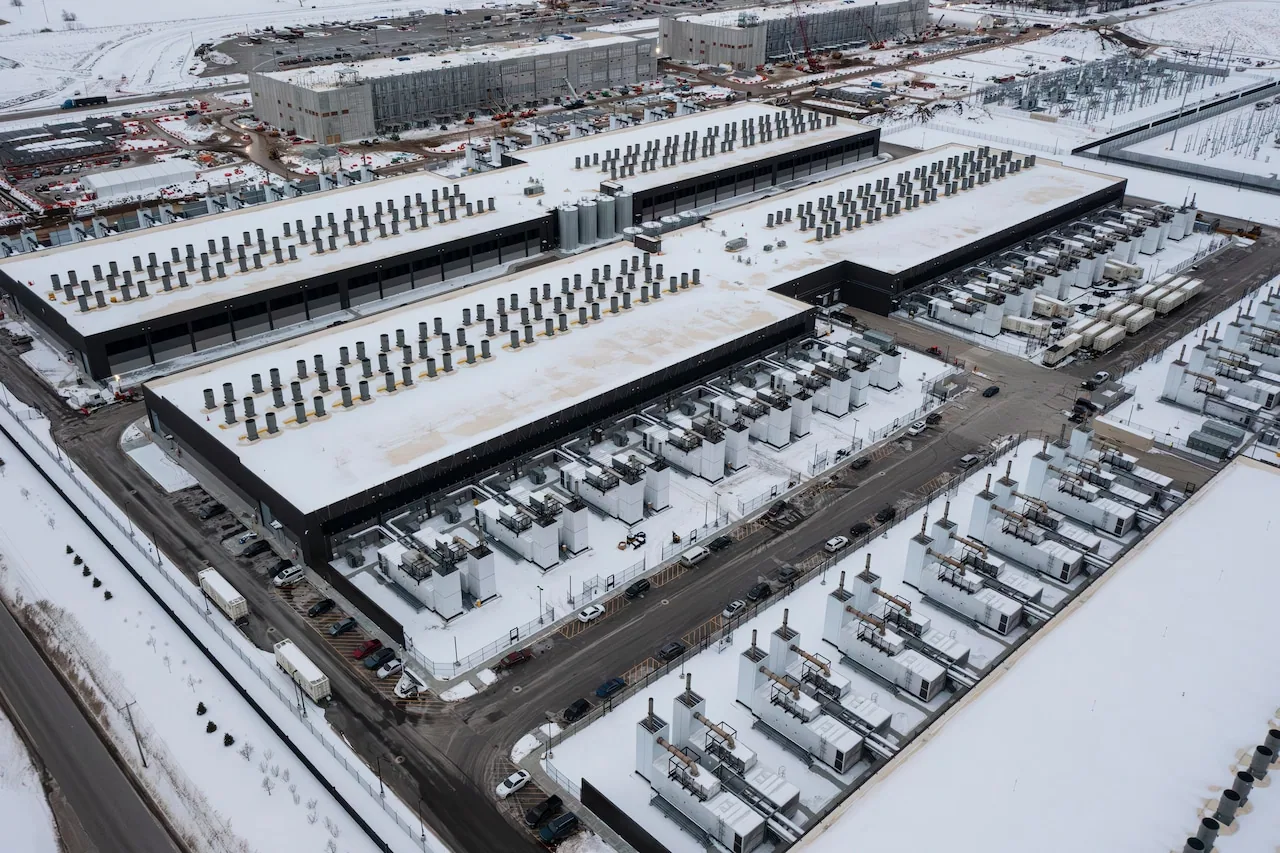
The Indiana Enterprise Center is a multi-building industrial park in New Carlisle, about 15 miles from South Bend. Listings show nine spaces ranging from 108,150 to 992,620 square feet, so roof assessments need to account for long runs, multiple drainage zones and active dock operations. If a leak appears as a dark stripe across a warehouse floor, record where it begins, which column lines it crosses and what weather preceded it. The roof inspection then follows that path from above, checks drains and identifies whether temporary protection is suitable while a permanent scope is developed.
Surveying a roof with long drainage runs
With spaces at this park listed from 108,150 to 992,620 square feet, inspection may combine a drone roof inspection of broad areas with close examination of blisters, open laps, ponding and displaced flashings. A person can then inspect flagged details and check the drains, sumps and overflow openings that control where water goes.
Where the surface looks sound but the floor shows moisture, an infrared moisture survey can identify patterns for further testing. Selected core samples help confirm insulation conditions at those points. A zoned roof plan, condition notes and photographs help the owner compare immediate repairs with work that can be budgeted later. A leasing team can use the same record to understand roof condition during turnover.
For each zone, note penetrations, rooftop equipment supports, expansion joints, edge metal and the path to the nearest overflow. These details help distinguish a membrane defect from drainage or movement at a transition. If a roof plan is available, mark findings against its grid so future work can be located without confusing one tenant's area with another's.
Protecting the floor and work area
Water on an industrial floor is a safety concern before it becomes a roofing scope. Keep people and lift traffic away from a wet area, move inventory if it can be done safely, and notify the property contact if water is near electrical equipment. The roof assessment checks drainage, the likely area above the wet line and whether temporary protection is appropriate; photographs can document observed conditions for the owner and insurer.
Where a building holds multiple tenants under one roof, the reporting tenant may not occupy the area below the opening. We trace the wet area from inside, check demising walls and note which spaces could be affected. Urgent roof conditions can be reported at any hour, including holidays; site access, weather and roof safety determine what work can proceed.
The roof at lease turnover
Industrial spaces change hands, and the roof is one of the shared systems a new tenant may inherit. A written condition report at turnover can record the membrane, insulation, drains and penetrations before racking, cranes or rooftop units are added. Buyers and lenders can use due diligence roof surveys to understand observed conditions and prioritize planned work across a portfolio.
New Carlisle also has large industrial and technology uses. Whatever the building holds, rooftop equipment needs sound curbs, flashing and drainage around it. A tenant or owner should compare equipment plans with the roof assembly before new penetrations or support frames are installed.
Owners with sites in nearby Mishawaka or Elkhart can use a consistent inspection record while keeping each roof's findings separate. Compare drainage, membrane condition, penetrations and repair history building by building rather than carrying one property's assumptions into another.
Open ground, wide wind, deep snow
South Bend recorded a 92 mph gust in August 1996. During the October 2001 tornado outbreak, an F3 tornado touched down near Crumstown and tracked northeast over northwest South Bend toward Niles. After strong wind, inspect edge metal, fastening patterns and outer membrane rows for movement or damage. Hail up to 1.25 inches was reported near Crumstown and 1 inch in South Bend in June 2019; a close roof inspection can document impacts that are not visible from the lot.
South Bend averages 64.5 inches of snow annually, and the airport recorded 22.7 inches in the November 2022 lake-effect event; Mishawaka recorded 20.7 inches. The city also recorded 4.88 inches of rain in 24 hours. For an industrial roof with long drainage runs, check sumps, outlets and overflow routes after heavy weather. A ponding water repair should address both the outlet and the roof slope that directs water toward it.
Repairing a large roof in phases
A large roof is rarely replaced in a single move. Owners can compare repairs to the worst zones, restoration of a sound but weathered surface, and replacement where insulation has failed. A single-ply system such as TPO can sometimes be installed in sections; transition details and temporary closure must be planned for the specific assembly and forecast.
Cost and schedule follow the number of zones, wet insulation, crane and lift access, and the season. Cold weather limits adhesives and welding, so some work may need to wait for suitable conditions while temporary measures protect the roof. For replacement, confirm applicable code, permit and insulation requirements with the building department before setting the final scope. For a tenant in a distribution center, coordinate dock hours, freight traffic and safe access with the operations lead.
For ongoing care, a roof log should identify the inspection date, weather conditions, roof zones reviewed, drains and overflows checked, and any detail that needs another look. After a repair, the property contact can use those reference points during routine preventive maintenance. This is especially helpful when a roof spans multiple tenant areas or when equipment changes over time. Keep manufacturer information and warranty documents with the roof plan, and record changes to rooftop units or penetrations so later inspections can assess the assembly accurately.
Commercial Roofing Questions
Water is showing up near a dock door, but the roof above it looks fine. Where do we start?
Start with the drain and the roof edge nearest the dock, and check for a flashing or a lap that sits upslope of the stain. Water travels along the deck and insulation before it drops, so the entry point is often some distance from the stain. A moisture scan from above shows where the wet insulation is, and we mark it on a photo of the roof.
A building has multiple tenants under one roof. How do we show which suite the leak affects?
We trace the wet area from inside each suite, check the demising walls and photograph the deck above. The report names the location, the cause and the date, which gives the owner a record that stands up with every tenant involved.
Is a drone survey enough, or do we still need someone on the roof?
A drone shows the whole surface quickly and flags what needs a closer look, but it cannot probe a lap or feel a soft spot. We use it to decide where the person with the probe spends time, and the two together give a tighter picture than either alone.
A new tenant plans to add rooftop equipment. What should we do first?
Walk the roof before the equipment is ordered. We check the membrane, drains and insulation where it will sit, set flashing details for the new curb and agree on a service path with walkway pads. Afterward we return to see how the flashings are holding.
How do you handle a reroof when the dock cannot close?
We work in sections that stay clear of the dock approach, schedule noisy steps for off-hours and keep each section dry at the end of the shift. The tenant's operations lead approves the zone sequence in advance.
Related Roof Work
- New Carlisle
- Drone Roof Inspection
- Infrared Roof Moisture Surveys
- Due Diligence Roof Surveys
- Mishawaka
- Elkhart
- Ponding Water Roof Repair
- Distribution Center Roofing
- Preventive Roof Maintenance
Talk to Our Team
Tell us where the water is landing, what the roof is made of and when the building is easiest to reach.
Phone: 555-555-5555
Email: [email protected]