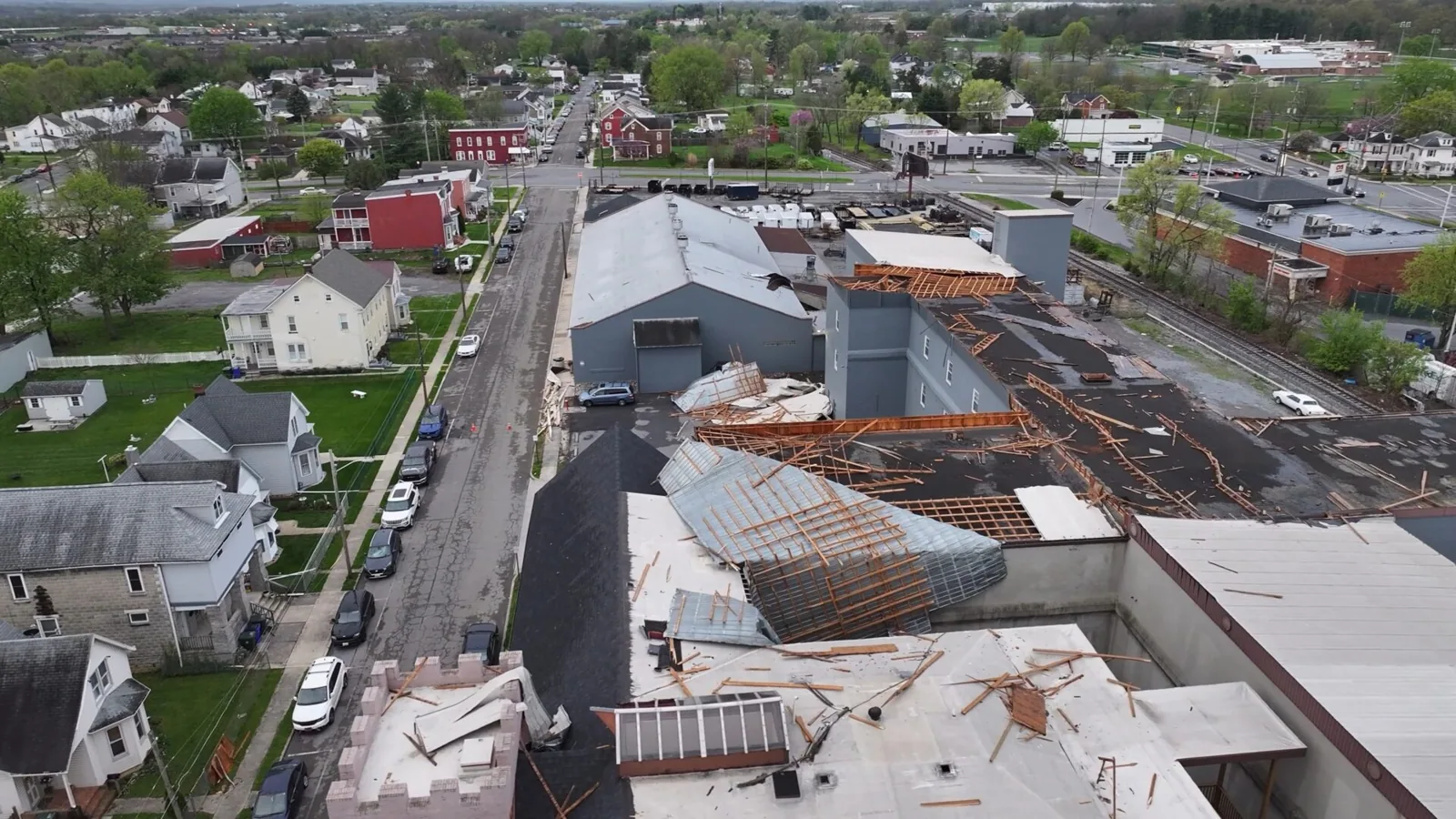
By the time the sky clears over St. Joseph County, the phone calls have already started. A tenant reports a pinging sound in the ceiling, a building engineer sends a photo of a loose strip of metal on the parapet, and a property manager with six buildings is trying to work out which one to check first. Storm damage on a commercial roof in South Bend, IN rarely shows itself in one dramatic gap. It shows up as small openings spread across the roof, some of which will leak tonight and some of which will leak in March. Our work begins with sorting those openings by urgency, so the dangerous ones are handled first and nothing is missed.
The first walk after the weather
We start from the ground, walking the perimeter and looking up for displaced coping, bent gutters, debris on the roof edge and anything lying in the lot that came off the building. Then a drone goes up to give us an overview of the membrane without putting weight on a roof that may be compromised, and the images from the drone pass show the crew where to walk. On the roof, we check the areas the wind loads hardest, which are corners, edges and the zones around rooftop units. We probe soft spots, check seams, and photograph each finding with its position marked. A building with obvious interior leaks goes to the front of the queue for an emergency dry-in before anything else is measured.
What straight-line wind does to a flat roof
The strongest gust on the books here reached 92 mph in August 1996, and on October 12, 2016 straight-line wind did damage along West Indiana Avenue while a microburst cut a swath from Northside Boulevard to Longfellow Road. A flat roof does not tolerate that kind of event evenly. Wind gets under an edge, lifts the metal, and peels the membrane back from the perimeter in a ragged line. Copings loosen, flashing tears at the corners, and ballast or loose gravel shifts to places it should not be. A larger failure can follow weather like this: the top floor of the county services building in Mishawaka flooded in April 2016 after a partial roof collapse that followed high winds and rain. For that reason we check how water is leaving after wind damage, not only where the membrane has torn. Perimeter repairs often tie into edge metal and coping work.
Hail that cannot be seen from the lot
Hail damage is easy to miss because a roof can look fine from every angle on the ground. On June 1, 2019 hail reached 1.25 inches near Crumstown, with a 1 inch report at South Bend and 0.7 inch at Mishawaka, and stones in that range can bruise a membrane without opening it. The damage shows up as fractured insulation under the surface, cracked coatings, dented metal and punctures at seams. We look for spatter marks, soft areas that give underfoot, and impact patterns that run in one direction across the roof. Where we suspect hidden damage, we recommend a moisture scan before the owner decides anything. Proving hail damage takes a close look, which is why a hail damage repair assessment is slow work done roof by roof.
Make safe now, plan the fix next
Once we know what the storm did, we split the work in two. The first part is anything that stops water or protects people today: tarping an open section, securing metal that is hanging over a walkway, clearing debris from the drains and closing the tear that is letting rain into a suite. The second part is the permanent repair, and it usually waits for dry weather and a clear scope. We give the property manager a written summary after the first visit that lists each building, what was done, what is still open and what the next visit will cover. Tenants who were disrupted get a brief notice from the manager that we draft with them, so nobody hears about the roof secondhand.
What the insurer will ask to see
A claim lives or dies on its record. We photograph the roof before we touch it, mark each finding on a roof plan, and keep a log with dates, times and weather conditions. When we make the roof safe we photograph that work too, so the cost of the temporary repair is clearly separate from the permanent scope. The owner can hand the same log to the adjuster, and we are glad to meet the adjuster on the roof. Our insurance claim assistance work follows the same file from the first visit to the final invoice.
Rebuilding to the standard that applies
Permanent storm repair is not always a matching patch. Statewide, the 2014 Indiana Building Code governs commercial work, drawn from the 2012 model code, and a rule to adopt a newer edition is pending. When the damage is large enough, the local building department can apply current code requirements to the area being rebuilt. Where a repair reaches into the insulation, the insulation and cover board specification matters as much as the membrane. We tell the owner when a repair is likely to trigger those requirements, and we match the repaired area to the surrounding membrane so seams and details sit properly. An owner with several buildings spread between Mishawaka and South Bend can have more than one roof hurt by the same weather, so we sequence the rebuild building by building.
Commercial Roofing Questions
Should we wait for the adjuster before anyone touches the roof?
Do not wait to stop water, but do wait to start permanent work. Policies generally expect the owner to protect the building, and failing to do so can reduce what the policy pays. We photograph everything before we place a tarp or cut anything, and we keep the temporary work as limited as the weather allows. The permanent repair waits until the adjuster has seen the roof and the scope is agreed, which avoids arguments about what was original damage.
How can you tell hail damage from ordinary wear on an older roof?
We look at the pattern, not just the marks. Hail leaves impacts that cluster on one exposure and spread unevenly across the roof, while age shows up as general surface wear, shrinkage and cracking at seams. We check how fresh the impact looks, whether dents in rooftop metal follow the same pattern, and whether the date of loss matches a recorded storm. The photographs and the roof plan let the adjuster see the same evidence, so the claim does not turn on an opinion.
A roof looks fine from the ground, so does it still need a walk?
Yes, because storm damage rarely announces itself. Lifted seams, cracked flashings and bruised insulation can all hide beneath a membrane that appears intact, and a slow leak may not show for weeks. We recommend a walk after any wind event that damaged trees or signs nearby, and a moisture scan after hail. The cost of looking is small compared with the trouble a late-reported loss can cause on a claim.
What if the storm hit several of our buildings at once?
Send us the list and the addresses, and tell us which buildings have tenants reporting leaks. We triage across the whole group, make the leaking buildings safe first, and then work through the rest in order of exposure. Each building gets its own photo log and summary, so the insurer sees clean files rather than a combined mess. The manager receives one running sheet showing where each building stands, which makes updates to ownership much easier.
Do we have to file a claim before you start the dry-in?
No. Making the building safe does not depend on a claim, and an owner can pay for the temporary work directly while deciding whether to file. We record the work in the same way either way, so the file is complete if the owner changes course. If the damage is modest, repairing and absorbing the cost may make more sense. We lay out the repair scope so that decision can be made calmly.
Related Roof Work
- Drone Roof Inspection
- Emergency Commercial Roof Repair
- Edge Metal, Coping and Gutter Repair
- Hail Damage Roof Repair
- Roof Insurance Claim Assistance
- Roof Insulation, Tapered Systems and Cover Board
- Mishawaka
Talk to Our Team
Tell us where the water is landing, what the roof is made of and when the building is easiest to reach.
Phone: 555-555-5555
Email: [email protected]