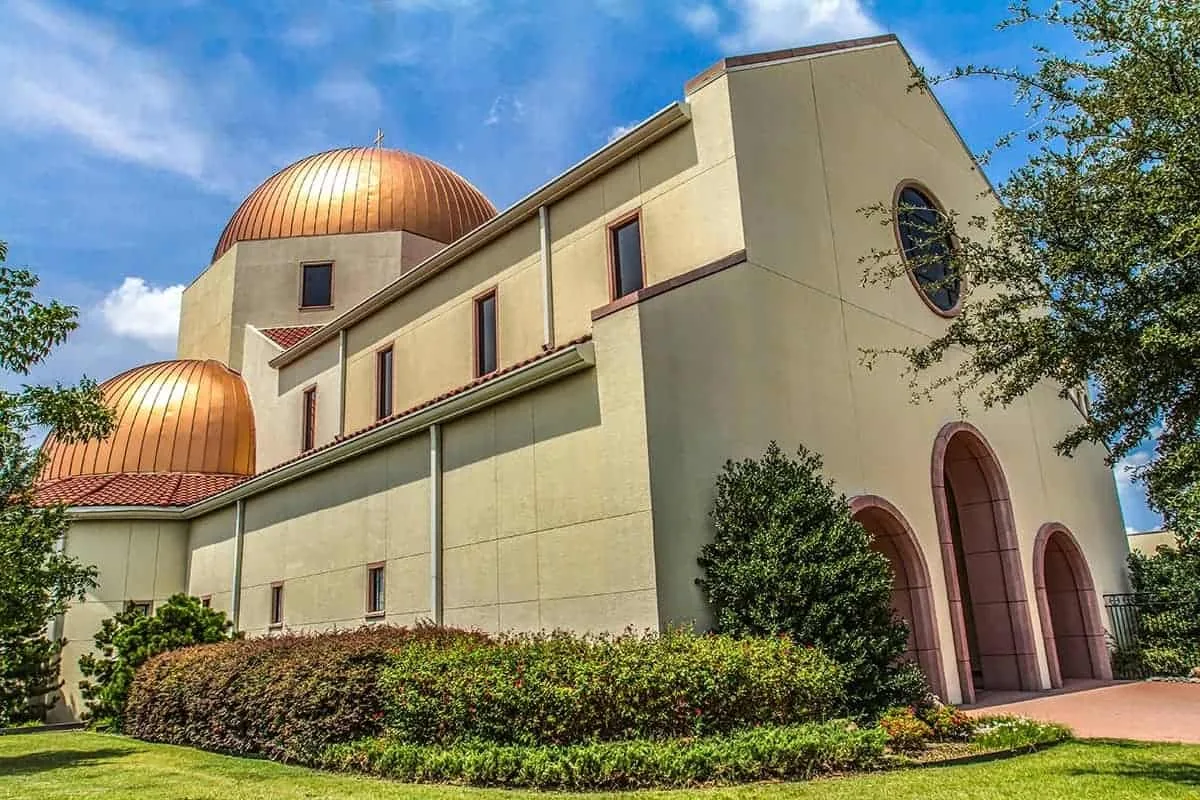
A sexton opens the side door late on a Friday before a wedding rehearsal and finds a brown ring spreading across the plaster above the front pews, three days after the thaw. Nobody planned for it, and the trustees are scattered across town. A church roof in South Bend, IN can fail exactly like that: quietly, over a week of freezing nights and warm afternoons, and then all at once in front of a room full of people who care about the building. The first conversation should establish what is wet, what is on the calendar and what must stay protected. The building contact can then coordinate roof access and the appropriate temporary measures.
The first call from the sexton
At many churches the person who finds the stain is a volunteer rather than a facilities engineer, so we ask plain questions. Which room, how far from the altar or the organ, and what event is coming next. An inspection can begin inside with photographs of the stain and a check for bulging plaster or loose lath. Readings along the ceiling show how far the water has moved. Then we climb. On many church buildings the roof is a mix of a steep slope over the sanctuary, a low-slope roof over a fellowship hall or education wing, and a flat section over a connector or entry. Each one leaks differently, so the interior photo log tells us which roof to walk first.
Valleys, towers and the places snow gathers
The steep sanctuary roof sheds snow onto whatever sits below it, and that is where trouble starts. A low roof tucked against a tall nave wall collects a drift load well beyond what falls on open ground, and the meltwater runs down the wall into the flashing at the base. We check counterflashing, valleys, box gutters and the base of any steeple or tower, because those details move with every freeze. The first 32 degree freeze in South Bend arrives around October 18, the last around May 1, and a parapet cycles through ice for most of that stretch. Failed flashing and plugged gutters and edge metal are the usual causes of a stain that looks mysterious from inside.
Wind and hail on a tall roofline
A church often rises above the buildings around it, which puts its roof in the strongest part of a storm. The highest gust ever recorded at South Bend, 92 mph on August 22, 1996, is the kind of wind that peels ridge caps and lifts loose copings. The October 24, 2001 tornado outbreak sent an F3 across northwest South Bend toward Niles and an F2 between Mishawaka and Osceola, and the June 1, 2019 storms dropped one inch hail on South Bend. After any of those events we look for missing slate or shingle, dented metal, split seams and fractured membrane. For a congregation near Notre Dame or out in the suburbs, the useful habit is the same: a camera walk within days of a storm like those, so the insurer receives dated photographs instead of a guess about when the damage happened.
Protecting the sanctuary while we work
Church interiors hold things that cannot be replaced with a purchase order: plaster ceilings, painted trim, stained glass, carved pews, and an organ that reacts badly to humidity. When water is coming in, we lay plastic and absorbent sheeting over the pews and floor, move what the congregation can move, and ask the organ technician to be called if pipes sit near the wet area. Loose plaster is brought down in a controlled way before it falls on its own. On the roof we put a temporary dry-in over the opening, using sheet membrane or sealant secured to the deck. Temporary protection should suit the roof assembly and conditions, with permanent repairs planned when materials can be installed properly.
Telling the congregation and the tenants
Many churches share the building with a preschool, a food pantry, a recovery group or a rented hall, so the roof affects more people than the Sunday congregation. Classrooms under the work are planned like a school roof, and a campus with several buildings follows the habits of college and university roofing. We give the pastor or the building chair a short notice for the bulletin and for the groups that meet during the week, listing the work dates, the hours, and which doors to use. Funerals and weddings go on the schedule first, and noisy work such as tear-off or fastening is kept clear of them. A tenant notice can also go to rented spaces, and the owner can plan a follow-up inspection after weather has tested the repair.
A repair plan a committee can fund
Decisions in a church usually move through a building committee, a finance board and sometimes a larger body above them, so the useful deliverable is a clear report. After a roof inspection we write down each condition with photographs, rank the work by priority, and separate what must happen this year from what can wait. A leak at one valley may call for a repair now, a worn low-slope hall roof may be a candidate for coating and restoration, and a roof with wet insulation may need replacement. The report feeds a capital plan that a congregation can spread across several budget years. Permanent work should be scheduled when the specified sealants and adhesives can cure under site conditions.
Commercial Roofing Questions
Our board meets once a month and the ceiling is already wet. What can happen before it meets?
Make the building dry first and the decision second. The immediate step is to protect people and contents, keep clear of loose plaster, and have the roof condition assessed. Temporary protection may be appropriate; contract approval and permanent scope follow the congregation's process. The board then receives photographs, a short written summary and a ranked repair list, so the vote at the next meeting is about the permanent fix instead of the emergency.
Will repair work disturb a wedding or funeral already on the calendar?
The work plan should account for the event calendar and guest access. Share dates and entry constraints so the building contact can coordinate noisy work, staging and safe routes. If a short-notice service is added, the property contact can coordinate any needed work-area changes. Quiet inspections and moisture readings can go on at almost any time, and the temporary dry-in is built so the sanctuary stays usable.
Is it safe to leave the organ in place under a leak?
Only if the organ technician agrees, and the call should come early. Water and swings in humidity affect pipes, reeds and wiring, so we cover the area, direct the water away and keep the roof opening closed while the technician looks. We do not touch the instrument. We protect the space around it and give the technician a record of when water entered and how long it lasted.
Does a steeple need its own inspection?
The base of a steeple is one of the most overlooked details on a church roof, because it is hard to see from the ground and moves differently from the main roof. We examine the flashing at the base, the louvers, the fasteners and the metal covering, and photograph each with a long lens or drone so the congregation sees what we saw. Repairs at height are scheduled with proper access, never improvised from a ladder.
How can a congregation stretch a roof budget over several years?
Ask for a ranked list of every condition, with a note on the likely consequence of delaying each one. Valleys, flashings and drains tend to rank first because they protect the plaster and the interior. Coating a sound low-slope roof can postpone a replacement, and a dry core means a tear-off is not needed yet. The committee can update the list after winter inspections to keep the budget discussion current.
Related Roof Work
- Flashing Failure Repair
- Edge Metal, Coping and Gutter Repair
- Mishawaka
- Notre Dame Area
- School Roofing
- College and University Roofing
- Commercial Roof Inspection
- Roof Coating and Restoration
- Roof Capital Planning
Talk to Our Team
Tell us where the water is landing, what the roof is made of and when the building is easiest to reach.
Phone: 555-555-5555
Email: [email protected]